The great robot invasion just hit a wall — a regulatory one. On July 28, 2026, the US Federal Communications Commission moved to block imports of what it calls “advanced robotic devices” made outside the country, along with foreign-built power inverters. And while the FCC insists the measure isn’t aimed at any single nation, nobody in the industry is buying the diplomatic phrasing: this is squarely about China.
The timing is hard to ignore. Chinese manufacturers have spent the past couple of years turning humanoid and quadruped robots into a viral spectacle — machines dancing (badly) to Michael Jackson, sparring in staged MMA bouts, and generally lurching their way into the global imagination. Behind the memes sits a serious industrial push, and Washington has clearly decided that push now counts as a national security concern.
Here’s what the ban actually covers:
- Mobile robots, explicitly including humanoid and quadruped (four-legged) models
- A wider net than just walking machines — the FCC’s language isn’t limited to bipeds or dog-shaped bots
- Power inverters manufactured abroad, folded into the same order
Crucially, the rule targets new models only. Robots already sold or authorized for the US market get a pass, so the humanoids currently rolling around research labs and trade-show floors won’t be yanked off the shelves. Instead, the restriction chokes off future certification — meaning foreign builders can’t push their next generation of machines through the FCC’s approval pipeline.
That distinction matters more than it might sound. In hardware, the real prize isn’t the model shipping today; it’s the one launching next year. By blocking new authorizations rather than seizing existing units, the FCC applies pressure to the roadmap instead of the showroom — a quieter but arguably more effective way to slow a rival’s momentum.
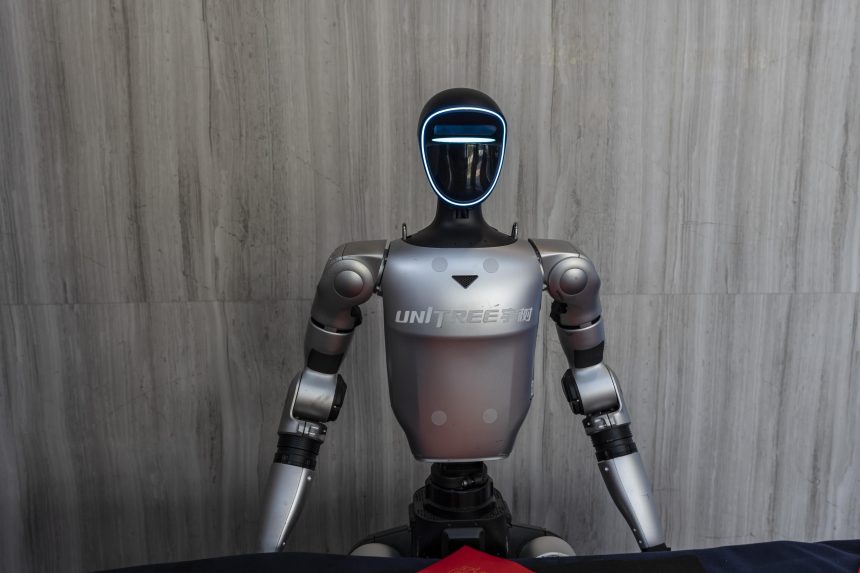
Chinese robotics firms are the obvious casualties. Companies like Unitree, whose agile quadrupeds and humanoids have become fixtures in demo reels worldwide, now face a US market that’s increasingly walled off. For makers betting on America as a growth engine — whether for logistics bots, security patrols, or the still-nascent humanoid market — the path just got dramatically narrower.
The broader picture is a familiar one. Robotics is the latest front in an ongoing tech standoff, following semiconductors, telecom gear and drones down the same well-worn road of import restrictions dressed in security language. The inclusion of power inverters — the unglamorous components that convert DC to AC in everything from solar setups to industrial systems — signals that the concern extends well beyond marching humanoids and into the guts of critical infrastructure.
For US consumers and businesses eyeing affordable automation, the near-term effect is simpler: fewer options, and quite possibly higher prices, as the most aggressive players in the field find the door bolted shut. Whether domestic manufacturers can fill the gap fast enough is the question that will define the next chapter of America’s robot ambitions.