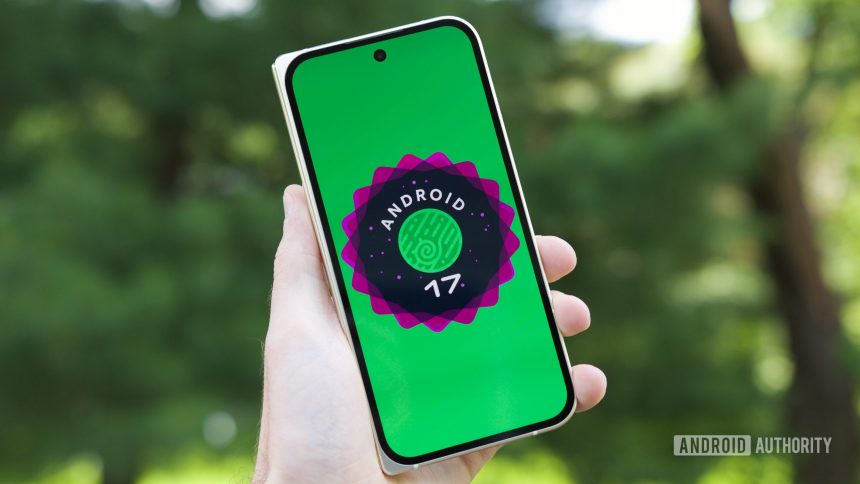
If your video calls stutter and your voice cuts out at the worst possible moment, Android 17 has a feature designed to smooth things over — and most people will never notice it working. That’s rather the point.
The seventeenth major release of Google’s mobile operating system, codenamed Cinnamon Bun, quietly introduced support for autorouting of over-the-top (OTT) voice and video calls to premium network connections. In plain terms, when you’re on a WhatsApp, Meet or FaceTime-style call, the system can automatically steer that traffic onto a dedicated, higher-priority network lane rather than letting it fight for space with everything else on the pipe.
What does that lane look like? Android 17 can route calls to a premium 5G slice or a premium 4G PDN connection — essentially a reserved slot in the carrier’s network built for latency-sensitive traffic. The result should be fewer dropped frames, less warble in someone’s voice, and calls that hold together even when the network around you is congested.
This is a meaningful shift in how Android treats OTT calls. Historically, apps like Zoom or Signal have been treated as ordinary internet data — no special handling, no priority, entirely at the mercy of whatever congestion the network is dealing with. Carrier-run calls (the old-fashioned kind) already enjoy prioritization. Android 17 essentially lets third-party apps tap into similar preferential treatment, with the operating system doing the routing automatically.
Here’s the catch, and it’s a big one: this is a capability, not a guarantee. Premium slices and premium PDN connections are things carriers control. That opens an obvious door for operators to treat smooth video calls as a premium tier rather than a baseline — something you might one day pay extra for, bundled into a higher-priced plan. The technology is neutral; how it gets monetized is entirely up to your provider.
- What it does: autoroutes OTT voice and video calls to a premium network interface
- How: premium 5G slice or premium 4G PDN connection
- Why it matters: lower latency and steadier calls under congestion
- The risk: carriers could gate the feature behind pricier plans
Android 17 was officially announced on May 12, 2026 during Google’s The Android Show, and rolled out to the public on June 16, 2026. Whether this particular feature becomes a genuine everyday upgrade or a bargaining chip depends less on Google and more on the network you’re paying every month.