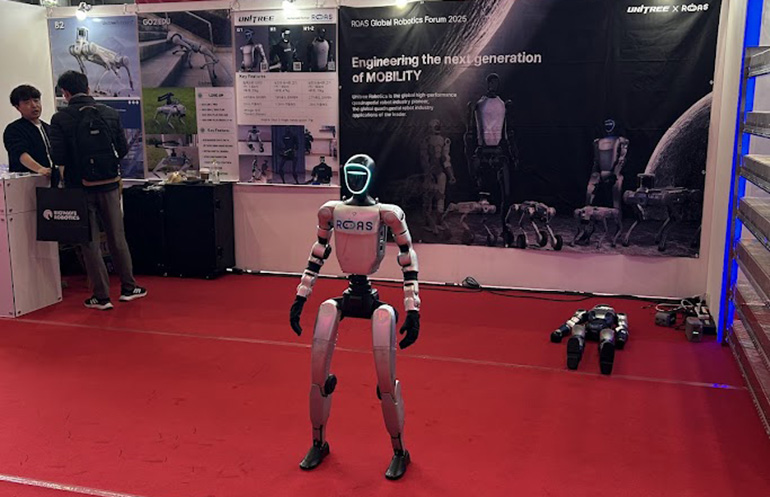
The robotics industry woke up to a jolt this week: the Federal Communications Commission has moved to ban the import of foreign-made humanoid and mobile robots, framing the decision as a national security measure aimed squarely at China. For an industry that has spent years leaning on cross-border supply chains, it’s a policy shift with teeth.
Here’s what the ruling actually covers. The ban applies to new models and reaches any system built with more than 35% foreign components. That threshold is the part making engineers sweat, because a modern humanoid is a global patchwork — actuators, sensors, battery cells and control boards frequently sourced from wherever they’re cheapest and best. Clearing the 35% bar isn’t a checkbox; for many designs it means re-architecting the bill of materials.
There is a pressure valve. The FCC left room for possible exemptions from defense agencies, a nod to the reality that some of the most advanced mobile robotics work lives inside government and military programs that can’t simply wait for a domestic supply chain to mature.
Industry reaction has split along a familiar fault line:
- The optimists see a runway for U.S. manufacturers. Squeeze out lower-cost foreign platforms and domestic builders suddenly have both market share and a reason to onshore component production — the kind of protectionist tailwind that can jump-start a home-grown ecosystem.
- The skeptics warn about the opposite effect. Robotics innovation thrives on access to the best parts at the best price, and a hard import wall could slow deployment, inflate costs, and hand a pace advantage to markets that keep their doors open.
The national security argument isn’t pulled from thin air. A humanoid robot is, functionally, a mobile sensor suite with cameras, microphones, network connectivity and increasingly capable onboard AI. Regulators framing foreign-built machines as a potential surveillance or supply-chain risk are drawing on the same logic that shaped earlier restrictions on telecom gear and networking hardware.
What’s less clear is how the rule plays out in practice. “New models” implies existing certified robots may keep flowing, but the 35% component test raises thorny questions about verification, enforcement and the paperwork burden on companies trying to prove where every servo and chip came from. Expect legal challenges, lobbying, and a scramble among robot makers to audit their own hardware.
For the humanoid boom specifically — a sector that has been racing toward warehouses, factory floors and even the home — this is the first time regulation, rather than technical limits, has become the gating factor. Whether it protects American robotics or simply slows everyone down may be the defining question of the year.
One thing is certain: the map of who can sell a walking, talking machine in the United States just got redrawn.