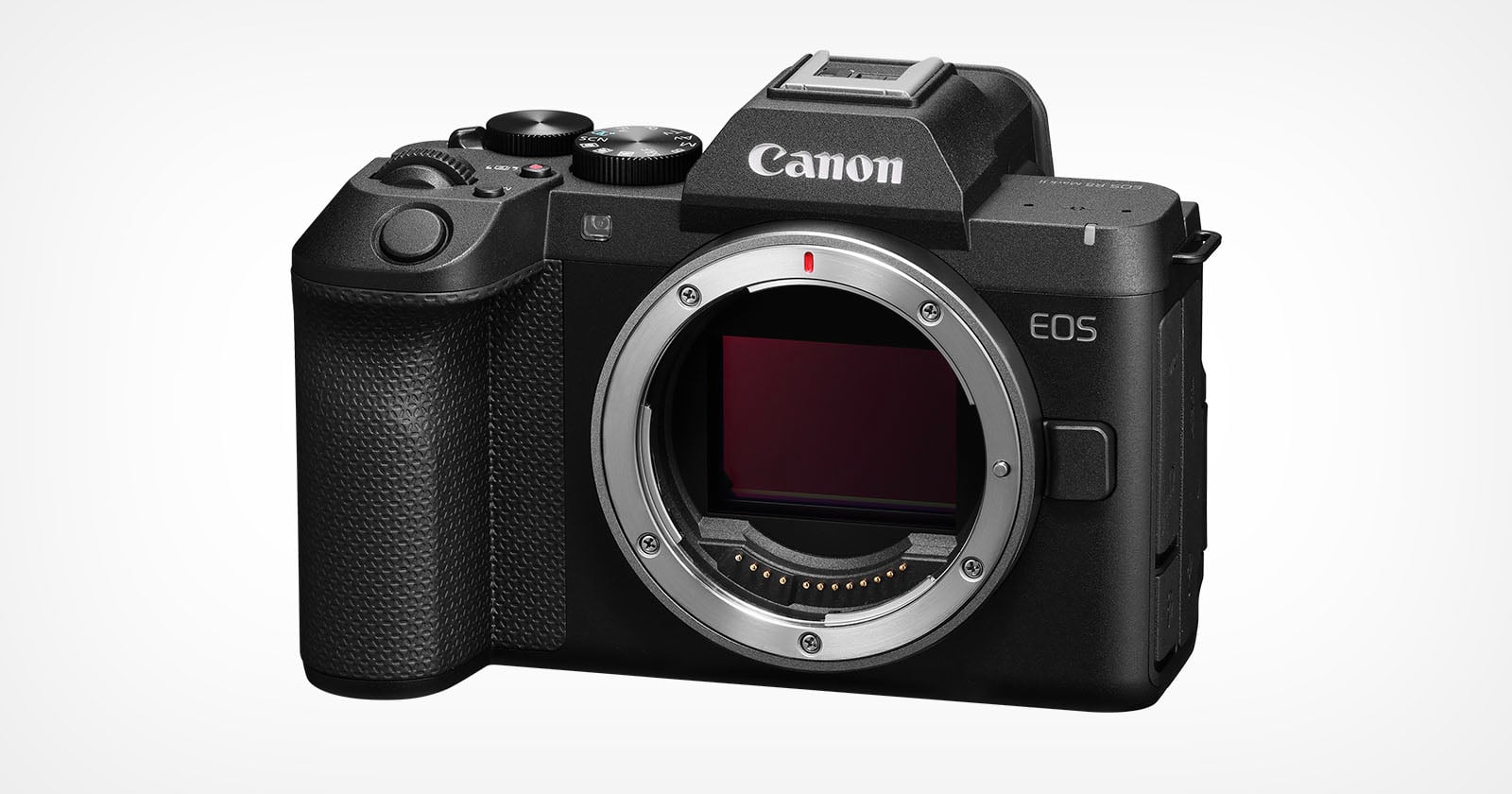
Canon’s entry point into full-frame mirrorless has stopped apologising for itself. The EOS R8 Mark II, announced on September 15, 2026, keeps the 24.2-megapixel full-frame image sensor and DIGIC X processor of the camera it replaces, but almost everything wrapped around them has changed — starting with a very angular camera body with squared-off edges that looks nothing like the soft, plasticky original.
The headline addition is stabilisation. The Mark II is the first R8 with a sensor-shift unit, rated for up to 7.5 stops of shake correction in the center of the frame and seven stops at the periphery. That single change rewrites what the body is good for: handheld low-light stills and gimbal-free video suddenly stop being a compromise on Canon’s cheapest full-frame chassis.
The second change is one owners of the original camera have been grumbling about since 2023 — there is now a dedicated autofocus joystick selector on the back. Behind it sits the Dual Pixel CMOS AF II system with 100% autofocus area coverage and AI-powered subject detection and tracking, working down to EV -7.5.
Speed is up too. The camera shoots at up to 40 frames per second and, more usefully, holds that pace longer: Canon claims 30% more continuous RAW photos and 58% more continuous JPEG shots than the original R8, with a buffer of up to 73 RAW frames. Pre-continuous capture in H+ mode banks roughly 20 frames from before the shutter was pressed.
Video is the other area where the Mark II quietly leapfrogs its price class. It records uncropped 4Kp60, oversampled from 6K, plus uncropped Full HD at up to 180p, with Canon C-Log3, HLG and PQ on board. Maximum recording time per clip is 2 hours at 100 fps or higher, and 6 hours below 100 fps, barring overheating or power loss.
- Sensor: 24.2-megapixel full-frame, DIGIC X processor, ISO 100–102,400 (expandable to 50–204,800)
- Viewfinder: 2.36-million-dot EVF; screen: vari-angle 3-inch panel with approximately 1.62 million dots
- Body: 131.4 x 90 x 79.7 millimeters (5.17 x 3.54 x 3.14 inches), 546 grams (19.3 ounces) with battery and card, 499 g body only
- Storage and power: single UHS-II SD slot, LP-E17 battery
- Connectivity: USB Type-C (USB 3.2 Gen 2), micro HDMI, 3.5 mm mic and headphone jacks, Wi-Fi 6, Bluetooth 5.3
The LP-E17 battery is the one piece of continuity nobody asked for — it is the same small cell as before, now feeding a stabilised sensor and a faster shutter.
Pricing lands at $1,899 for the body and $2,099 in a kit with the RF 24-50mm f/4.5-6.3 IS STM lens, with shipping set for late October 2026. Two accessories arrive alongside it on the same schedule: the EG-E2 Extension Grip at $99.99, which bolts to the base for larger hands, and the Speedlite EL-5 Ver.2 at $379.