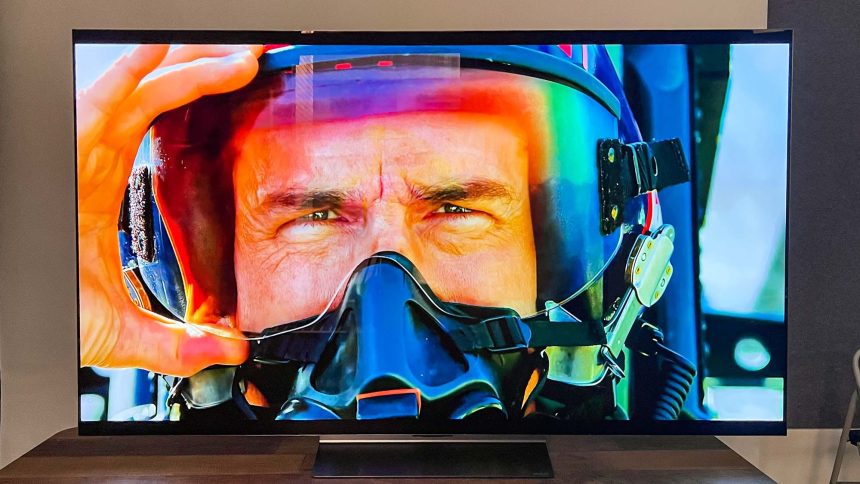
Here’s the good news for anyone still nervous about splashing out on an OLED TV: burn-in is a solved problem for normal humans. Here’s the catch: it’s still very much a real phenomenon if you treat your panel like a science experiment.
A fresh torture test aimed at modern OLED sets confirms what the industry has quietly known for years. Yes, image retention and permanent burn-in can happen. No, it won’t happen to you unless you do something genuinely absurd — like parking on a single channel with a static logo for thousands of hours, uninterrupted, across more than a year of continuous viewing.
That’s the level of abuse required. We’re not talking about a weekend gaming marathon with a persistent HUD, or a news ticker you leave running while you make coffee. We’re talking about the same bright, static elements — logos, scoreboards, channel bugs — hammering the exact same pixels for an eternity that most people will never come close to matching in a decade of ownership.
The reason burn-in persists at all comes down to how OLED works. Each pixel is a self-emitting organic diode, and the ones asked to shine brightest, longest, age fastest. When neighbouring pixels wear unevenly, you get a ghost of that static element permanently baked in. It’s physics, not a manufacturing flaw.
What’s changed is how aggressively manufacturers fight it. Modern OLED panels lean on a stack of countermeasures working quietly in the background:
- Pixel shifting — the entire image nudges by a few pixels over time so no single point takes the full load.
- Logo detection and dimming — the set spots static bright elements and eases off their brightness automatically.
- Panel refresh cycles — periodic compensation runs that even out pixel wear, usually kicking in after long viewing sessions.
Stack those defences together and the practical result is clear: for the way real people actually watch television — mixed content, varied brightness, the occasional off switch — burn-in simply isn’t a concern anymore.
So why does the myth cling on? Partly because early OLED sets genuinely were more vulnerable, and first impressions in tech are sticky. Partly because “OLED burns in” is a tidy soundbite, even when the reality now carries an enormous asterisk.
The honest takeaway is this: if your usage involves a single static image glued to the screen for a year-plus, OLED is the wrong technology and an LCD or Mini-LED set will serve you better. For literally everyone else, the burn-in warning belongs in the same drawer as “don’t sit too close to the TV.” Technically true once, functionally irrelevant now.