Most electronics recycling starts by destroying value before it can be recovered. Boards get shredded, then the mixed output gets sorted — a process that flattens memory chips, processors, magnets, and capacitors into bulk streams. According to the UN’s most recent Global E-Waste Monitor from 2024, current management captures less than a third of the recoverable metal value in discarded electronics, and the world is on track to generate 82 million tonnes of e-waste per year by 2030.
San Francisco startup Tuurny wants to run that process backwards. Instead of shredding first and sorting later, its robotic system — called Nantul — identifies and extracts components before anything hits the shredder, then reroutes them either to testing labs for reuse or to refiners and smelters. The first target is RAM integrated circuits, and Tuurny claims each machine can recover 300 intact RAM ICs per hour.
How Nantul works
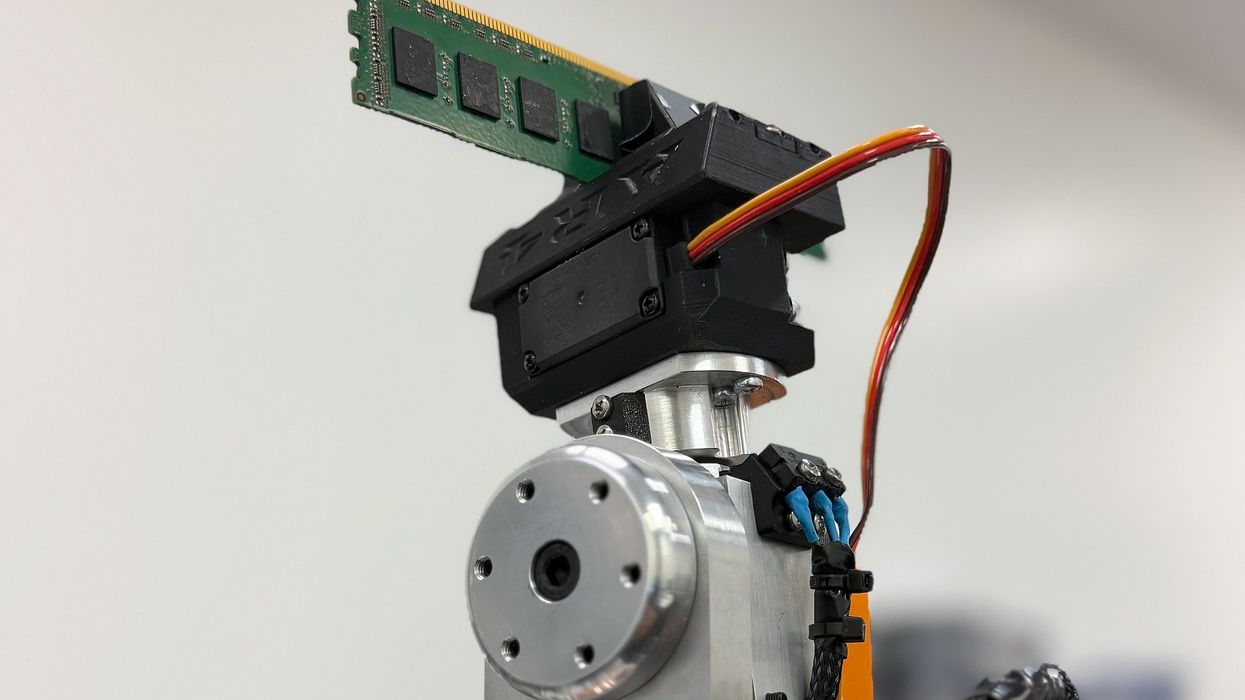
Nantul bundles three robotic systems into one. An arm continuously feeds two tabletop machines that look a lot like 3D printers or CNC units. A neural network identifies and catalogs each component, then searches the internet for the manufacturer’s thermal-profile specifications. Armed with that data, the machine uses a mix of suction, controlled heat, computer vision, and robotic control to lift chips off the board while minimizing damage. Recovered items are then sorted by model number into material-specific groups.
The hardware is deliberately modest. Tuurny builds small modular machines from off-the-shelf parts, custom controls, and Nvidia Jetson Nano boards, aiming for a price point well below the centralized industrial gear used at large facilities. Founder Sina Ghashghaei says the toughest engineering hurdle has been the autonomous computer vision and robotic control — exactly the part you can’t buy off a shelf.
Why RAM, and why now
The four-person company started elsewhere. Last year it won a NASA-funded grant for an AI-powered repair assistant for printed circuit boards, then pivoted to e-waste after deciding discarded electronics were the bigger market — especially amid U.S. interest in on-shoring critical minerals and rare earths. The pivot also lines up neatly with legacy-chip shortages in telecom, aerospace, and defense, where equipment stays in service long after its chips leave mainstream production.
Tuurny is preparing its first field deployment with dozens of machines through a six-figure deal with Areera, a UK television recycler that processes 1,500 tonnes of TVs per month. That rollout is planned for early 2027. Ghashghaei says the company is also in talks with legacy chip suppliers and pursuing agreements to feed recovered aluminum and copper to smelters.
Minghui Zheng, an associate professor of mechanical engineering at Texas A&M University, calls the approach technically feasible and promising, but still early. RAM is a smart starting point — high reuse value, relatively standardized — yet the hard part is removing chips without heat, mechanical, or electrical damage and proving they still work afterward. “The key question,” Zheng says, “is whether the robotic disassembly technology can work reliably, affordably, and at scale.”