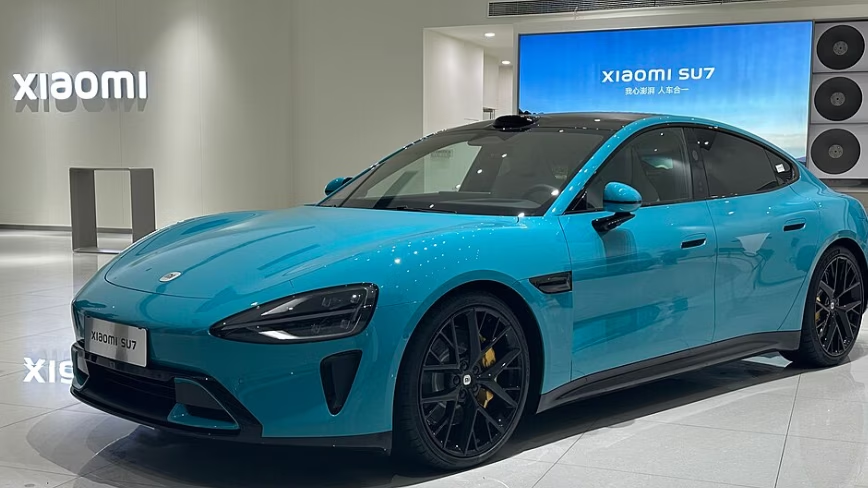
Xiaomi’s first-ever electric car has hit a milestone that most legacy automakers would envy: cumulative deliveries of the SU7 series passed 500,000 units as of August 19, 2026. That’s just 28.5 months after the very first handover, a pace that underlines how quickly the phone giant has muscled its way into the crowded Chinese EV market.
The SU7 arrived on March 28, 2024, with customer deliveries kicking off the following month. A new-generation refresh rolled out on March 19, 2026, keeping the sedan fresh against fierce local competition. And Xiaomi’s broader EV push looks even healthier when you zoom out: the company has now shipped more than 760,000 vehicles in total.
Not every number points straight up, though. SU7 deliveries are actually down 43.6% year on year, even as Xiaomi’s overall EV volume climbed almost 15%. In other words, the halo model is settling into a steadier rhythm while the wider lineup does the heavy lifting.
The value proposition is a big part of the story. The SU7 starts at $31,870 (roughly €27,553 / £23,775), a figure that reads almost provocatively low given the hardware on board. Every variant ships with a serious sensor suite by default: LiDAR, 4D millimetre-wave radar, and Nvidia’s Thor-U compute platform handling the driver-assistance workload. That’s flagship-grade kit spread across the whole range rather than reserved for a top trim.
Under the skin, buyers get a genuine spread of choices:
- Standard and Pro variants deliver 235 kW of power
- The Max version steps up dramatically to 508 kW
Battery options are equally varied. Xiaomi offers 73 kWh and 96.3 kWh LFP packs alongside a 101.7 kWh ternary lithium battery. On the optimistic CLTC cycle, those translate to 720 km, 902 km and 835 km respectively — so the mid-tier LFP pack, not the largest ternary unit, actually posts the longest quoted range.
What makes the 500,000 figure notable isn’t just the raw count but the timeframe. Building a car company from scratch is famously brutal on cash and reputation alike, and plenty of well-funded startups have stumbled long before their first six-figure delivery tally. Xiaomi got there in under two and a half years, leaning on an existing ecosystem, brand recognition, and aggressive pricing that keeps the SU7 firmly in the conversation.
The dip in SU7-specific volume is worth watching, but it reads more like a maturing product than a fading one — especially with a refreshed generation now on sale and total EV shipments comfortably north of 760,000. Xiaomi wanted to prove it could make a real car, at scale, that people actually buy. Half a million SU7s later, that argument looks settled.