Most mobile robots wait to be told what to do. Cobot’s Proxie Gen 2 doesn’t. According to founder and CEO Brad Porter, the latest version can figure out when materials are ready to be moved, work out where they need to go, and generate its own tasks — all without a human flagging the job first. That’s the headline feature, and it shifts the robot from obedient mover to something closer to a self-directing logistics worker.
Collaborative Robotics, the Santa Clara company behind the machine, unveiled Proxie Gen 2 on June 22, 2026 at Automate 2026. The pitch isn’t just smarter software, though. The hardware has been rethought too.
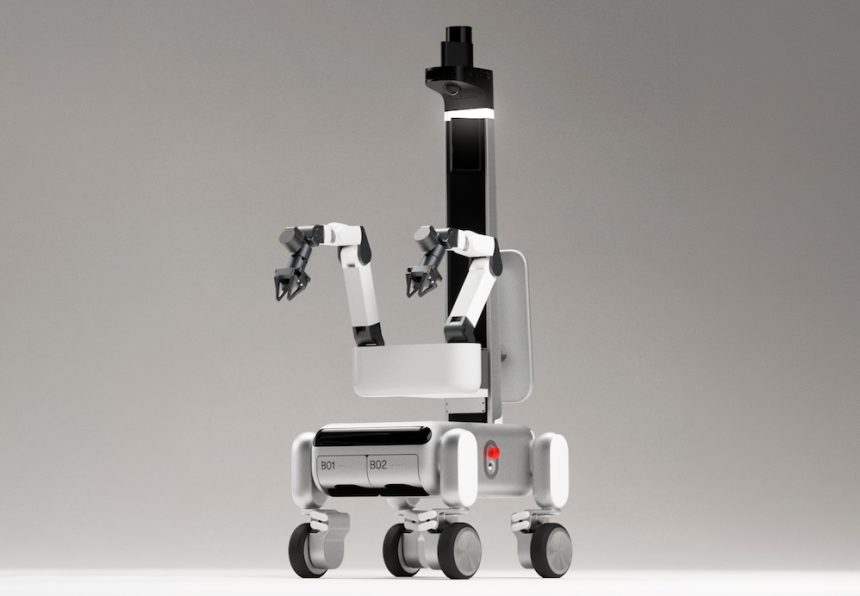
The numbers are the part worth lingering on. Proxie Gen 2 can push and pull carts weighing up to 1,500 lb and lift up to 220 lb using a vertical spine — a clever bit of mechanical design that lets it handle height variation rather than just shoving things around at floor level. There’s also an optional bimanual setup, giving the robot two arms for tasks that genuinely need a second hand.
Cobot also went on a diet. The Gen 2 ships with 40% fewer parts and a smaller footprint, which sounds like an accountant’s win until you realize what it’s actually for: squeezing through tight hallways and fitting into elevators. Anyone who has watched a bulky AMR get stuck at a doorway will appreciate why this matters in a real building rather than a tidy demo floor.
Power comes from lithium iron phosphate batteries paired with a self-swapping battery station, so the robot can keep itself topped up instead of sitting idle waiting for a charger. On the sensing side, an enhanced lidar package has been built in, designed to support future safety certification — a signal that Cobot wants these machines working alongside people, not fenced off in a cage.
Put it together and you get a robot that decides what to do, hauls serious weight, slips through human-sized spaces, and manages its own energy. The autonomy claims will need to prove themselves in messy real-world conditions, where “determine when materials are ready to move” is far harder than it sounds. But the ambition is clear.
Pricing follows the now-familiar robot-as-a-service model, starting at US$5,000 per month. Proxie Gen 2 is available to order, with deployments beginning this year. For warehouse and facility operators weighing the cost of labor against a monthly subscription, the math is about to get interesting.