An AI-generated image doesn’t need to be perfect to spread — it just needs to hit an emotional nerve. This week that lesson landed on Senator Mitch McConnell, who became the subject of a fabricated photo showing him tangled in tubes in a hospital bed, apparently in extreme distress. The picture ricocheted across Reddit and X before fact-checkers stepped in.
The tool that settled the argument wasn’t a trained human eye or a hunch about lighting inconsistencies. It was Google’s SynthID, and this marked its first high-profile real-world win. Snopes ran the viral image through SynthID and confirmed what a lot of people suspected: the photo was synthetic, generated rather than captured.
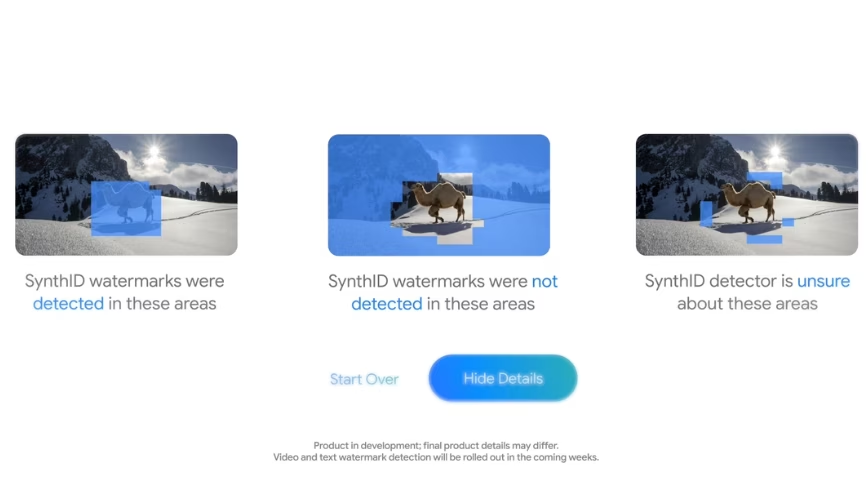
Here’s why that matters. SynthID isn’t a filter you apply after the fact, and it isn’t guesswork. It embeds an invisible signature directly into AI-generated content — a watermark woven into the pixels themselves, imperceptible to the human eye but readable by SynthID’s algorithms. When a photo carries that signature, the system can flag it as machine-made even after it’s been reposted, screenshotted and passed around a dozen times.
Google introduced the technology at its I/O developer conference in 2025, and it has been quietly building out ways for ordinary people to use it. You don’t need a lab or a subscription. You can:
- Ask a Gemini model whether an image carries a SynthID watermark;
- Upload the image to a public image-verification tool to check for the signature.
The McConnell case is a neat demonstration of the whole point. Detecting deepfakes by inspecting them manually is a losing race — generators keep getting better, and the tells that used to give them away (mangled hands, nonsensical text, uncanny skin) are disappearing fast. A watermark baked in at the moment of creation sidesteps that arms race entirely. Instead of asking “does this look fake?”, you ask “is the fingerprint here?”
There are limits worth being honest about. SynthID can only flag content produced by systems that actually apply the watermark, so a fake churned out by a tool that ignores the standard won’t light up. It’s not a universal lie detector for the internet. But as an increasing share of generated imagery passes through pipelines that support the signature, the net gets wider — and a debunk like the McConnell one becomes a matter of seconds rather than a drawn-out forensic exercise.
For a technology that spends its life being invisible, this was a very visible debut. The first time most people hear about a watermarking scheme is usually when it fails. This time, it worked — and it did so on a story that millions had already seen.