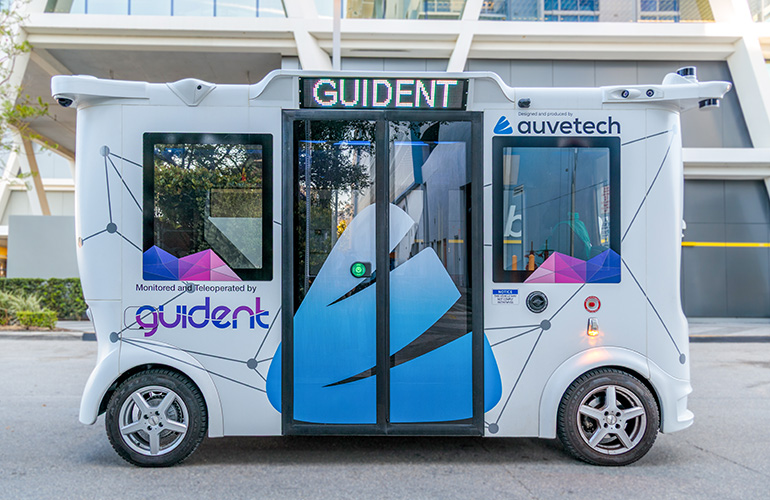
The rules of the road just changed for driverless cars in California — and this time the machines aren’t the only ones being held accountable. As of July 1, 2026, a fresh batch of autonomous-vehicle regulations handed city officials real leverage over the companies putting robotaxis and self-driving trucks on public streets.
Guident CEO Harald Braun laid out what the new framework actually means for operators, and the short version is this: the era of AV companies answering only to a state regulator is over. Local authorities now have a seat at the table, and they can throw the book at fleets that misbehave.
What the new mandates cover
- Traffic tickets: City officials can now issue citations for traffic violations committed by driverless vehicles — a notable shift, since previously there was no clear mechanism for penalizing a car with no human behind the wheel.
- Fleet size controls: The regulations stipulate limits on how many vehicles a company can deploy, giving municipalities a way to keep expansion in check rather than waking up to thousands of robotaxis overnight.
- Emergency geofencing: Authorities can use geofencing to restrict where AVs operate during emergencies — think wildfires, floods, or major incidents where a confused robotaxi is the last thing first responders need blocking a street.
Then there’s the headline number for heavy-duty autonomy. Before a heavy-duty AV can be commercially deployed in the state, it must accumulate at least 1,000,000 miles — including 200,000 miles in California specifically. That in-state requirement matters: a truck that’s only ever driven in the wide, dry lanes of Texas hasn’t proven it can handle California’s traffic density, weather, and road quirks.
Why it matters
For years, the driverless industry operated in a regulatory gray zone where accountability was fuzzy and enforcement mostly meant a state agency pulling permits after something went badly wrong. The new California regime tries to fix that with tools that operate at the local level and in real time — a ticket here, a geofence there, a hard mileage floor before a big rig ever carries freight autonomously.
It’s a meaningful recalibration of power. Cities that felt like passengers in their own streets now have brakes they can pull. And for AV companies, compliance is no longer a single checkbox with Sacramento — it’s an ongoing relationship with every municipality they roll into.
Braun’s takeaway is that operators who treated regulation as an afterthought are about to feel the difference. The million-mile bar in particular sets a high engineering and validation cost for heavy-duty players, while the ticketing and geofencing provisions make daily operations answerable in ways they simply weren’t before. The technology may be driverless, but the responsibility is anything but.