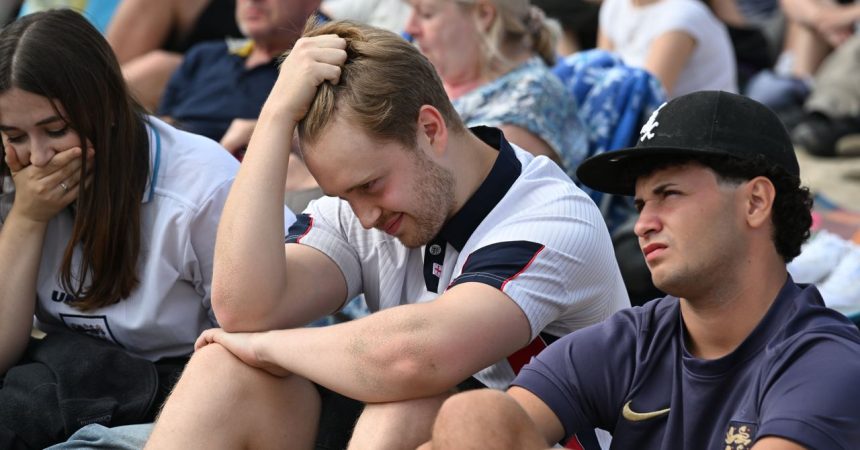
Think you’re ready for the 2026 World Cup final? Your cardiovascular system might disagree. Researchers at Germany’s Bielefeld University strapped smartwatches onto football fans and discovered exactly how much of a physical beating your body takes when your team is fighting for silverware.
The setup was refreshingly straightforward for a physiology study. The team tracked 229 supporters of German club Arminia Bielefeld over three months, using consumer wearables to continuously log heart rate and an estimated stress index derived from heart rate variability. That let them line up the day of the 2025 German Cup final against the ordinary days around it.
The numbers are blunt. Physiological stress climbed by around 41 percent during the final compared with a normal day. Average heart rate rose from 70.9 beats per minute to 78.7 bpm — a measurable jump even against other weekends. And crucially, the reaction didn’t wait for kickoff: stress markers started creeping up in the morning and peaked just before the match began, then lingered after the final whistle.
Where you watch matters enormously. Fans in the stadium averaged 94.2 bpm versus 79.4 bpm for those watching on television. After their team’s opening goal, supporters in the stands spiked to an average of up to 108 bpm.
Alcohol pours fuel on the fire. Participants who reported drinking during the match ran heart rates roughly 5 percent higher than the rest, and nearly 12 percent higher after their team’s first goal. The researchers didn’t assess medical risk directly, but they note alcohol can add cardiovascular strain in an already heightened emotional state.
Perhaps the most human finding: the body doesn’t calculate probabilities. Heart rates peaked in the tense, undecided opening minutes, then dropped once the outcome looked settled — only to spike again when two late goals went in, despite a comeback being mathematically hopeless. The authors read this as proof that the body responds to hope, pride and attachment, not cold odds.
This lines up with heavier clinical work. A study published in the New England Journal of Medicine after the 2006 World Cup in Germany found the risk of an acute cardiovascular event nearly tripled during German national team matches among people with preexisting heart conditions. Later research tied matches to spikes in stress hormones like cortisol, and showed that the fans who identify most strongly with their club show the most intense biological responses.
The practical takeaway for anyone glancing at their smartwatch during the final? Those elevated readings aren’t a glitch — they’re your body genuinely treating the game as a threat worth surviving. Maybe go easy on the pint before the penalty shootout.