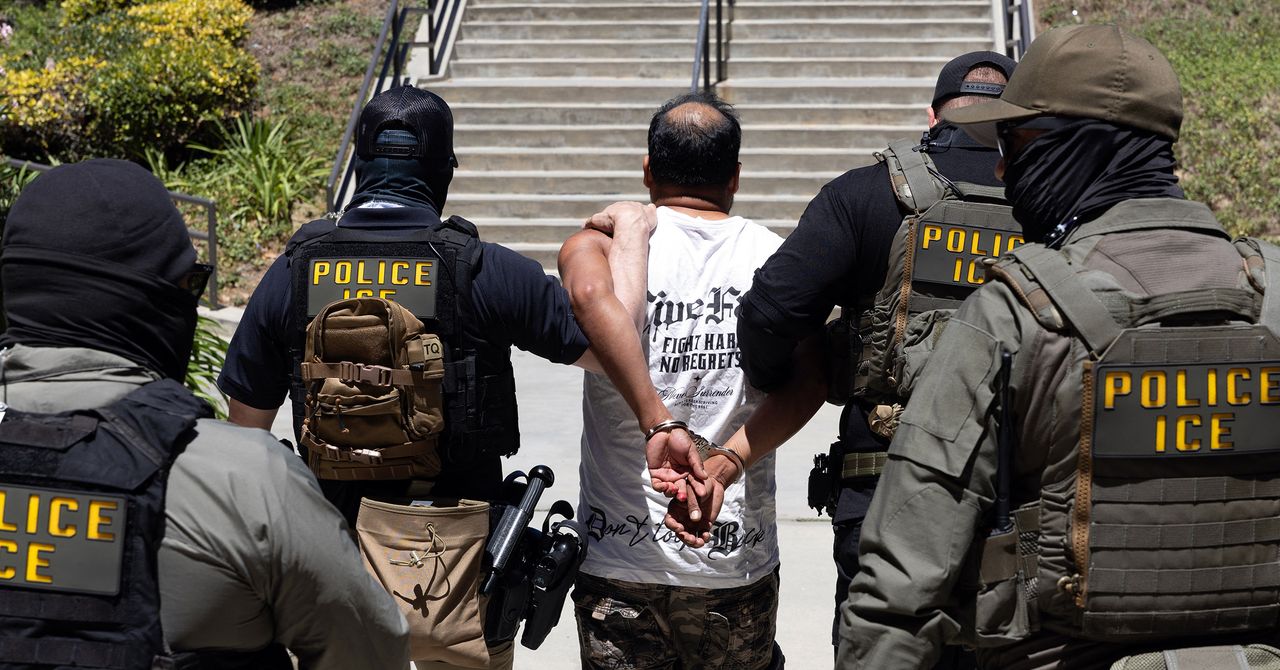
A targeting app built to find people for deportation may also have been lined up for a second job: hunting for illegal voters. Internal emails released through a Freedom of Information Act request show that Immigration and Customs Enforcement discussed loading processed voter roll data into ELITE, the Palantir-supported tool its agents use to identify enforcement targets. WIRED reported the story on October 8, 2026.
The records were obtained and published in early October 2026 by Democracy Forward, a legal advocacy group. Beyond the ELITE discussions, they show that DHS officials investigated over 150 nonprofit groups looking for evidence that they were helping noncitizens register to vote, and that ICE has become central to federal voter fraud investigations.
What ELITE is
ELITE stands for Enhanced Leads Identification & Targeting for Enforcement. Its existence was first reported by 404 Media in January 2026. According to that reporting, agents using the tool can:
- build maps of potential deportation targets;
- pull up a file on each person;
- see a “confidence score” for that person’s current address.
What the emails say
The voter fraud work is led by Homeland Security Investigations (HSI), one of ICE’s two major components. Its Innovation Lab, known internally as iLab, builds tools for agents. In a May 26 email with “Voter Fraud” in the subject line, a worker in HSI’s Countering Transnational Organized Crime unit wrote that iLab’s processing focuses on DOJ voting rolls and US Citizenship and Immigration Services data. Criminal histories were “currently excluded, with efforts underway to address this.”
The same email said coordination with iLab continued, “particularly on ingesting processed voter roll data into the ELITE enforcement system to enhance lead management, analytical review, and investigative tracking.” It also described a “network-based investigative approach” that would prioritize analysis of organizations and facilitators over individual leads.
ELITE came up again in a July 7 email with an attachment named “Fraud WAR”. WAR usually means weekly activity report. That email said Connecticut, Georgia, Kentucky, Missouri, Michigan and New Mexico had “been enriched by the iLab and are pending Palantir entry into ELITE.” The records don’t make clear what exactly was enriched. Another email in the chain said the update would be sent to the White House.
The denials
Palantir rejects the main implication. “Voter roll data has never been integrated into ELITE,” a company spokesman told WIRED. ICE said it does not disclose its investigative methods. DHS said HSI is “actively rooting out and investigating election fraud wherever it can be found.” The White House did not address ICE’s possible use of ELITE.
Chinmayi Sharma, an associate professor at Fordham Law School who has followed ELITE closely, reads the documents as describing a system still being built rather than one already deployed. She argues that DHS offers ready-made authorities, infrastructure, vendor relationships and contract vehicles, so building on an existing tool makes sense if the goal is a system that gets “good at determining how to find people to investigate.”
The bigger picture
All this comes ahead of the November 2026 midterms, as the Trump administration presses its claim that noncitizen voting is widespread. All available evidence shows such voting is vanishingly rare. DHS, under secretary Markwayne Mullin, has found only a handful of possible cases. In early October 2026, the Justice Department announced charges in 16 cases involving foreign nationals accused of voting-related crimes. All 16 were lawful permanent residents. In September 2026, a whistleblower alleged that federal employees directed by DHS leadership may have broken the law when they searched state websites for illegally registered voters.
Whether ELITE ever received voter data is still disputed. Either way, the emails show that ICE treated a deportation targeting platform as a natural home for election investigations.