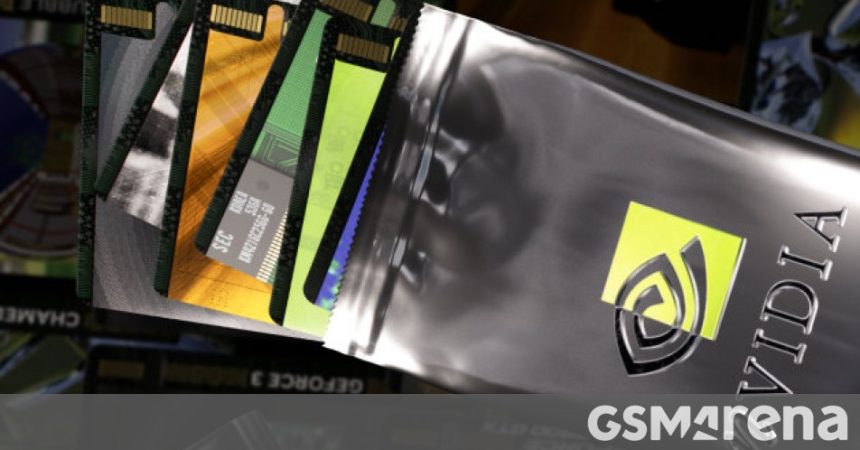
Nvidia has spent the past few years elbow-deep in AI silicon, so it’s easy to forget the company built its empire on frame rates and fragging. As a reminder — and perhaps a peace offering — Nvidia has rolled out the GeForce Trading Cards Series 1, a free collectible set celebrating some of PC gaming’s defining GeForce moments.
The collection spans 14 possible designs, and it reads like a tour through graphics history. Card hunters can chase the NV1, the legendary GeForce 256 (the chip Nvidia famously dubbed the world’s first GPU), the GeForce 3, the enthusiast darling GeForce 7800 GTX, the GeForce 10 Series, and the ray-tracing pioneer GeForce RTX 2080 Ti. It’s a lineup that essentially charts the evolution of real-time rendering, one silicon milestone at a time.
Nvidia didn’t stop at hardware, either. Several cards are inspired by the classic tech demos that showed off each generation’s muscle — the shimmering Bubble, the color-shifting Chameleon, and the stone-cold Medusa. For anyone who remembers loading these demos to justify a fresh GPU purchase, the throwback lands squarely in the feels.
Here’s the part that matters most: the cards are free. There’s no retail price because there’s no retail sale — at least not yet. Nvidia hasn’t announced any plans to sell the cards separately, so the only way in is through the company’s giveaways.
Distribution runs through the Summer of RTX promotions on Nvidia’s social channels, plus a handful of in-person events where physical cards are being handed out. Those include:
- Bilibili World 2026
- QuakeCon 2026
- gamescom 2026
The timing is telling. With new gaming GPUs not expected until next year, the trading cards are a low-cost, high-charm way for Nvidia to keep gamers engaged during a lull — a bit of brand affection while the roadmap catches up. It’s marketing, sure, but it’s the kind that acknowledges a fanbase’s history rather than just selling to it.
The Series 1 branding also hints that this is meant to be an ongoing thing rather than a one-off stunt. If the first set proves popular, it’s not hard to imagine future runs digging into more corners of GeForce lore. For now, though, the smart move is simple: follow Nvidia’s social feeds and, if you’re heading to any of the listed events, keep an eye out for a booth handing out cardboard nostalgia.
No frame rates, no benchmarks, no eye-watering MSRP — just a small, deliberate reminder that beneath all the data-center ambition, Nvidia still remembers where it came from.