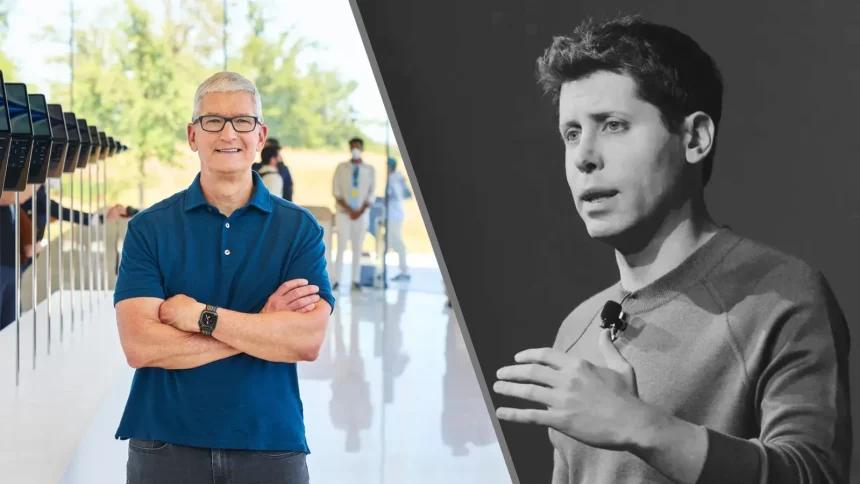
Apple rarely airs its grievances in public, so when it does it usually means the gloves are off. The company has filed a sweeping lawsuit against OpenAI, accusing the AI firm of systematically siphoning off confidential hardware knowledge as it builds out its own device ambitions. The complaint reads less like a routine IP dispute and more like a spy novel, complete with poached engineers, smuggled parts and coaching on how to beat security checks.
At the center of it is Tang Tan, OpenAI’s hardware chief and a former Apple VP — a name familiar to anyone who followed the iPhone’s product design leadership. According to the suit, Tan didn’t just recruit from his old employer; he allegedly turned interviews into intelligence-gathering exercises.
Here are the four allegations that stand out most:
- Bring the parts to the interview. Apple claims Tang Tan directed its employees interviewing at OpenAI to bring “actual parts” from Apple for “show and tell” sessions, using them to draw out confidential information.
- The laptop that never came back. Chang Liu, a former Apple senior systems electrical engineer, allegedly failed to return an Apple-issued laptop after leaving for OpenAI in January 2026. Apple says he accessed and downloaded dozens of confidential hardware files — covering unreleased products, engineering presentations and technical specifications.
- A guide to dodging exit checks. Tan is accused of circulating an Apple “Need to Know” offboarding document to teach new OpenAI hires how to slip past Apple’s exit security procedures.
- Working the supply chain. The complaint alleges OpenAI had a trusted Apple partner perform Apple’s proprietary metal-finishing technique while misleading that partner about having permission — and approached another Apple supplier using insider terminology to ask pointed questions about specific components.
The subtext is hard to miss. OpenAI has been openly assembling a hardware team, and Tan’s arrival was widely read as a signal that the company wants to build physical devices rather than live entirely in the cloud. Apple’s argument, in essence, is that OpenAI tried to shortcut years of internal engineering by lifting the parts of the recipe that matter most — materials science, manufacturing know-how and the roadmap for products that haven’t shipped yet.
None of these allegations have been proven, and OpenAI has not conceded any of them. Trade secret cases hinge on whether the information was genuinely confidential, whether reasonable steps were taken to protect it, and whether it was actually misappropriated — all of which will be fought over in court.
What makes this one worth watching is the collision it represents: the most secretive hardware company on the planet against the most aggressive AI company of the moment, both eyeing the same prize of a next-generation consumer device. However it resolves, it’s a rare glimpse into how the sausage — and the aluminum casing — actually gets made.