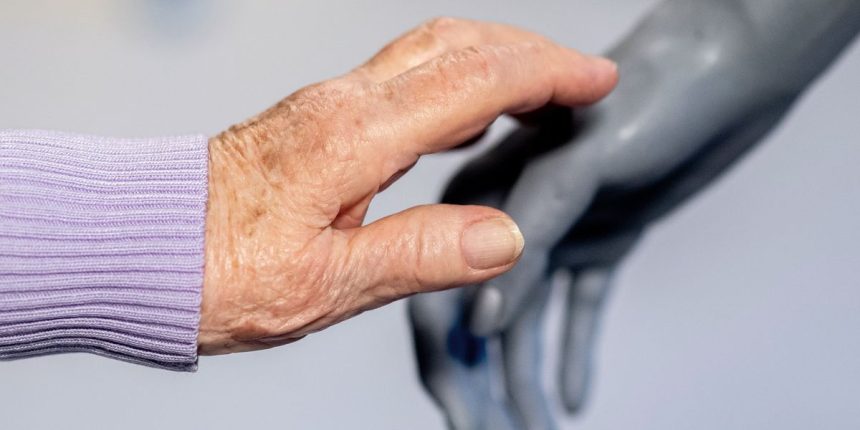
The rules that govern how robots behave in your living room are about to change — and one researcher thinks they aren’t changing nearly enough. The International Organization for Standardization (ISO) is updating ISO 13482, its 12-year-old safety framework for personal care robots. The timing is loaded: domestic humanoid makers are dragging their machines out of the lab and into actual homes, alongside real caregivers, children, pets and clutter.
The proposed update tackles hazard identification, risk assessment and various use scenarios. What it doesn’t do is set hard limits, propose test methods, or provide enforcement mechanisms. And according to Jae-Seong Lee, a technology policy researcher at the Electronics and Telecommunications Research Institute in Daejeon, South Korea, that omission is exactly where things get dangerous.
Lee’s central argument is that safety in a home isn’t a fixed property you can bolt onto a machine. It emerges from a relationship. Human-robot interaction is bidirectional: the robot changes what the person does, and the person changes what the robot perceives and decides to do next. Measuring collision avoidance or impact forces in a lab tells you almost nothing about that feedback loop.
Industrial robotics gets to cheat here. Factory designers can bound the task, the workspace and the population of people involved. A home robot enjoys no such luxury. Its entire value proposition depends on operating in uncontrolled spaces, adapting to elderly residents, curious toddlers, visitors and unpredictable behavior. As Lee puts it, those aren’t edge cases — they’re the baseline. Tighten the operating envelope to factory-like conditions and you no longer have a domestic humanoid at all; you have an expensive appliance that only works in a photo studio.
Training data doesn’t rescue the situation either. Companies building humanoid datasets are reportedly paying contract workers around the world to record their chores in ordinary settings, so the machines will learn from genuine domestic messiness rather than sanitized demonstrations. That variability is a feature — but it also means the safety problem lives in the composition of the entire human-robot system, not in any single sensor or actuator.
Then comes the uncomfortable question the standard largely dodges: who decides whose behavior counts as normal?
- Whose gait sets the movement baseline?
- Whose risk tolerance becomes the acceptable threshold?
- Whose definition of “safe judgment” gets written into the requirement language?
These are value judgments, not engineering ones. Lee notes that the people most affected — especially older adults, the primary intended users of care robots — aren’t systematically represented in the working groups shaping the standard. Their movement patterns and cognitive states simply aren’t embedded in the process.
The deeper stake isn’t a single injury. It’s that flawed safety assumptions get baked into products and standards before regulators or users can question them. Once deployment patterns harden, revising the baseline becomes brutally difficult. Lee’s prescription for engineers on the standards bodies is a subtle but sweeping shift: stop asking only whether the robot’s outputs stay within safe thresholds, and start asking what human states the robot engages with — and whether that engagement stays safe across all of them.