Autonomous vessels rarely make headlines the way flashy consumer gadgets do, but the machines Kraken Technology Group builds are quietly reshaping how navies and defense forces operate at sea — and investors have taken notice.
The British maker of uncrewed surface vessels closed a $175 million Series B funding round on July 9, 2026, a raise that valued the company at $1 billion. The plan for that war chest is refreshingly concrete: keep developing its fleet of uncrewed surface vessels and localize manufacturing in markets around the world, rather than funneling every hull through a single factory.
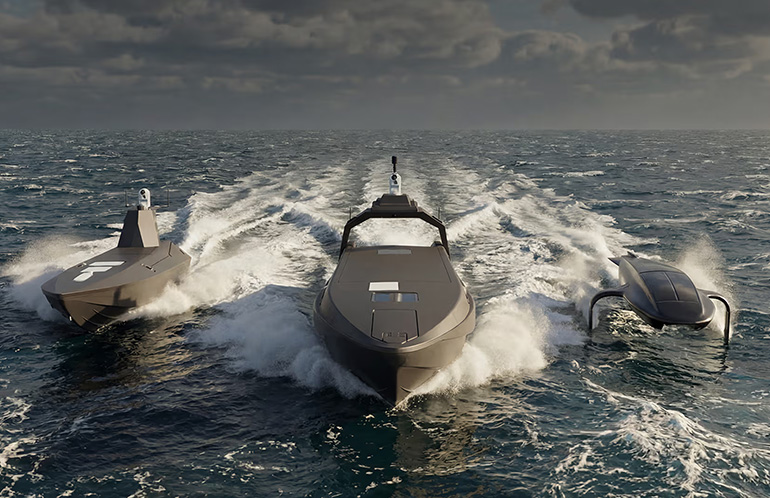
Kraken’s lineup reads like a naval order of battle. At the smaller end sits the K3 SCOUT, an 8.4-meter USV designed for long-range work — it can cover up to 650 nautical miles per trip at a top speed of roughly 28 miles per hour. That endurance is the whole point of an uncrewed platform: no crew to feed, rotate or put in harm’s way, just a boat that keeps going until the mission is done.
Then there’s the K4 MANTA, easily the most intriguing member of the family. This hybrid uncrewed surface/subsurface platform blurs the line between boat and submersible. Measuring 18 feet long, the Manta can dive to depths of more than 30 feet and haul up to 220 pounds of equipment — enough to carry sensors, payloads or specialized gear beneath the waves and back up again.
Rounding out the range are the heavier hitters: the K5 KRAKEN and the K7 SABRE, both built as heavy-duty, high-endurance vessels for the more demanding end of the mission spectrum.
What separates Kraken from the crowded field of maritime startups is that its hardware is already in the water on real deployments. The company holds contracts with the UK Ministry of Defence, NATO’s European partners and USSOCOM, and its platforms are reportedly in use across several active conflicts. That operational track record is exactly the kind of proof point that turns a Series B pitch into a billion-dollar valuation.
The localized-manufacturing angle matters more than it might sound. Defense buyers increasingly want supply chains close to home, both for security and for the ability to scale production quickly when demand spikes. By spreading assembly across multiple regions, Kraken is positioning itself to serve allied forces without the bottleneck of a single production line — a strategic bet as much as a logistical one.
These are not gadgets you’ll be adding to a shopping cart. But as autonomous systems creep from the lab into frontline service, Kraken’s rise is a useful reminder that some of the most consequential robotics right now are floating — and diving — far from shore.