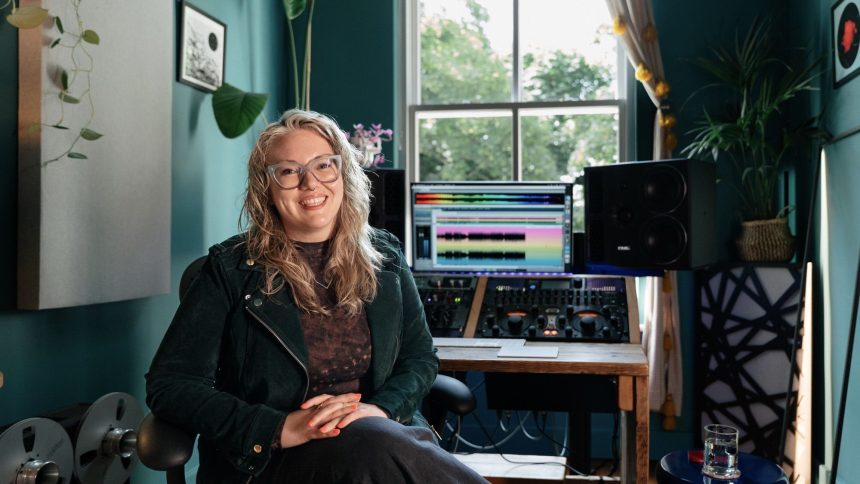
Every listening room has a personality, and the people who build records for a living have a ruthless way of exposing it: they cue up a handful of songs they know intimately and let the speakers confess. What Hi-Fi? recently asked eight sound engineers — veterans of Air Studios, Real World Studios and Strongroom Studios — which tracks they trust to ‘tune’ themselves into an unfamiliar control room. The answers are a masterclass in critical listening.
The brightness stress test. Rupert Coulson, who has worked with The Rolling Stones and Max Richter, reaches for You Get What You Give by the New Radicals — ‘possibly the brightest record ever made.’ If it doesn’t nearly take the enamel off your teeth at volume, the monitors are broken. He notes that front-of-house mixers favour Donald Fagen’s Nightfly precisely because it’s dry, punchy and — being mixed for vinyl — deliberately bass-light, so any reverb you hear is the room itself.
The balance benchmarks. Animesh Raval (Fontaines D.C., Pulp, The Last Dinner Party) leans on Massive Attack’s Teardrop, mixed by Spike Stent: deep, authoritative low end, a forward vocal that never turns aggressive, and a top end that either keeps its composure or ‘turns brittle.’ For a modern pop reference he uses Taylor Swift’s Anti-Hero, praising Serban Ghenea’s disciplined balance of tight low end and bright-but-smooth vocals. His most useful references, though, are his own mixes — because he knows exactly what the source sounded like and can hear what a speaker is adding or hiding.
Density and drama. Oli Middleton (Harry Styles, IDLES) picks Perfume Genius’s Slip Away for the way its airy intro detonates into a massive chorus ‘out of nowhere’ — proof a track can hit hard without leaning on distortion.
The low-end nightmare. Two engineers independently name Beyoncé’s Partition. One engineer calls the sweeping sub drops the fastest way to reveal room unevenness, adding that the kick drum shifting to a midrange-heavy character mid-song helps map the space. Another mastering engineer agrees, and also uses Nadine Shah’s Ladies for Babies (Goats for Love) as a roadmap they know inside out.
Translation checks. Mastering engineer Izzy McPhee favours Mitski’s Why Didn’t You Stop Me for its balance of electronic and band elements; crucially, every part still shines when you turn the volume down.