The next wave of humanoid robots and robot dogs won’t be arriving on American shores anytime soon — at least not the foreign-made kind. The Trump administration has moved to ban the import of new foreign-built humanoid robots, quadruped robots, and power inverters, calling them an “unacceptable” threat to national security. In practice, that means China, which dominates the global market in all three categories.
The U.S. Federal Communications Commission announced the ban on Tuesday. The agency’s reasoning leans on a familiar fear in the connected-device era: hardware built overseas could theoretically be remotely controlled or repurposed for surveillance by foreign governments, or drafted into cyberattacks. When a robot can walk through your home or a workplace, or an inverter sits wired into the power grid, that concern carries more weight than it might for, say, a smart lightbulb.
There is a release valve. The FCC said exceptions would be granted if the government determines that a specific device does not pose a risk to U.S. national security — a case-by-case escape hatch rather than a blanket permanent wall.
Here’s what the ban actually touches:
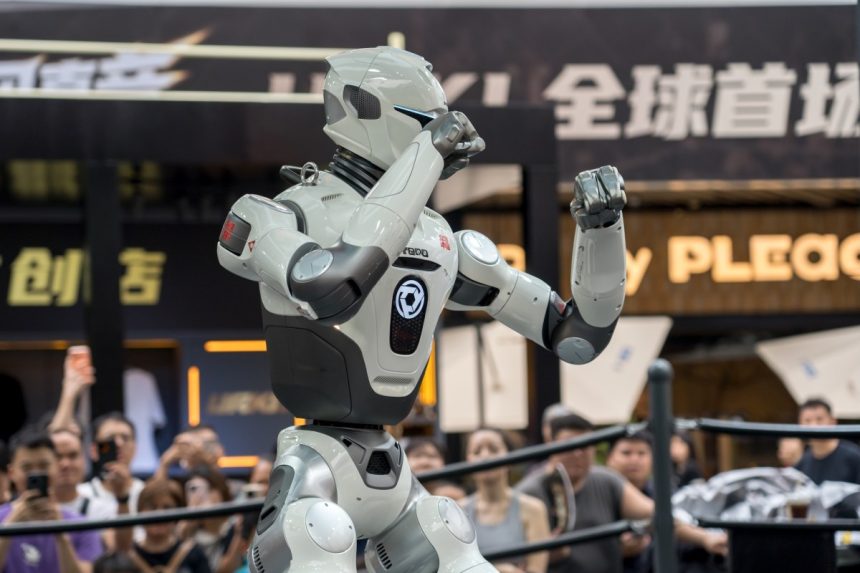
- Humanoid robots — the human-like machines that are still very much in their infancy. Only around 15,000 humanoid robots shipped worldwide in 2025, with China’s two largest robot makers accounting for the majority of them.
- Robot dogs — the four-legged quadruped robots that have found roles in inspection, security, and research.
- Power inverters — by far the most mainstream of the trio, these connect home solar and other renewable energy systems to the wider grid.
Crucially, the ban applies only to new imports. The FCC confirmed that existing devices already installed in American homes and facilities are unaffected, so anyone running a foreign-made inverter on their solar array won’t suddenly be out of compliance.
This isn’t happening in a vacuum. It’s the latest entry in a growing list of U.S. actions targeting Chinese tech, following the forced sale of TikTok to U.S. investors, restrictions on a broad range of foreign-made consumer routers, and bans on surveillance equipment makers Hikvision and Dahua. Washington has long accused Beijing of hacking U.S. businesses and positioning itself for future cyberattacks, while also warning that Chinese ownership alone could let the government compel a company to spy or tamper remotely. It’s worth noting the U.S. government holds broadly similar legal powers over its own firms.
Beijing didn’t take it quietly. A Foreign Ministry spokesperson, quoted by the Associated Press, said China would use “all measures necessary” to protect its businesses. The timing is pointed, too: Chinese president Xi Jinping is expected to meet President Donald Trump in Washington, D.C., during a planned state visit in September.