The AI companion nobody asked for just got louder. Avi Schiffmann’s Friend pendant, the always-listening wearable that critics have branded dystopian since it went viral in 2024, now has a second iteration — and this time it talks back.
The headline change is a speaker mounted on the back of the pendant, letting the device voice its responses aloud instead of firing off text messages like the original did. That addition reshaped the hardware: the underside is noticeably bulkier to accommodate the driver. Under the hood, the AI has also been upgraded, now running OpenAI’s latest models.
Where Friend gets genuinely strange is personalization — or the lack of it. Each new pendant ships with a randomly assigned voice and personality that’s already locked in. You can’t change the voice or the name. Whatever companion you get out of the box is the one you’re stuck with, for better or worse.
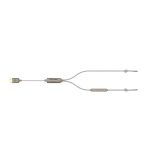
The new model costs US$249, nearly double the original’s US$129 price. You can buy it now on Friend.com, the domain Schiffmann reportedly paid US$1.8 million for. There’s also an optional US$10 monthly subscription that extends the AI’s memory of your conversations beyond 30 days. A colorful accessory cord collection is promised for later this year.
Schiffmann, now 24, first made headlines in 2020 as a teenager building a COVID-19 case tracker. These days he’s better known — and more notorious — for a device that has drawn comparisons to Black Mirror. His marketing has arguably overshadowed the product itself: billboard campaigns across New York, Los Angeles and Chicago in 2025, followed by Paris in early 2026, were graffitied by protesters who accused the ads of devaluing human connection.
Schiffmann leans into the friction. He describes Friend as “both real but also, like, ridiculous,” and openly frames the whole endeavour as an extension of himself — an “inherently egomaniacal ambition,” in his words. His pitch is oddly analog: he says he has no internet at home, listens to music on a record player, and is shooting a documentary about himself on Kodak Ektachrome film. Even the controversial ad blitz, he argues, was analog by design.
The company’s promotional videos follow the same uneasy tone — retro color grading over portraits of lonely or depressed users asking the pendant whether they’ll ever get married or whether their creative work is any good. Schiffmann insists the bleakness is deliberate.
Commercially, he sold his first run of 5,000 pendants and now aims to move 50,000 of the second version. One market that won’t see it: the European Union, which Schiffmann says he’ll likely abandon because complying with GDPR data privacy rules makes selling there too expensive.
“How do you make lonely weirdos look cool?” Schiffmann asks. “I think it’s kind of interesting.” Whether buyers agree at nearly twice the price is another question entirely.