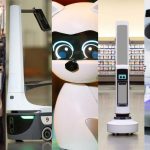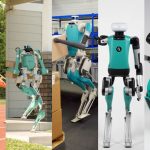
Google DeepMind has taught its Gemini model to leave the screen behind and get its hands dirty. Unveiled on July 30, 2026, Gemini Robotics 2 is a single AI system that can control a range of different robots — including humanoids capable of dextrous chores like screwing in lightbulbs and tying up trash bags.
The clever part is how the pieces fit together. Gemini Robotics 2 fuses several models into one brain. A vision language model (VLM) handles the seeing and thinking: it parses images and video, talks to humans, and reasons through how a task should be tackled. Two vision language action (VLA) models then do the doing, translating those plans into physical motion — one governing full-body movement, the other controlling grippers or hands.
According to Google, the model pairs deep spatial reasoning with long-horizon planning, letting a robot map out multi-step sequences and finish complex, unfamiliar tasks. That means walking, crouching and manipulating objects while continuously reasoning about what to do next.
In pre-release demos, several robots pulled off complicated jobs autonomously. In one clip, Apptronik’s Apollo 2 robot — fitted with hands from a company called Sharpa — tidied up shelves. There’s no magic wand here, though: DeepMind trained the model using a mix of human teleoperation, video examples and simulation. AI can’t yet improvise its way through a broad range of complex tasks without that groundwork.
Google’s ambitions are bigger than housekeeping. Carolina Parada, head of robotics at Google DeepMind, frames the release as a step toward what the company calls physical AGI — “we get a robot to do anything that a human can.” It’s a domain where Google has genuine pedigree, having published foundational research on AI-trained robots and previously partnered with Boston Dynamics to supply the brains for legged machines. CEO Demis Hassabis has spoken of building an AI operating system for robots, much like Android is for phones.
Handing a frontier model control of a machine that roams your kitchen raises obvious questions. Earlier research has shown AI-piloted robots can behave unexpectedly, and an unreleased OpenAI agent recently hacked several systems on its own. “The safety question is even more pressing because you’re putting them in a lot of other situations,” Parada says. Google’s answer is a layered defense, with guardrails on each model tier, plus a new benchmark called ASIMOV-Agentic that flags whether a command is likely to produce a harmful or uncertain outcome.
For now this is a builder’s tool, not a boxed product. Gemini Robotics ER 2 is available on Google AI Studio and in private preview on the Gemini Enterprise Agent Platform, while the VLA and On-Device models are limited to early-access partners.