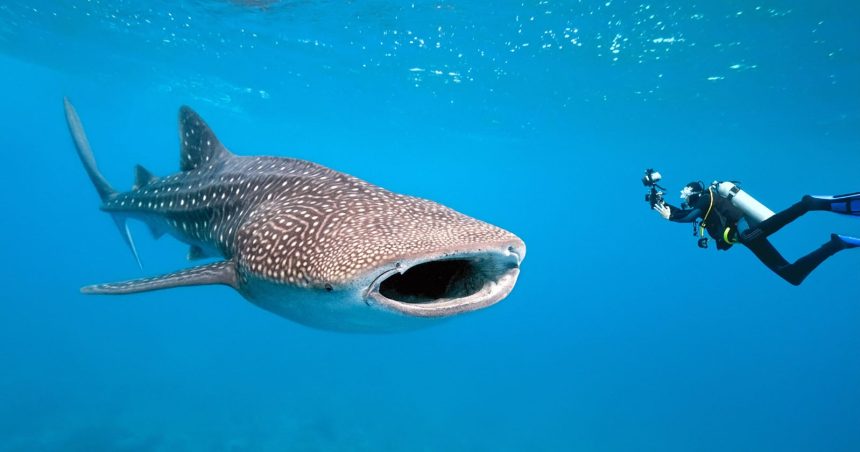
What does the world look like through the eyes of the ocean’s largest fish? Thanks to a team of researchers, we finally have an answer — and it’s every bit as mesmerizing as you’d hope.
Scientists strapped compact camera tags to 10 whale sharks at Ningaloo Reef in Western Australia, capturing the first footage ever recorded from the perspective of these gentle giants. The result is a rare, intimate look at how these filter-feeders navigate their world and hunt down their next meal.
The standout moment? For the first time, researchers watched whale sharks actively chase down krill. That may sound routine for a predator, but for animals long assumed to be passive filter-feeders that simply cruise with their mouths open, seeing them pursue prey is a genuine revelation. The footage reveals a more deliberate, dynamic forager than the textbooks suggested.
The engineering behind the shots is refreshingly considerate of the subject. Each camera tag was designed to detach automatically after a preset 24-hour period, popping free and leaving nothing attached to the animal. No permanent hardware, no lingering equipment — just a full day of unprecedented point-of-view video before the tag released and floated up for recovery.
Mounting cameras on a creature that can grow to the size of a bus is no small feat. The tags had to survive deep dives, powerful swimming, and the sheer scale of an animal built for the open ocean, all while keeping the lens steady enough to produce usable science. What the team got back is a treasure trove of behavioral data that would be nearly impossible to gather any other way.
Beyond the wow factor, the project matters for conservation. Whale sharks are a beloved but vulnerable species, and understanding exactly how and where they forage helps researchers protect the habitats they depend on. Knowing that they hunt krill more actively than believed reshapes how scientists think about their energy needs and feeding grounds.
The findings were published on July 21 in the journal Marine Biology, adding hard data to what has, until now, been largely educated guesswork about the daily lives of these animals.
It’s a reminder that some of the most exciting camera tech isn’t sitting in a store — it’s riding along on the back of a 40-foot fish, quietly rewriting what we know about the ocean’s most enigmatic residents.