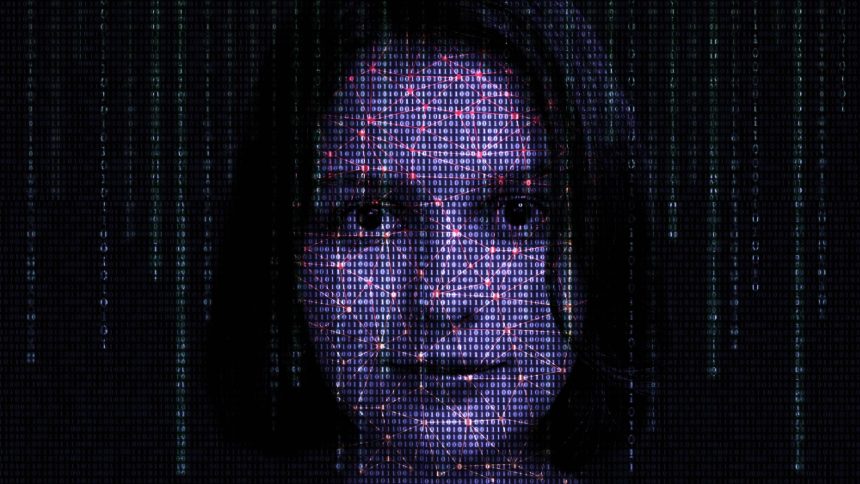
Imagine scrolling through your feed and finding your own face staring back at you — except it isn’t quite your face, and you never recorded that video. That’s the surreal, deeply unsettling reality creator Paige Davis found herself in when an AI clone hijacked her likeness, sparking a fight that laid bare just how badly Big Tech protects the everyday people who fuel its platforms.
The technique behind the theft has a name that sounds almost benign: reskinning. Here’s how it works. Fraudulent accounts scrape a genuine creator’s video, strip out the original voice audio, and then bolt that authentic-sounding track onto AI-generated footage using face-swap tools. The result is a Frankenstein clip — real voice, fake face — engineered to look and sound convincing enough to fool casual viewers.
As Davis put it, “all she did was change the face.” That single sentence captures the eerie simplicity of the con. The heavy lifting of authenticity — the tone, the cadence, the personality baked into a creator’s voice — is lifted wholesale from the victim. The AI only needs to paper over the visuals.
What makes her story more than a one-off horror show is what happened next. When Davis tried to get the impostor content taken down, she ran headfirst into the systemic failure at the heart of modern content moderation. Reporting stolen likenesses is slow, opaque and frequently futile, leaving individual creators to police platforms that have every incentive to keep engagement flowing and little urgency to act on behalf of a single wronged user.
This is the uncomfortable underbelly of the generative-AI boom. Face-swap and voice tools were sold as playful novelties and creative shortcuts, but the same technology drops a ready-made kit for impersonation into anyone’s hands. The barrier to cloning a real person’s identity has never been lower, and the tools to fight back — verification, rapid takedowns, provenance tracking — remain frustratingly immature by comparison.
For creators, the implications are sobering:
- Your voice is now an asset thieves want. Audio is harder to fake convincingly than video, which is precisely why reskinners steal it rather than synthesize it.
- Takedown systems weren’t built for this. Copyright and impersonation reporting tools were designed for a slower, less automated era of fraud.
- The burden falls on the victim. Platforms largely expect wronged individuals to find, document and chase down each fake themselves.
Davis’s ordeal is a warning shot. As reskinning tools grow cheaper and more seamless, the line between an authentic creator and their AI-generated doppelgänger keeps blurring. Until platforms treat identity theft with the same seriousness they reserve for their own copyright interests, the people who build audiences — and the audiences who trust them — are left exposed. Her fight may be personal, but the problem it exposes belongs to everyone who has ever posted their face and voice online.