The U.S. Navy just handed a serious vote of confidence to unmanned shipbuilding. On August 4, 2026, the Naval Oceanographic Office (NAVOCEANO) selected Blue Water Autonomy for a multiple-award contract to map the deep ocean floor using long-endurance uncrewed surface vessels — no crew, no bunks, no coffee machine, just steel, sensors and software crossing open water for months at a stretch.
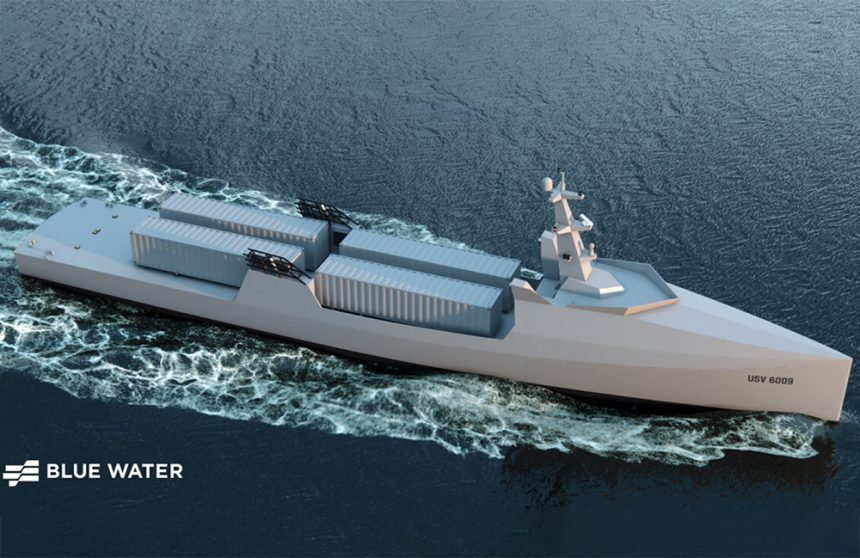
The star of the show is the Liberty Class, a 190-foot steel autonomous ship built to shrug off the kind of blue-water conditions that would make a small crewed research vessel turn for home. This is not a scaled-up drone boat. It’s a genuinely large platform designed to stay out there and get work done.
The headline numbers back that up:
- 190-foot steel hull
- Range of over 10,000 nautical miles
- Payload capacity of over 150 metric tons
That endurance is the whole point. High-resolution ocean floor mapping is painstakingly slow work — you sail methodical grid patterns for weeks, keeping survey gear steady and consistent. A vessel that can run for months without a crew rotation changes the economics of the job entirely. It also frees human operators from the tedium and risk of babysitting instruments in the middle of nowhere.
Blue Water Autonomy specializes in exactly this: ships that operate autonomously on the open ocean for extended stretches, months at a time. The company isn’t just floating renderings, either. Construction of the first Liberty Class vessel began at Conrad Shipyard in March 2026, following the platform’s announcement on February 11, 2026. That first ship is expected to be completed for the U.S. Navy later in 2026.
For NAVOCEANO, the appeal is straightforward. Detailed bathymetric charts underpin everything from navigation safety to submarine operations, and vast swaths of the seafloor remain poorly mapped simply because surveying them the old-fashioned way is expensive and time-consuming. Throwing a fleet of tireless, long-range autonomous vessels at the problem is a way to cover far more water for the same effort.
The multiple-award structure of the contract is worth noting too. Rather than betting everything on a single supplier, the Navy is keeping options open across several vendors — a signal that uncrewed surface vessels have moved from experimental curiosity to a procurement category the service intends to build out seriously.
With a 150-metric-ton payload, the Liberty Class also isn’t locked into survey duty. That’s a lot of room for whatever sensor suite, communications gear or mission-specific hardware the Navy wants to bolt on down the line. For now, though, the assignment is clear: point these robotic ships at the deep ocean and start filling in the map.