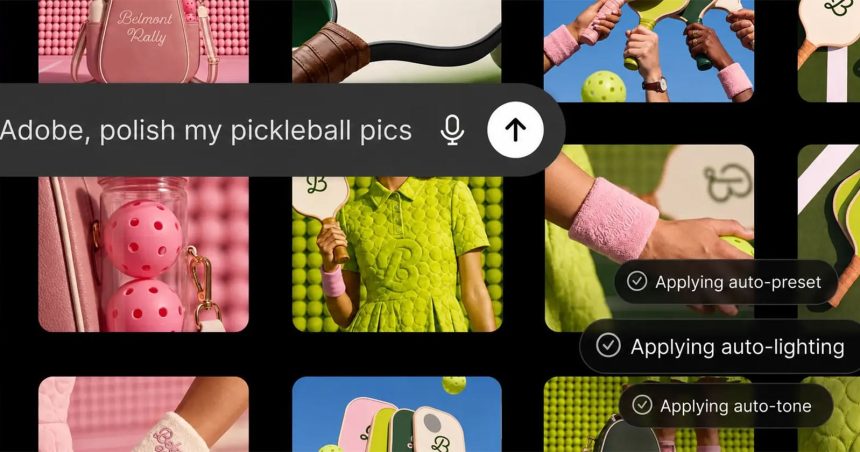
Adobe has just made its boldest move yet in the AI arms race, and it’s aimed squarely at Canva. On August 6, 2026, the company rolled out the Adobe plugin for ChatGPT, dropping its entire creative arsenal directly into OpenAI’s conversational assistant. This isn’t a token integration of one or two apps — it’s the whole studio.
The move builds on Adobe’s earlier experiment, when it wired Photoshop, Express, and Acrobat into ChatGPT late last year. That was a warm-up. The new plugin pulls in over 70 Adobe tools, including Photoshop, Lightroom, Premiere, Express, Firefly, Acrobat, Illustrator, InDesign, and Adobe Stock. In other words, the bulk of the Creative Cloud lineup is now a chat prompt away.
Here’s the part that stings the competition: it’s free. You don’t need a Creative Cloud subscription to start using it. That pricing decision alone reframes the battle, positioning Adobe against Canva’s approachable, low-friction model rather than its own traditional pro-tier gatekeeping.
So what can you actually do? Quite a lot, and without leaving the conversation:
- Edit photos with plain-language instructions
- Resize videos for different platforms
- Generate polished social media assets using Firefly and other Adobe tools
The clever bit is the plumbing underneath. Instead of forcing you to pick the right app for each task, the plugin automatically routes your request to the correct Adobe application. Ask it to retouch an image and it quietly hands the job to the right tool; ask it to trim a clip and a different engine takes over. This orchestration runs on the Model Context Protocol (MCP), the emerging standard that lets AI assistants talk to external tools in a structured, reliable way.
What makes this genuinely interesting is the shift in interaction model. For decades, creative work meant learning the interface — the layers, the timelines, the panels, the muscle memory. Adobe is betting that a growing slice of users would rather just describe what they want and let the software figure out which of its 70-plus tools to summon. That’s a very different pitch from Adobe’s classic identity as the home of deep, professional-grade control.
The plugin is available across the board from launch: web, desktop app, and mobile. That ubiquity matters, because it means a quick edit on your phone taps the same underlying engines as a heavier session at your desk.
Whether this converts casual ChatGPT users into eventual Creative Cloud subscribers, or simply keeps Adobe’s name in front of a generation raised on conversational AI, remains to be seen. But the strategic message is unmistakable. Adobe no longer wants to be the app you open — it wants to be the engine humming behind the assistant you already talk to every day. For Canva, that’s a shot across the bow.