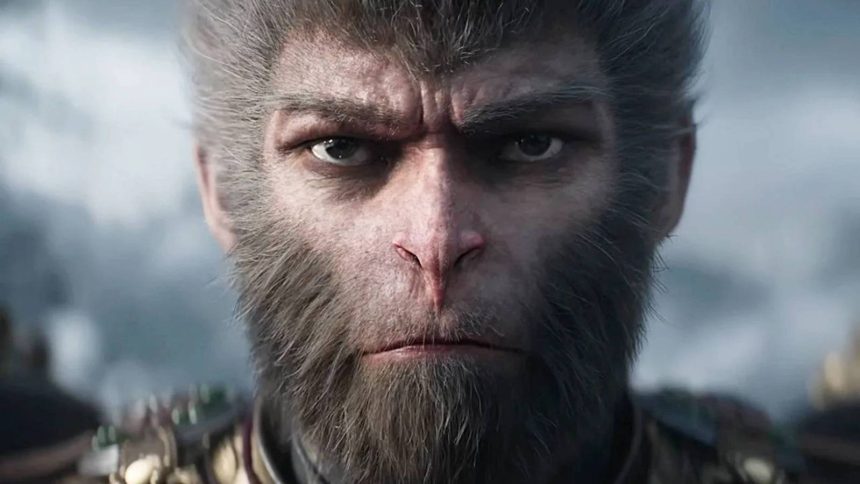
The team behind Black Myth: Wukong has drawn a firm line in the sand for its next project — and it has nothing to do with hardware and everything to do with philosophy. Game Science, the Chinese studio that turned a Ming-dynasty legend into one of the most talked-about action RPGs of recent years, says its follow-up, Black Myth: Zhong Kui, will be built without generative AI in the creative pipeline.
The reasoning, according to the developers, comes from an unexpected place: cinema. The studio pointed to Christopher Nolan’s approach to filmmaking as its guiding star, citing his upcoming adaptation of The Odyssey as a benchmark for how much craft matters when you’re chasing something genuinely memorable. In short, if a director is willing to shoot practically and sweat every detail rather than lean on shortcuts, a game studio building a mythological epic should hold itself to the same standard.
That’s a bold stance in an industry increasingly comfortable with AI-assisted asset creation, procedural texturing and automated dialogue tools. Plenty of studios now use these techniques to speed up production and trim budgets. Game Science is effectively betting the opposite way — arguing that hand-crafted art, animation and world-building are the whole point, not overhead to be optimized away.
There is a catch, and the studio isn’t hiding it: doing things the slow way takes time. Zhong Kui is expected to have a longer development cycle as a result, with the game still in early stages and a likely arrival somewhere around 2028. If you were hoping to descend into Chinese folklore again in the near term, patience will be required.
For anyone who missed the phenomenon, Black Myth: Wukong leaned heavily on Journey to the West and became a showcase for dense, atmospheric environments and demanding, spectacle-driven combat. Zhong Kui shifts focus to another towering figure from Chinese mythology — the demon-queller himself — which suggests the studio wants to keep mining that rich cultural seam rather than chase a Western-friendly reboot.
What makes this interesting beyond the fan hype is what it signals about creative identity. Studios that built their reputation on visual craftsmanship are now being forced to publicly define where they stand on AI, and Game Science has chosen the artisanal route loudly and deliberately. Whether that translates into a better game or simply a more expensive one is the open question.
For now, there’s no release date locked in, no pricing and no platform confirmation to report. What we do have is a clear statement of intent: the people who made Wukong want their next myth to be built by human hands, even if that means the wait gets longer.