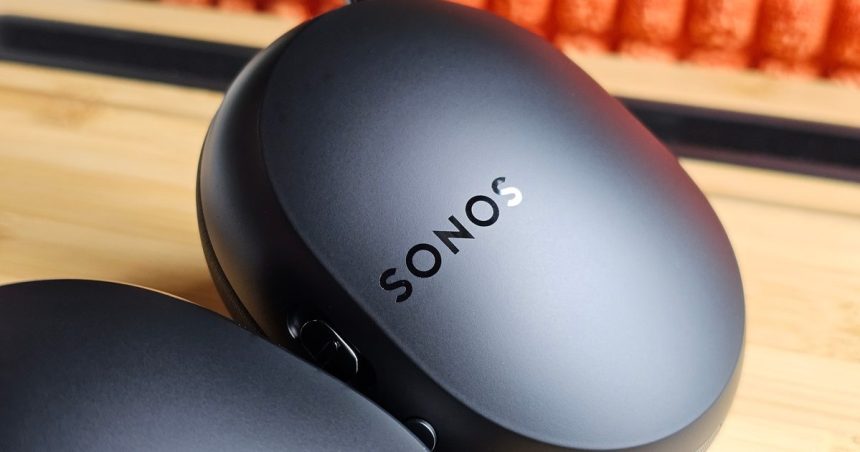
Sonos is lining up a second attempt at premium wireless headphones, and the Sonos Ace Ultra looks like a far more ambitious effort than the pair it succeeds. The model surfaced through an FCC filing dated August 10, 2026, with much of the paperwork redacted — but enough slipped through to confirm both the name and a couple of genuinely interesting details.
The first is variety. Where the original Ace shipped in 2024 in just black and white, the Ace Ultra is set to arrive in five colours: Greige, Shadow Black, Agave, Blush and Sand. That is a real shift for a company that has historically played it safe with monochrome hardware.
The filing also spells out the connectivity you would expect from a modern flagship: Bluetooth alongside both 2.4 GHz and 5 GHz Wi-Fi. That dual-band Wi-Fi is the sort of plumbing that hints at deeper integration with Sonos’ whole-home system — precisely the thing the first Ace was criticised for lacking.
But the headline is the voice angle. Technical details in the filing suggest the Ace Ultra could support voice commands, potentially letting users talk to AI assistants directly through the headset. According to Bloomberg, that would patch a glaring hole in the first-generation Ace, which had no support for voice interactions with AI chatbots.
This slots neatly into the broader story Sonos is telling. CEO Tom Conrad has framed AI as a route to “conversational computing and predictive intelligence” in the home, rather than yet another chatbot bolted onto a gadget. The company already has its own Sonos Voice Control assistant, which it has extended to handle Philips Hue lighting and Lutron Caséta accessories, and Conrad wants voice interactions to feel natural instead of something you consciously trigger.
Sonos is also pitching its multi-room setup as an AI advantage. Instead of an assistant trapped inside a single device, the idea is for the hardware to understand a home’s layout and how people move between rooms.
There is history riding on this. The original Ace was a handsome piece of industrial design, but its thin integration with the wider Sonos ecosystem stung: owners could privately pipe TV audio from a soundbar into the headphones, yet couldn’t seamlessly hand music off between home speakers and the Ace. Then came the company’s troubled 2024 mobile-app overhaul, which dented sales and prompted Sonos to pause new hardware. Conrad has since admitted that launching the Ace without deeper system integration was a mistake.
The Ace Ultra reads like a deliberate do-over — a more mature headphone strategy fused with the company’s connected-home ambitions. The timing lines up too: Conrad flagged a September product launch during a recent earnings call, and the FCC filing strongly suggests the Ace Ultra will be part of it.
The bigger question is whether smarter voice tricks are enough to pull buyers away from Apple, Sony or Bose. As of now, Sonos has not officially announced the Ace Ultra, and pricing remains unconfirmed. For a company with something to prove, AI may be its most persuasive pitch yet.