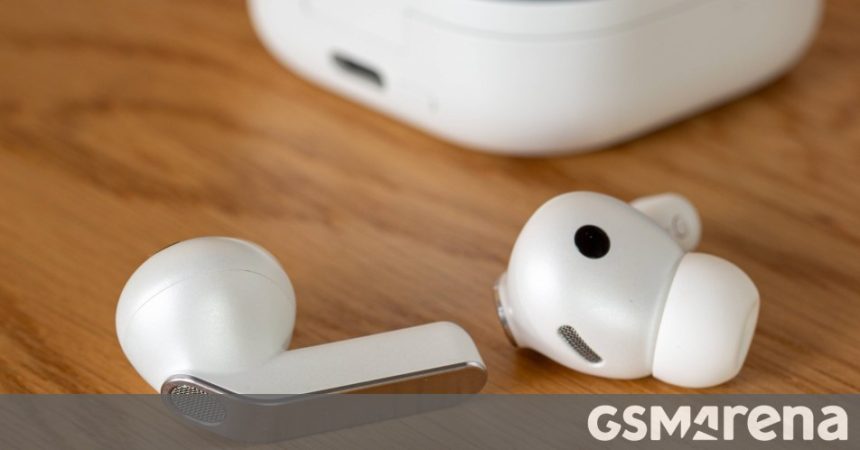
Your earbuds now double as a certified hearing aid. On August 11, 2026, the US Food and Drug Administration cleared Samsung’s Hearing Aid feature as an over-the-counter solution for adults aged 18 and above, turning the Galaxy Buds 3 Pro and Galaxy Buds 4 Pro into a genuine alternative to standalone devices — no prescription, no clinic visit required.
The target audience is people with mild to moderate hearing loss: the kind who struggle to follow a conversation across a noisy restaurant table. Instead of buying dedicated hardware, they can lean on earbuds many already own.
Getting set up doesn’t mean an audiologist appointment. Samsung bakes a Hearing Test straight into the Settings menu, which screens for potential hearing loss in about five minutes and returns medical-grade results. From there, the buds personalize amplification using NAL-NL2, a globally recognized clinical fitting formula — the same math professional fitters use to match gain to a specific hearing profile.
Raw amplification would be useless in exactly the environments these users need help with, so the feature leans on the buds’ existing hardware. Noise elimination and beamforming work together to lock onto the voice in front of you while suppressing the clatter behind it. It’s the same directional trickery high-end hearing aids charge a premium for, running on earbuds you’d also use for music.
Battery life holds up for all-day use: up to 7 hours per earbud and 30 hours total with the charging case. That’s enough to get through a workday of meetings without ducking away to top up.
The value proposition sharpens when you look at the price tags. The Galaxy Buds 4 Pro sell for US$173, and the Galaxy Buds 3 Pro for US$134.95 — a fraction of what traditional hearing aids can cost, with the added bonus that they don’t announce to the world that you’re wearing hearing aids.
A few caveats. This is a screening-and-assist tool for mild to moderate loss, not a substitute for a full clinical evaluation if your hearing is significantly impaired. And while the FDA clearance is in hand, the feature itself is rolling out in Q4 2026 across the US and select markets — so it isn’t live on your buds just yet.
Still, it’s a meaningful shift. Samsung has spent years stacking health-tracking features across its ecosystem, and folding hearing assistance into mainstream earbuds nudges the category out of the medical-device aisle and into everyday tech. For millions who put off dealing with hearing loss because of cost or stigma, the barrier just got a lot lower.