For years, deploying an autonomous floor scrubber meant playing chauffeur first. A human operator would manually walk or drive the robot along every corridor, teaching it a route it would then repeat ad nauseam. That teach-and-repeat era is now firmly in the rearview mirror, thanks to Brain Corp’s SelfPath AI.
Introduced as the centerpiece of the BrainOS Clean 2.0 release, SelfPath AI landed in March 2026 and reached full fleetwide availability across Tennant’s X-series robotic floor cleaners in May 2026. The pitch is refreshingly simple: stop training robots, and let them figure it out themselves.
Rather than blindly following a memorized track, a SelfPath-equipped machine plans and continuously refines its own cleaning paths, even in cluttered, unpredictable spaces like warehouses, airports, and big-box retail floors. In practice, that removes one of the most time-consuming and error-prone steps in commercial robotics deployment.
Three capabilities do the heavy lifting here:
- Autonomous path planning — the robot independently maps and optimizes its cleaning route, eliminating the need for manual route training.
- Enhanced Visual Perception — machines build a genuine contextual understanding of their surroundings, which feeds both cleaning performance and on-floor safety.
- Dynamic Replanning and Recovery — when an aisle is blocked or an unexpected obstacle appears, the robot reroutes on the fly instead of grinding to a halt and waiting for a human.
That last point matters more than it sounds. A conventional teach-and-repeat scrubber that hits a stray pallet or a spill it wasn’t trained around tends to stop, stall, and page a technician. SelfPath AI turns those dead ends into detours, keeping the robot productive during the messy, real-world moments that used to break the workflow.
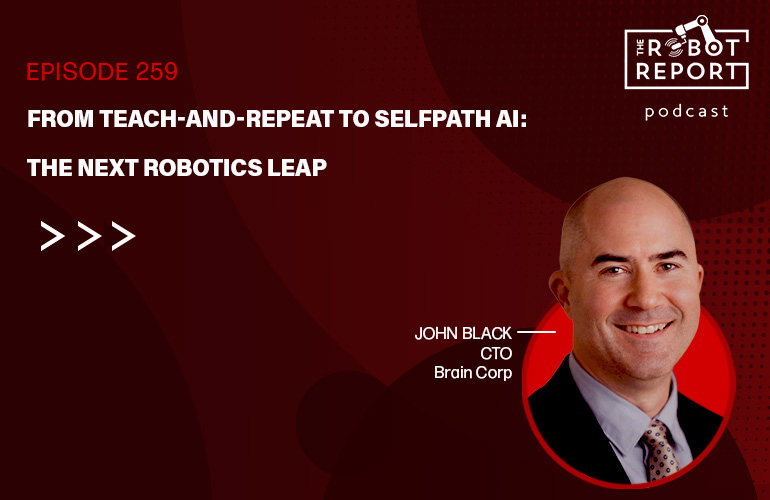
Brain Corp’s chief technology officer, John Black, frames the shift as fundamentally about trust — the willingness of operators to hand more decision-making to a fleet of machines. It’s a fair concern. Every layer of autonomy you add is a layer where the robot’s judgment replaces a human’s, and that only works if the perception and recovery systems are dependable enough to earn the leash. The emphasis on contextual visual understanding, rather than rote route memory, is the technical foundation for that trust.
It’s worth being clear about what SelfPath AI actually is: not a gadget you buy off a shelf, but a software intelligence layer baked into BrainOS Clean 2.0 and shipped inside Tennant’s existing X-series hardware. There’s no standalone price tag because it isn’t a standalone product — it’s the brain upgrade that makes the machines you already own considerably smarter.
The bigger story is where this points. Moving from scripted repetition to self-directed navigation is the same leap the broader robotics industry is chasing across logistics, delivery, and service. If floor scrubbers can teach themselves the room, the template for trustworthy autonomous fleets everywhere gets a little clearer.