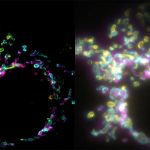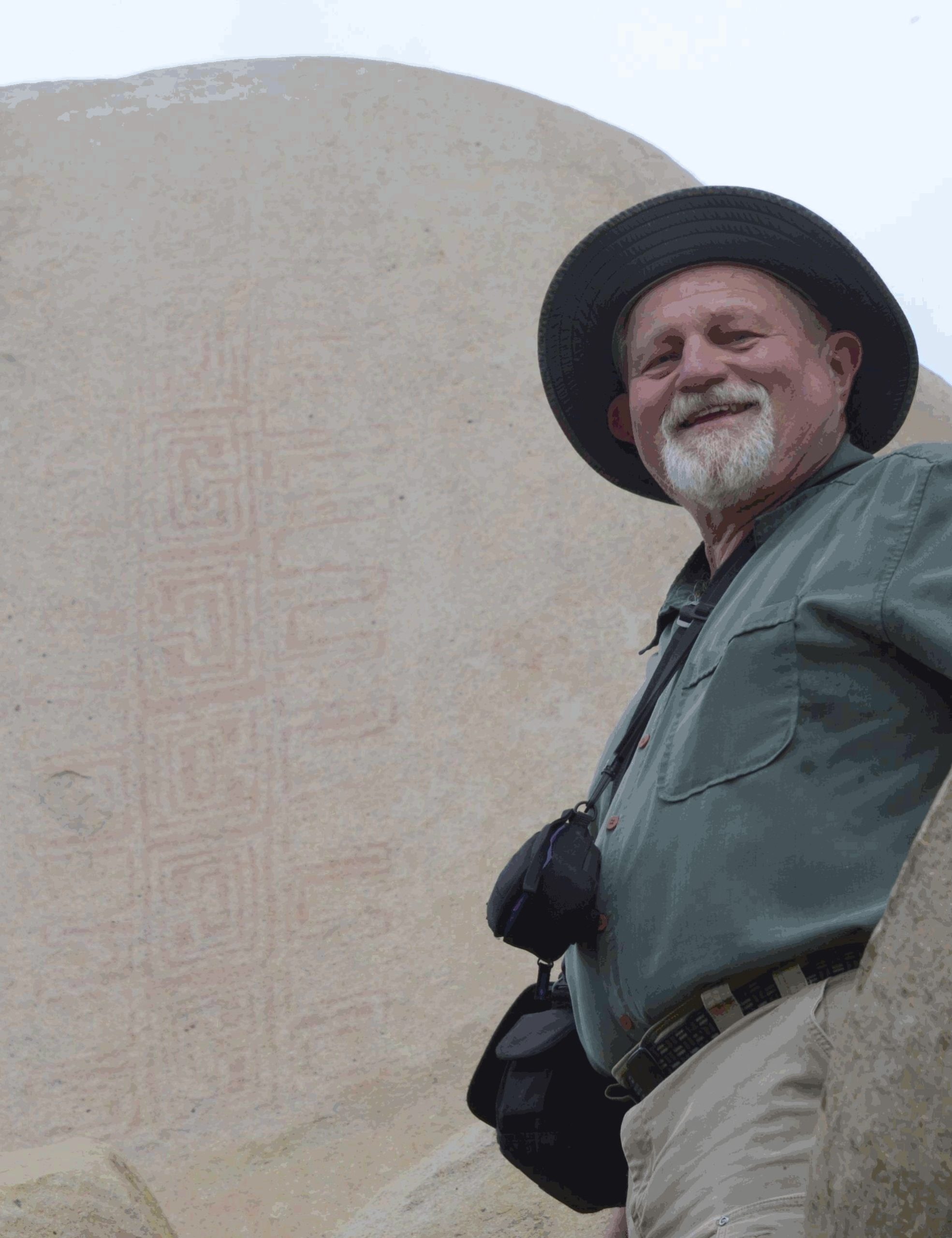
The algorithm that squeezes extra detail out of satellite photos of Mars now spends most of its working life pointed at cave walls. DStretch, a rock art enhancement tool built on a NASA Jet Propulsion Laboratory technique called decorrelation stretch, has been credited with surfacing paintings that eyes and ordinary cameras had written off as blank stone. NASA put the story back in the spotlight in a feature published on September 8, 2026, following its Spinoff writeup of December 31, 2025.
The method itself is pure remote sensing. JPL employee Ronald Alley published the decorrelation stretch approach in a 1996 paper, and it went to work on the Advanced Spaceborne Thermal Emission and Reflection Radiometer (ASTER), launched in 1999 aboard NASA’s Terra satellite. A 2005 JPL page calls it a “visualization tool to enhance the color variations among objects within a scene,” yielding “an output image whose pixels are well distributed among all possible colors, while preserving the relative sense of the hue, saturation, and intensity of the input image.” It is not a contrast slider. Original colors are remapped into an expanded range through steps that include diagonalizing color matrices.
Jon Harman, a rock art enthusiast from Pacifica, California, with a PhD in mathematics from Berkeley and a background in medical imaging, saw before-and-after Mars frames at a rock art conference in 2005 and recognized what they meant for faded pigment. “I Googled it and found a NASA paper that explained how to do the algorithm,” Harman says. “I knew from my medical imaging experience that I could do it, so I did.”
What he built was a plug-in for ImageJ, the open-source image processing and analysis program originally developed by the National Institutes of Health, extended with custom color spaces tuned to rock art. His first test images were his own photos from Baja California, Mexico, where a yellow figure emerged from what had looked like empty rock. “That convinced me of the usefulness,” he says.
Archaeologists took it from there:
- Angkor Wat, Cambodia. Singaporean archaeologist Noel Hidalgo Tan used DStretch between 2010 and 2012 to find more than 200 faded paintings around the temple complex, among them a traditional Cambodian musical ensemble known as a pinpeat.
- Arsand 1, Norway. Roughly 15 undocumented figures uncovered, with detail sharpened in 28 more.
- Beni Hassan, Egypt. Images of bats and pigs pulled out of the walls of the ancient cemetery.
- Writing-on-Stone Provincial Park, Alberta, Canada. Indigenous rock carvings exposed.
- Vlochos, Greece. The same processing applied to aerial imagery for site identification.
Tattoos on mummified remains have been clarified the same way.
Distribution stayed deliberately small-scale. The ImageJ plug-in ships only after a mandatory US$50 contribution, and Harman handles about 200 requests a year. The mobile versions, iDStretch on the App Store and aDStretch on Google Play, cost US$20 and have been downloaded thousands of times, though his own site notes they carry less functionality than the desktop plug-in. Not bad for a Mars geology tool repurposed by one mathematician with a camera and a hunch.