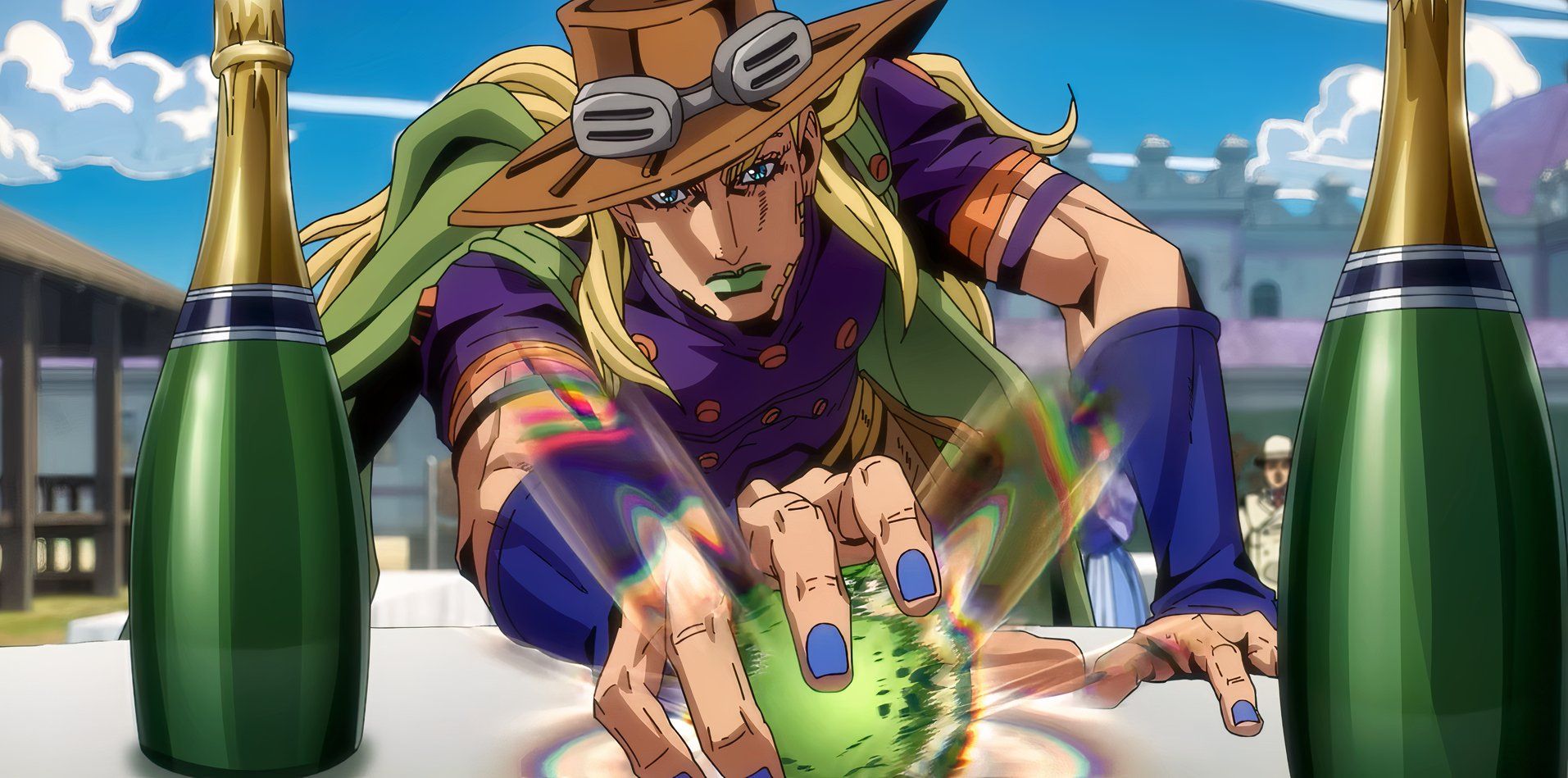
The weird part hasn’t started yet. That is the message from Yasuhiro Kimura, the animator directing and storyboarding JoJo’s Bizarre Adventure: Steel Ball Run for Netflix, ahead of the show’s return on September 25, 2026. Speaking to Polygon by email, Kimura drew a sharp line between what viewers have already seen and what is coming: “In the 1st Stage, we focused mainly on the excitement of the race itself, but from the 2nd Stage onward, the story really starts to move, and the Stand users begin to appear as well.”
Hirohiko Araki’s seventh JoJo arc is a Spaghetti Western with a rulebook of its own. Set in the 1890s, it follows a grueling cross-continental horse race across North America with a $50 million grand prize attached. Paraplegic ex-jockey Johnny Joestar and the loud, charming Gyro Zeppeli ride it together, and the further they get, the more the course looks like the cover story for a national conspiracy.
The adaptation, animated by David Production, opened with a double-length premiere that condensed the manga’s first two volumes and aired on March 19, 2026. That opener was retroactively christened The 1st Stage. From September 25, 2026 the series switches to a weekly cadence, with 11 episodes covering the 2nd and 3rd Stages arriving through December 4, 2026. Fans have already named the slot: JoJo Fridays.
The most interesting production answer Kimura gave was about horses, which animators generally treat as a punishment. His solution was to split the animal in half:
- Movement and skeletal, sketch-like elements are handled in 3D.
- Surface-level elements visible on screen are hand-drawn on top.
- Motion is turned into reusable assets, so animators don’t design each gait from scratch.
“This lets us remove the stiffness of 3D while still achieving both the fluctuation and softness of hand-drawn animation,” Kimura said, adding that the asset movement is still designed by hand and laced with deliberate exaggeration, the distortions animators call “lies.” The payoff, he noted, is volume: a large number of cuts without a single specialist becoming a bottleneck.
The look of the thing got the same deliberate treatment. Kimura says the team pushed art direction and color design toward classic Western cinema, chasing “the vast land stretching out to the horizon, the dry, dusty air, and the harsh, blazing sun.” Having previously directed episodes of Golden Wind, he describes the shift as incremental rather than radical: the core “JoJo-ness” stays put while the scene-specific color tinting, and where it gets applied, was reworked for this part.
What’s waiting past the starting flag is a desert crossing of roughly 750 miles containing a stretch feared as the Devil’s Palm. Kimura also teases that “the mysterious Gyro’s past and his relationship with Johnny will gradually start to change.” The series is directed by Toshiyuki Kato, with character designs by Daisuke Tsumagari and music by Yugo Kanno.