Ask five robotics companies what an “autonomous” robot is and you may get five different answers. Arm wants to fix that. On September 8, 2026, the chip designer unveiled Arm Total Design for Physical AI, an ecosystem program that brings together more than 80 companies from across the physical AI stack. Alongside it, Arm published a Robotics Capability Framework, meant as a starting point for a common way to define and advance what robots can do.
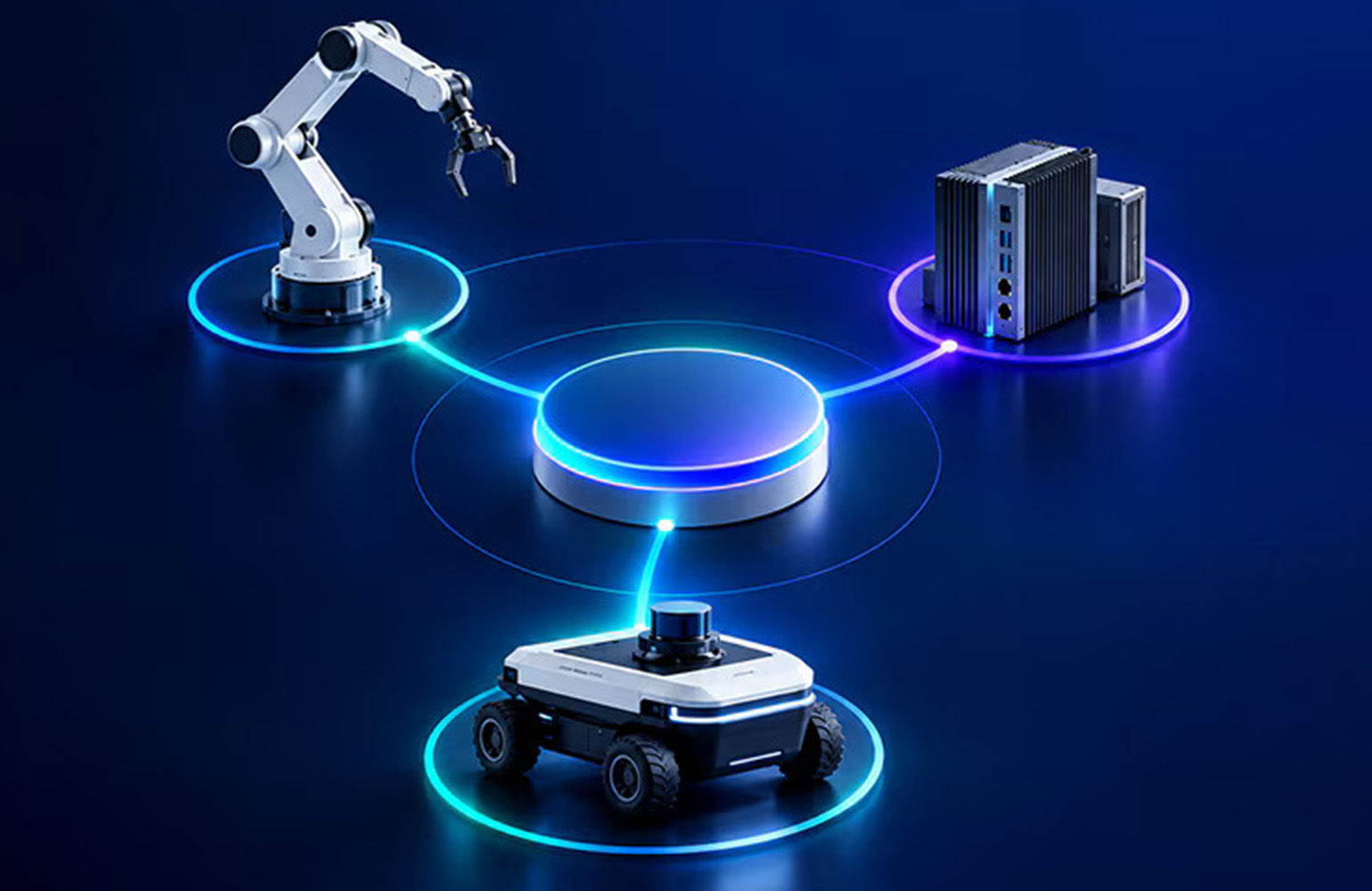
The program’s starting list reads like a cross-section of the industry: AWS, ECARX, Hugging Face, Liquid AI, NXP, PlusAI, PSYONIC, QNX, Qwen, Siemens and Unitree Robotics are among the initial participants. The idea is to pull together expertise in software stacks, AI models, sensors, compute hardware, virtual platforms and digital twins, so that partners can develop and validate interoperable systems earlier instead of stitching pieces together at the end.
Dermot O’Driscoll, Arm’s vice president of go-to-market and customer solutions for physical AI, described the goal to The Robot Report as bringing those companies together and “looking at ways to work better together.” His diagnosis of the market is blunt: “Robots are being propagated, but it’s a bit fragmented in how we talk about them.”
Six levels, from reflex to self-improvement
The framework is Arm’s answer to that fragmentation. It defines six capability levels, numbered from zero to five:
- Level 0 covers robots that react to stimuli using fixed rules.
- The levels in between trace a path through context-aware and cognitive systems.
- Level 5 describes systems with evolving, self-optimizing behavior.
According to Arm, the framework ties real-world use cases to a robot’s behavior and outputs, and then to system requirements such as latency, where compute sits, memory, power limits, determinism and safety. Without shared definitions, Arm argues, every company in the supply chain specifies the same capability differently, which leads to confusion and duplicated engineering work.
A group of collaborators helped shape the framework: Anaxi Labs, ANYbotics, FMC³ Robotics, Fourier, GALBOT, Gravis Robotics, Lenovo, McKinsey and Robotec.ai. Arm has also published a manifesto for the framework and invites other companies to contribute.
Borrowed from the car world
If the level system sounds familiar, that’s on purpose. Arm modeled it on SAE International’s levels of driving automation. The company points out that cars and robots have a lot in common: both are safety-critical, both need real-time computing, and both depend heavily on computer vision. Arm also concedes that robotics is “more complex” and “multi-dimensional” than driving, since a robot’s capabilities can’t be measured along a single axis.
For Arm, the move follows a familiar pattern. Its processor designs already power a large share of the chips going into vehicles and edge devices, and a shared vocabulary for robots could make it easier for partners to build on that hardware. Whether the rest of the industry adopts the six levels the way carmakers adopted SAE’s scale is the real test. With more than 80 companies already signed up, it has a strong start.
Earlier on GismoLand: Arm Physical AI. Dermot O’Driscoll brings the trust question to RoboBusiness.