Robotics teams often spend hundreds of hours coding basic capabilities from scratch before a robot arm does anything useful. Intrinsic wants to end that. At ROSCon 2026 in Toronto, which runs September 22–24, 2026, the company unveiled Intrinsic Core, an open source set of ROS-compatible capabilities for building robotic applications. It is released under the permissive Apache 2.0 license and published on GitHub.
Intrinsic was founded in 2021 and became part of Google in February 2026. It did not write a new toolkit for the community. Instead it packaged the software it uses in real manufacturing deployments into a pre-configured environment that runs on local hardware. The Robot Report called these pieces “building blocks of robot behavior.”
“This is not us coming by and dropping off some code and saying, ‘Have fun.’ What we’re sharing this week is the core of our own software stack,” said Brian Gerkey, CTO at Intrinsic.
What’s in the box
- Intrinsic Control: a hardware-agnostic, real-time control framework that lets a robot change its behavior mid-trajectory based on sensor input, across different robot arms, grippers and sensors.
- Pose estimation: built on NVIDIA FoundationPose for 6-DoF pose estimation of 3D parts, so parts can be detected and handled without rigid physical fixtures.
- Motion planning: generates efficient, collision-avoiding paths automatically, so nobody has to program the robot joint by joint.
- Grasp planning: lets grippers adapt to where a part sits and how it is oriented, using real-time sensor feedback.
- Simulation services: Gazebo-powered testing, troubleshooting and visualization for debugging application logic and workcell behavior.
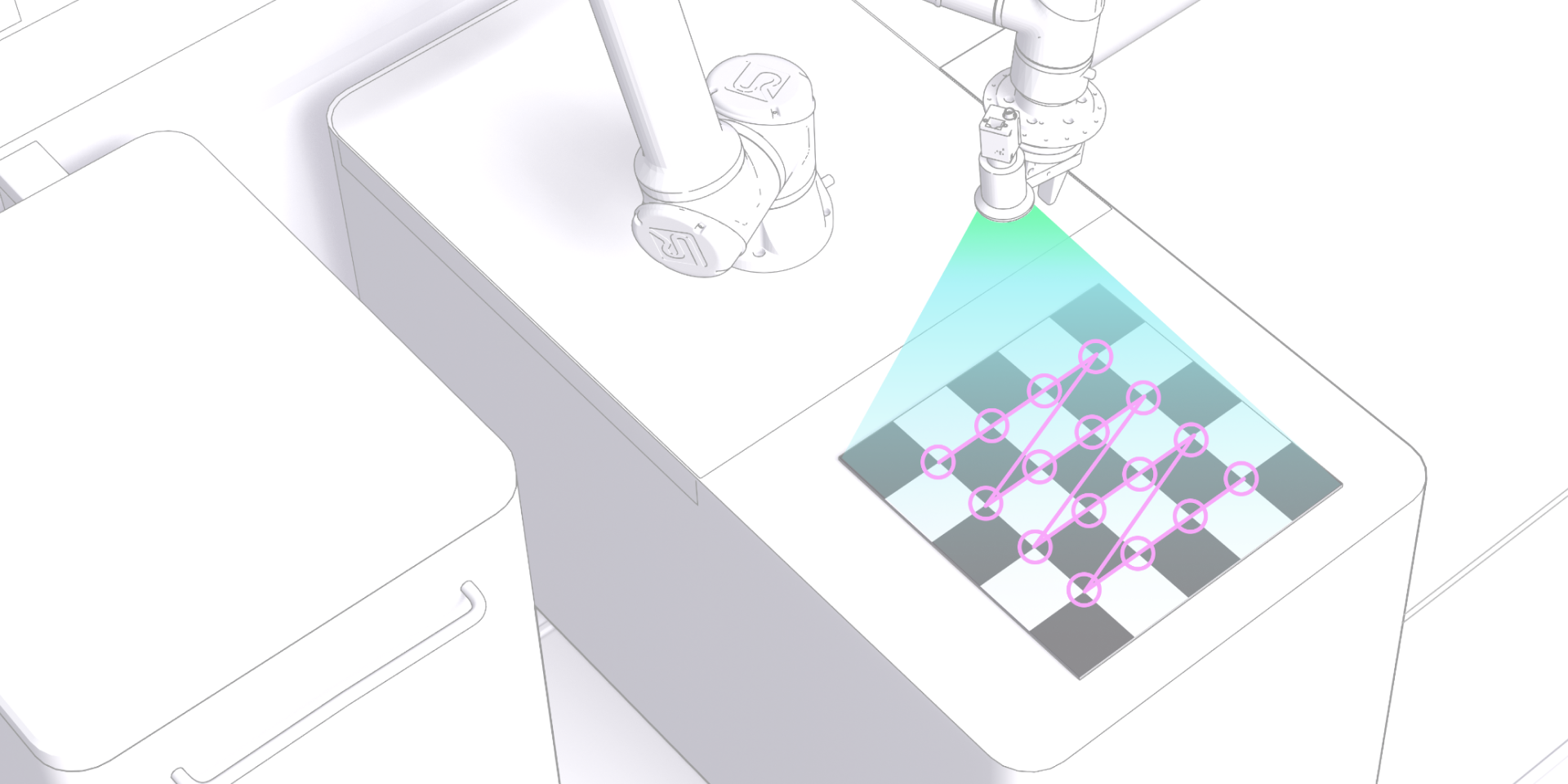
- Camera calibration: automates robot camera calibration and physical alignment.
- Intrinsic-ROS drivers: pre-configured, ROS-compatible drivers for supported robots, grippers and 3D cameras.
The target audience is narrow on purpose. Intrinsic is aiming at developers who already know ROS and are working on manipulation tasks for commercial deployments. Robotic arms are supported. Mobile robots and humanoids are not, at least in this release.
A ready-made use case
To show the stack doing real work, Intrinsic also released the Open Machine Tending Solution (OMTS). It is an open reference design for CNC machine tending that runs on Intrinsic Core and the Open Robotics Suite, and it can be adapted to hardware from FANUC and Universal Robots. The pitch is aimed at fabricators and machine shops that have lacked affordable AI-driven automation. SiliconANGLE, citing the company, put the automation rate among tens of thousands of U.S. and European fabrication shops at 8%.
The open source community welcomed the move. “The release of Intrinsic Core is both the first step and a demonstration of where robotics is going to go,” said Geoffrey Biggs, CTO of the Open Source Robotics Foundation, the organization behind ROS.
Why it matters
Perception, planning and control usually sit behind proprietary licenses or are rebuilt in-house by every integrator. With the Apache 2.0 license, companies can use, modify and ship Intrinsic Core in commercial products. If the ROS community adopts it, a CNC cell or pick-and-place station could start from a tested core instead of a blank repository. That would free engineering hours for the part of the application that actually differs from one project to the next.