Sitting between two award-winning siblings is not easy. The Sonos Beam Ultra is squeezed between the Beam (Gen 2) and the Arc Ultra, both of which have won What Hi-Fi? Awards and five-star reviews, and people will judge it against both. In What Hi-Fi?’s full review, published on September 22, 2026, the new bar held up well. It got five stars out of five and was called “an exceptional soundbar for both movies and music, delivering a cohesive and exciting audio experience”.
The price is US$699 / £699, which puts it squarely between the Beam (Gen 2) at US$449 / £449 and the Arc Ultra at US$999 / £999. The Beam Ultra does not replace the Beam (Gen 2). That model stays in the range as the cheaper way into Dolby Atmos, although it has no dedicated up-firing drivers. Preorders opened on September 1, 2026, and general availability is scheduled for September 29, 2026.
What changed inside
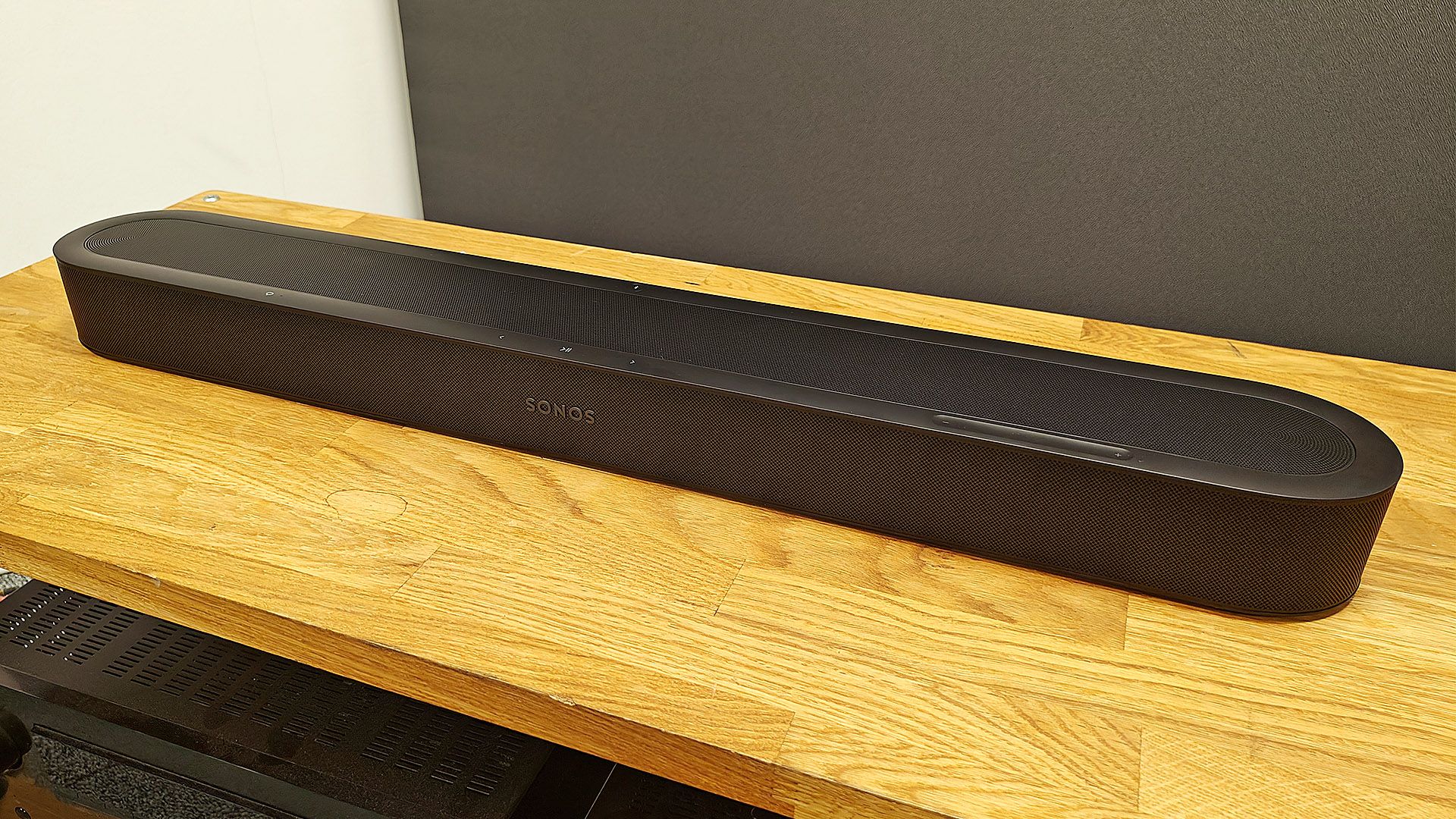
The key upgrade sits under the perforated grilles on the top panel: two up-firing drivers, one at each end of the bar. The Beam (Gen 2) gets its height effects from virtualisation instead of physical drivers. In total the Beam Ultra has nine drivers, four more than its smaller sibling, arranged in what Sonos calls a 7.1.2-channel configuration. Sonos says it redesigned the centre channel around a coaxial transducer, with a tweeter embedded in a woofer, to make “movies sound wider” and “dialogue sound clearer”.
- Weight: 2.8kg, the same as the Beam (Gen 2), though the new bar is a little longer and slightly thinner
- Finishes: black and white, both matte
- Connections: a single HDMI eARC port, plus a USB-C port that the Beam (Gen 2) lacks, for the optional Line-In Adapter (3.5mm aux) or the Combo Adapter (3.5mm plus Ethernet)
- Formats: Dolby Atmos, but no DTS:X
- Controls: a Bluetooth button and touch controls for volume and play/pause. There’s no remote in the box, so your TV remote handles volume
Setup runs through the updated Sonos27 app. It offers height, bass and treble sliders, a Loudness toggle, Night Sound and Sonos’s AI Enhancement for clearer speech. Trueplay comes in two versions. Quick tuning uses the bar’s own microphones, while Advanced tuning uses an iOS device carried around the room. You can add Sonos surround speakers and a subwoofer, use the portable Move 2 and Play as surrounds, or send the sound privately to Sonos Ace or Ace Ultra headphones.
How it sounds
According to the review, the height drivers deliver exactly the upgrade the Beam (Gen 2) was missing. Film soundtracks gain width, height and precise placement of voices in the scene. The bass is muscular and controlled, if not the deepest in its class. With music, What Hi-Fi? found the bar transparent and emotive, and put it at the top of its class.
The criticisms are short. The bar doesn’t project sound towards the listener quite as strongly as some rivals, so voices can feel a little less direct, and the Beam (Gen 2) actually sounds a bit more upfront. Like every Sonos bar, it has no HDMI passthrough and no DTS:X. The Arc Ultra still has more authority, but it is also bigger and more expensive.
Earlier on GismoLand: Sonos Beam Ultra. Nine drivers and a ceiling to aim at.