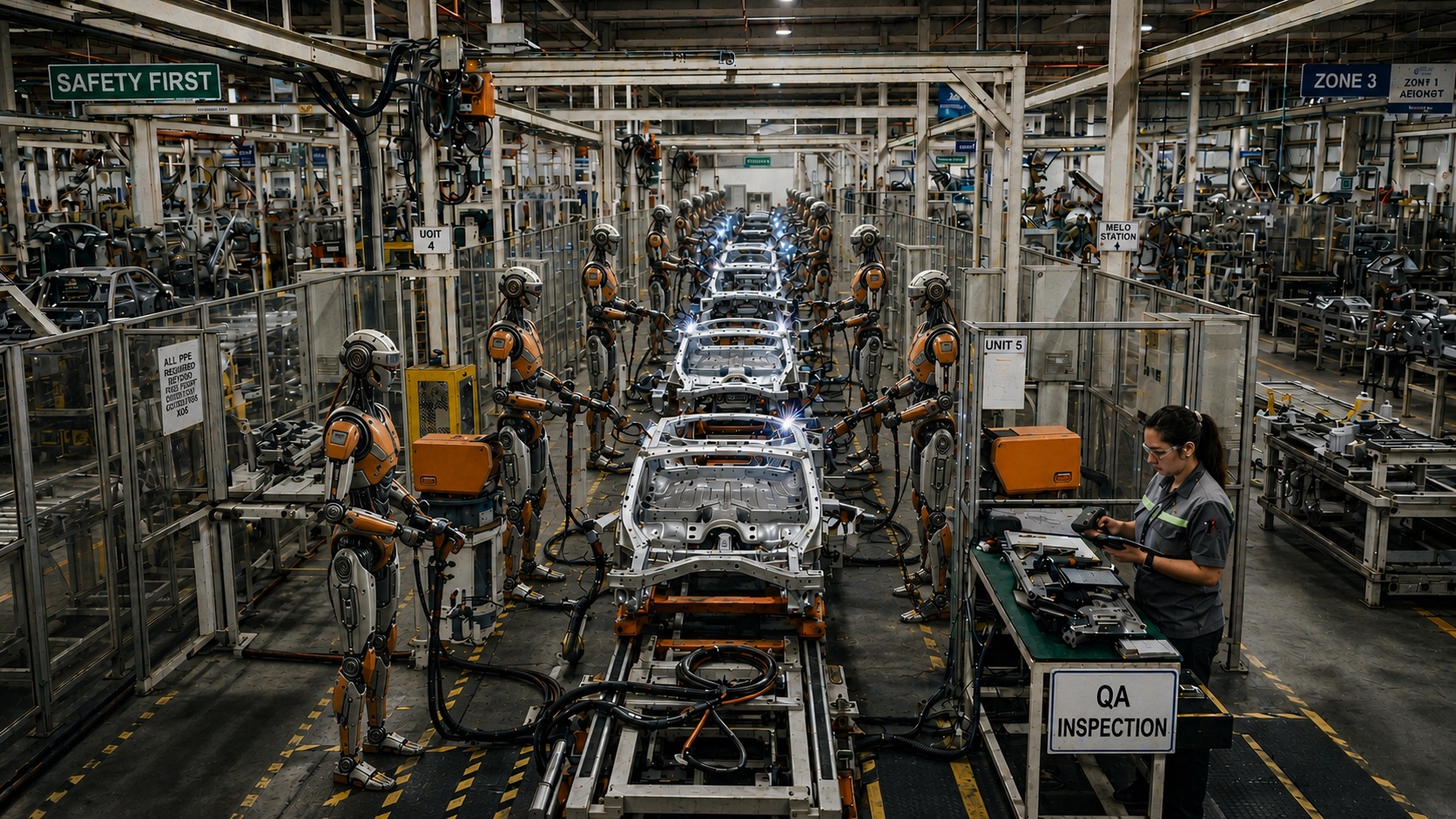
Isaac Asimov wrote his Three Laws of Robotics in 1942, and for more than eight decades they have been the go-to shorthand for “safe robots”. In an opinion piece published by The Robot Report on September 27, 2026, entrepreneur and futurist Rinaldo Brutoco, founding president and CEO of the World Business Academy, argues that the famous laws are nowhere near enough for the age of generative and agentic AI.
A quick refresher on the fictional rulebook:
- First Law: a robot may not harm a human or, through inaction, allow a human to come to harm.
- Second Law: a robot must obey human orders, unless they conflict with the First Law.
- Third Law: a robot must protect itself, unless that conflicts with the first two.
Brutoco’s first jab is at industry practice. By his account, only one business has made the First Law a core element of its software development: Advanced Robotic Technologies Inc., which applies gen AI to manufacturing large-scale industrial products. Everyone else, he suggests, is building without even that minimal guardrail.
The frontier wants a speed limit
The essay lands amid an unusually public debate about pace. On September 12, 2026, Anthropic CEO Dario Amodei published “We Must Pace the Frontier”, calling for slowing the development of frontier AI models in general and agentic AI in particular. Anthropic committed on its own to the first step of his three-part plan: giving third-party evaluators permanent, employee-level access to its systems. OpenAI’s Sam Altman said he agreed, and Elon Musk posted that “Dario is right.” Brutoco adds that Bill Gates has voiced reservations about the speed of AI development, and cites a former Anthropic and OpenAI researcher who put the chance of human extinction from fast agentic AI development at 10%, with Anthropic alignment science lead Evan Hubinger placing the catastrophic odds “even a little bit higher.” Not everyone agrees: NVIDIA CEO Jensen Huang has called such concerns overblown.
From robots to paychecks
Brutoco’s bigger worry is the workforce. On July 21, 2026, Senator Mark Warner, vice chairman of the Senate Intelligence Committee, rolled out “A Framework for America’s AI Future”. Among other things it proposes a National Workforce Transition Fund for worker retraining, employer retention and redeployment grants, and tuition assistance for high-demand fields. Warner has warned that within two years as many as 30% of college graduates may be unable to find work because of AI’s rapid spread. Brutoco also points to the “We Must Act Now” statement from economists and technologists, which he says has more than 2,500 signatories.
In his reading, mid-level white-collar workers are most exposed right now, while plumbers, carpenters and electricians have years before robots catch up. Unlike the unplanned upheaval of the Industrial Revolution, he argues, this transition can and should be managed. He is sceptical of the White House line from AI advisor David Sacks, who suggested the industry could agree on guardrails among itself.
Asimov already moved on
The neatest point in the essay is that Asimov himself saw the gap. By his 1985 novel Robots and Empire, he had added a Zeroth Law that puts the protection of humanity as a whole above the original three. Brutoco’s conclusion: build safeguards into the code and put transition policies in place now, while humans are still firmly in control.