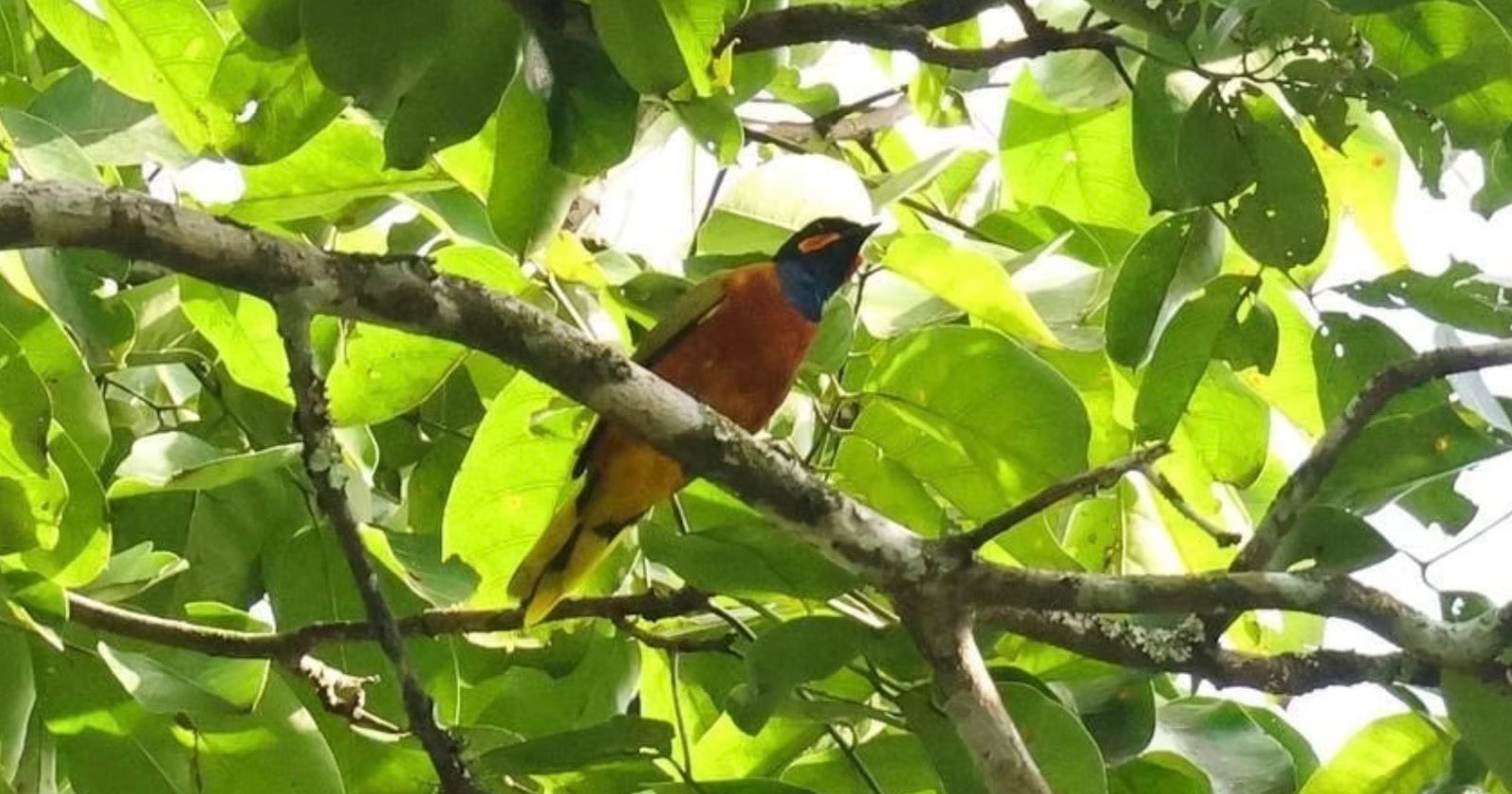
Some wildlife photos are about perfect light and patient hides. Others are about having a camera up a split second before your brain catches up. The first-ever video of the Ghana Cuckooshrike (Lobotos lobatus), a West African forest bird that had gone 13 years without a confirmed sighting, falls squarely into the second category.
The footage, along with what are now regarded as the best stills ever taken of the species, was shot in Taï National Park, Ivory Coast, by Stephanie Bartlett and Paulo Ditzel of the International Bird Conservation Partnership (IBCP). According to Mongabay, the encounter took place in June 2026; IBCP announced the find in a news release dated July 20, 2026, and PetaPixel covered the video on October 1, 2026.
Off the map for more than a decade
Before the encounter, the Ghana Cuckooshrike sat on the list of birds considered “lost” to science, a label generally applied to species that have not been reliably seen for at least a decade. Its last photographic records came from Ghana’s Kakum National Park in 2010 and the Atewa Forest Reserve in 2013, with no confirmed sightings since.
It is not hard to see why. The bird typically stays 65 to 165 feet above the ground, in the crowns of the tallest trees, moves with mixed-species flocks and is remarkably quiet. No audio recording of it has ever been made.
A bridge, a flicker of color, a burst of frames
Bartlett and Ditzel were on a six-month expedition through West Africa and had joked before the trip about stumbling on a lost bird, knowing the odds were extremely low. Then, while crossing a small bridge under the rainforest canopy one afternoon, they caught a quick movement overhead and picked out the bird’s distinctive yellow, orange and black plumage, feeding unusually low where they could see it clearly.
- Ditzel’s reaction, per IBCP: an urgent whisper of “Cuckooshrike, cuckooshrike, cuckooshrike!”
- Bartlett, an experienced photographer, was already shooting as the bird moved through the branches across the stream.
- By the time Ditzel had fetched the rest of the team, the bird was gone.
“I got a photo of the bird before I saw it,” Bartlett told Mongabay. “They’re scared of you. You don’t get to get close to them, and so often you have to use the camera as a tool for identification.” That is a point any bird photographer will recognize: in dense forest, the camera often does the identifying, and the human confirms later on the back screen.
John Mittermeier, director of the Search for Lost Birds at the American Bird Conservancy, called Bartlett’s images “probably the best photos ever taken of this bird.” The Search for Lost Birds program tracks species unconfirmed for at least 10 years and accepts photographs, video, audio or genetic evidence as proof.
What comes next
The species’ Upper Guinean rainforest habitat has been broken up by logging and agriculture, according to Mongabay, and Bartlett and Ditzel plan to return to Taï National Park for further fieldwork to monitor the population and capture the bird’s still-unrecorded voice. The find follows the Rusty Lark, a small bird thought to be extinct for nearly a century, which was photographed for the first time a few months before.