The smart home still hasn’t fully cracked the code. In theory, everything should work everywhere, spaces should adapt to your mood, and none of it should require ripping open your walls. In practice, it’s messy. Yet if any brand has come close to nailing the concept, it’s Philips Hue — and its June 2026 lineup gives you plenty more ways to bathe a room in exactly the color you want.
Leading the charge are two new fixtures built around Hue’s Play ecosystem. The Philips Hue Play Table Lamp lands at US$79.99 and stands 23.6 inches tall, while the taller Philips Hue Play Floor Lamp rises to 53 inches and costs US$149.99. Both went on sale in June 2026.
What makes the Play family fun rather than just functional is the synchronization trick. Pair either lamp with the Hue Play HDMI Sync Box or the Hue Sync TV and desktop apps, and the light reacts in real time to your games, TV shows, movies, and music. The Table Lamp also leans on full-spectrum daylight technology with a temperature range reaching up to 20,000K, and it speaks Matter over Thread for tidier integration into a wider smart home.
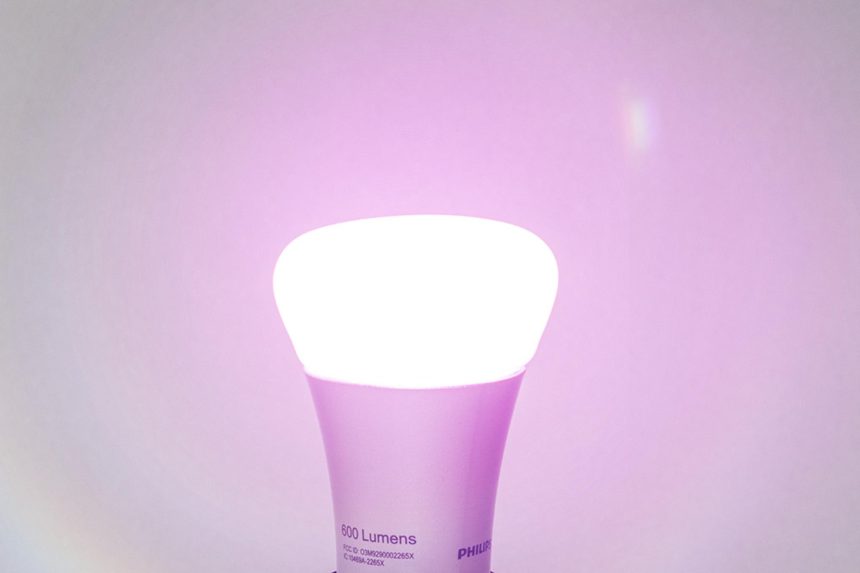
The refresh isn’t limited to statement pieces. Philips also updated its Candle Bulbs, priced at US$59.99 for a single bulb or US$109.99 for a 2-pack. Built for an E12 socket, they push out 470 lumens, use full-spectrum daylight technology, and support Matter. Better still, they’re 40% more energy efficient than their predecessor — a rare case where the smarter option is also the greener one.
There’s good news for anyone tired of the smart-home-means-smart-bulbs-everywhere approach, too. In Europe, Hue rolled out a family of wired controls that finally bring ordinary, non-smart fixtures under the Philips Hue app’s umbrella:
- Wired Wall Switch Module — €44.99 (2-pack €79.99)
- Wired On/Off Switch (1-Channel) — €49.99
- Wired On/Off Switch (2-Channel) — €49.99
- Wired Dimmer Switch (1-Channel) — €59.99
These modules let you dim and toggle compatible dumb lights through the same app that runs your Hue scenes, which is exactly the kind of quiet, behind-the-walls intelligence the smart home is supposed to be about. No renovation required, no visible gadgetry — just lights that finally do what you tell them.
Taken together, the June 2026 additions underline why Hue keeps getting cited as the ecosystem to beat. It’s not one killer feature; it’s the way the pieces fit — bulbs, lamps, switches, and sync boxes all pulling in the same direction. The goal has always been obvious. Hue just keeps inching closer to it.