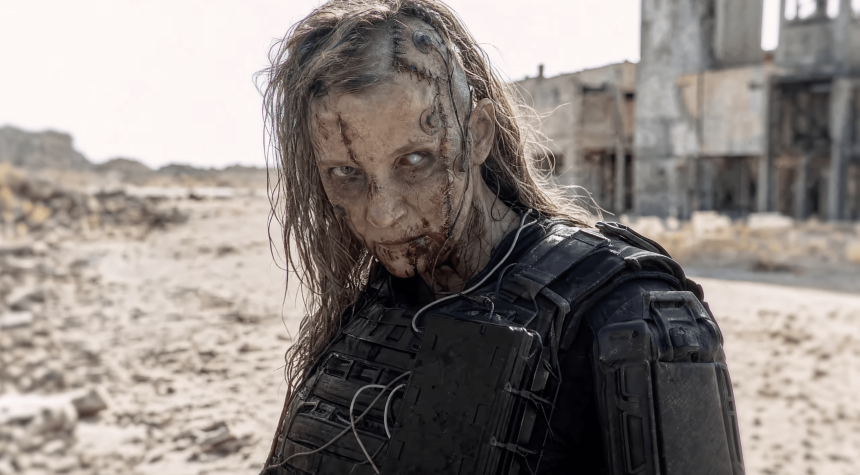
District 9 and Gran Turismo director Neill Blomkamp has waded into the deep end of generative video, and the results are already stirring up the internet. On Monday he released Nightborne, a 13-minute sci-fi short loosely based on Peter Watts’ 2014 novel Echopraxia — and every single shot in it was produced by ByteDance’s Seedance 2.0 text-to-video generator.
The film comes from Barley Studios, Blomkamp’s new AI startup and production company. Its characters have faces and voices modeled after human actors, but no camera, lens or set was involved. This is machine-generated cinema, start to finish, and Blomkamp is not shy about saying so.
On X, he framed Nightborne as a “test start” — a proof of concept meant to show what generative tools can currently pull off. He also stated the ambition behind it: he wants “to tackle a full feature” using the same approach. In other words, this short is the trailer for a much larger experiment.
Here’s what’s actually notable from a technology standpoint:
- Fully AI-generated visuals — the entire 13 minutes were rendered through Seedance 2.0, ByteDance’s text-to-video model.
- Actor-derived likenesses — the characters’ faces and voices are modeled on real human performers, rather than fully synthetic avatars.
- Source material — the narrative draws loosely from Peter Watts’ 2014 hard sci-fi novel Echopraxia.
- New studio — Barley Studios is Blomkamp’s dedicated AI production outfit, not a side project bolted onto an existing pipeline.
What makes this interesting isn’t the plot, it’s the workflow. Text-to-video models have spent the last couple of years generating impressive but short, incoherent clips — a few seconds of dreamlike footage that fall apart under scrutiny. Stitching a 13-minute narrative together, with consistent characters and voices, is a meaningful step up in ambition, even if it’s a long way from a polished feature.
The reception, predictably, has been split. To supporters, a name-brand director publicly building on Seedance 2.0 signals that the tools are maturing fast enough to attract serious filmmakers. To critics, an AI short from a director capable of the practical-effects craft seen in District 9 reads as a step backward — visually flat, emotionally thin, and reliant on a machine trained on other people’s work.
Either way, the significance is hard to dismiss. Blomkamp isn’t a hobbyist posting clips for clout; he’s a filmmaker with real theatrical credits publicly staking his next project on generative video. If Nightborne is the “test start,” the promised full feature is the real experiment — and it will be a far more revealing measure of whether text-to-video can carry a story rather than just a mood.
For now, Nightborne is exactly what it claims to be: a demo. A glimpse of where one director thinks the pipeline is heading, warts and all.