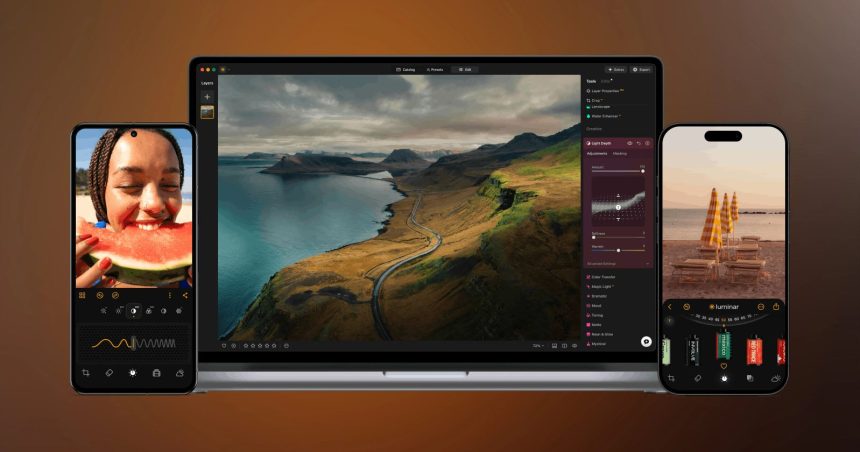
There was a time when slapping “AI-powered” on a piece of photo software was pure marketing gold. That time, it seems, has passed. Skylum — the company behind the popular editor Luminar Neo — is now recalibrating how it talks about the very technology that made its name, pivoting its messaging away from artificial intelligence and back toward the photographer holding the mouse.
The shift is a response to a broader mood swing. As generative tools have flooded the creative world, public sentiment has curdled from wonder into suspicion. For a brand whose entire pitch was built on automation and machine smarts, that’s an awkward position. Skylum’s answer isn’t to strip the AI out — it’s to reposition it as a tool that amplifies human vision rather than replacing it.
To be clear, the features aren’t going anywhere. Luminar Neo still leans hard on machine learning for the everyday grunt work: automatic portrait enhancement, scene relighting, and AI-driven masking that isolates skies, skin and backgrounds without the tedium of manual selections. Those are the kinds of capabilities photographers actually use to move faster, and they remain front and center.
Then there’s the generative side, which is where the industry’s anxiety really lives. Luminar Neo includes:
- GenErase — for wiping out distractions and unwanted objects
- GenExpand — for extending an image beyond its original frame
- GenSwap — for replacing objects in a scene entirely
These are exactly the powers that draw fire in debates about authenticity, and it’s no coincidence that Skylum is now careful to frame them as creative options rather than shortcuts. The first stage of updates around this new positioning arrived during August 2026 as a free update for existing Luminar users.
The pricing structure, meanwhile, gives you a few ways in. As of Summer 2026, the Luminar Neo Desktop Perpetual License runs US$119, the Cross-Device Perpetual License is US$149, and the top-tier Luminar Neo MAX Perpetual License sits at US$164.99. If you’d rather rent than own, the Pro Subscription comes in at US$119 per year.
What makes this move interesting isn’t the software itself — it’s the tacit admission baked into it. Skylum spent years selling AI as the headline. Now it’s quietly reminding customers that the human behind the edit is the one who matters. Whether that’s a genuine philosophical pivot or savvy damage control depends on your level of cynicism, but the underlying calculation is sound: photographers want to feel like artists, not button-pushers.
For existing users, the practical takeaway is simple. The tools you already rely on are intact, the generative features are still there if you want them, and the update costs you nothing. The only thing that’s really changed is the story Skylum is telling about who’s in charge.