Building a house is still a stubbornly manual affair — hammer, sweat and a shrinking pool of skilled labor. The University of Florida is betting that robots can change that equation, and it just opened a lab to prove the point.
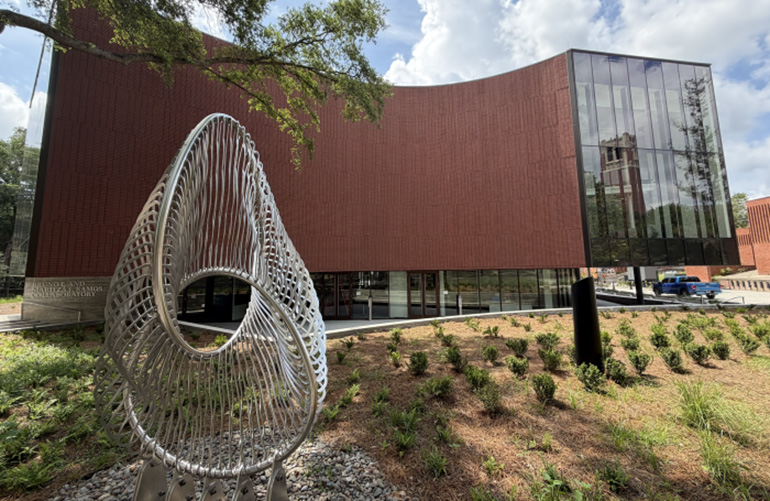
On August 4, 2026, UF held a ribbon-cutting for the Autodesk Design and Make Laboratory, which will open its doors to researchers this fall semester. The facility is now home to Dr. Aladdin Alwisy’s Smart Industrialized Design and Construction (IDC) Lab, a cross-disciplinary effort spanning UF’s College of Design, Construction and Planning and the Herbert Wertheim College of Engineering.
The lab exists to attack two problems that keep colliding: a national housing shortage and a construction workforce that keeps thinning out. The pitch is industrialized construction — treating buildings less like one-off artisanal projects and more like products that can be designed, engineered and assembled with the precision of a factory floor.
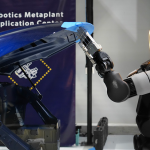
That’s where robotics and automation come in. By moving fabrication into controlled environments, industrialized construction promises tighter tolerances, less material waste and faster throughput, all while easing the reliance on manual labor that’s increasingly hard to find. It’s the same logic that reshaped automotive and electronics manufacturing, now aimed at the walls, floors and modules that make up a home.
Underwriting the effort is a US$1 million donation from Autodesk, the software company whose design and simulation tools are already fixtures across architecture and engineering. The partnership hints at where the field is heading: a tight loop between digital design and physical make, where a model on a screen flows directly into robotic assembly with minimal human translation in between.
For UF, planting this lab at the intersection of two colleges is a deliberate move. Industrialized construction isn’t purely an engineering problem or purely a design problem — it lives in the messy overlap between them. Getting architects, structural engineers and roboticists working under one roof is arguably as important as any single machine on the floor.
The broader stakes are hard to overstate. If robotic and industrialized methods can be scaled reliably, they could reshape how quickly and affordably housing gets built at a moment when both speed and cost are painful sticking points. Universities have long served as the proving grounds for that kind of shift, translating research into methods that industry can eventually adopt.
With the lab set to welcome researchers this fall, the coming semesters will be the real test of whether these ideas hold up outside a slide deck. For now, UF and Autodesk have laid the groundwork — a physical space, a research mandate and a clear target. The rest depends on what the robots actually build.