Apple’s iPad isn’t having its best year. A fresh market report pegs iPad shipments as falling 8% year-over-year in Q2 2026, giving hard numbers to something Apple already hinted at last week: a 5% drop in iPad revenue for the June quarter.
The two figures aren’t contradictory — revenue and unit shipments move to different rhythms. Higher average selling prices can cushion a revenue line even when fewer boxes leave the warehouse, and that’s roughly the story here. Apple still sold plenty of tablets; it just sold noticeably fewer of them than it did a year ago.
The more interesting context is that this isn’t purely an Apple problem. The report frames the iPad’s decline against a broader slump across the global tablet market in Q2 2026. When an entire category contracts, the culprit is usually less about one company’s product missteps and more about buyers sitting on the hardware they already own. Tablets have quietly become one of the longest-lived gadgets in most households — a device that gets handed down, repurposed as a kitchen screen or a kid’s drawing pad, and replaced only when it truly gives up.
That longevity cuts both ways for Apple. On one hand, it’s a testament to how durable and well-supported iPads remain years after purchase. On the other, it makes the upgrade pitch a tough sell, especially when the current lineup is already stacked with capable options at every tier.
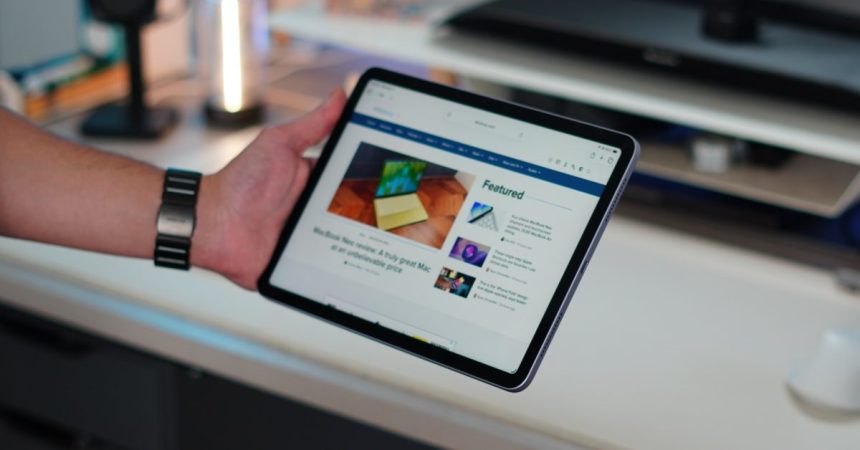
And it is a strong lineup. The refreshed iPad Air (M4) arrived in March 2026 in 11-inch and 13-inch sizes, packing 12GB of memory, Wi-Fi 7 and 5G, priced at US$749 and US$849 respectively. At the top sits the OLED iPad Pro (M5) from October 2025, running Apple’s M5 chip and starting at US$1,199 for the 11-inch and US$1,499 for the 13-inch. The entry point stays friendly too, with the iPad (11th generation) and its A16 chip holding at US$449.
So the hardware isn’t the issue — it’s the math of a saturated market. When your last iPad still runs the latest software smoothly, there’s little urgency to spend hundreds on a new one.
Apple may be counting on its next moves to reignite demand. The lineup still has gaps waiting to be filled, and a device that hasn’t seen a dramatic redesign in a while could be exactly the kind of nudge fence-sitters need. For now, though, the numbers tell a plain story: iPads are still selling well, just not as briskly as before — and the whole tablet aisle is feeling the same chill.