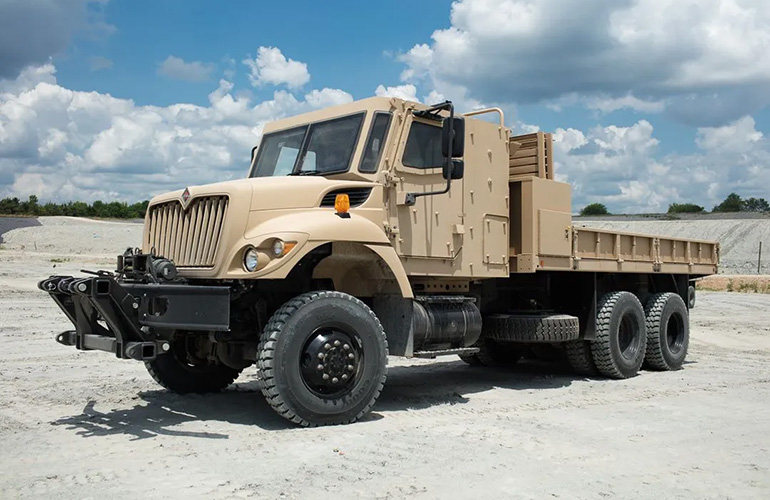
Getting fuel, ammo and gear to the front line is one of the oldest problems in warfare — and one of the deadliest jobs on any battlefield. The U.S. Army wants to hand a big chunk of that risk over to machines, and it has just picked a team to build the robot that could do it.
On August 10, 2026, a team led by Stratom Inc. won a U.S. Army contract to develop TALUS — the Tactical Autonomous Logistics Utility System. The award falls under a Project Sustainment contract, meaning the goal is a platform built for the long, unglamorous grind of keeping troops supplied rather than a one-off demonstrator.
What makes TALUS interesting isn’t a single headline gadget but its approach: modularity. Instead of a purpose-built vehicle locked into one role, TALUS is designed as a multi-mission capability set — a foundation you can reconfigure depending on what the mission actually needs on a given day.
According to the program description, that capability set spans three core jobs:
- Autonomous transport of multiclass supplies — moving everything from rations and medical stock to ammunition without a human behind the wheel.
- Operational energy generation and distribution — not just hauling power, but producing and routing it where units need it.
- Mission payload integration — a hookup for task-specific gear so the platform can take on new roles as requirements shift.
The phrase that keeps coming up is contested environments, and it’s doing a lot of work. Autonomous logistics on a quiet supply road is comparatively easy; doing it where GPS may be jammed, comms are degraded and the route is under threat is a very different engineering challenge. A system built for that world has to make sense of its surroundings and keep rolling when the tidy conditions robots love simply aren’t there.
The strategic logic is straightforward. Every convoy of supply trucks is a convoy of people, and resupply routes are a favorite target. Push autonomy into that loop and you shrink the number of soldiers exposed to ambush and roadside threats, while keeping the beans, bullets and fuel flowing. Energy is the quiet centerpiece here — modern units are hungry for power to run sensors, comms and electronics, and a platform that can both generate and distribute it changes what a forward position can sustain on its own.
TALUS is squarely a piece of defense hardware, not a gadget you’ll ever add to a cart, so there’s no price tag or store shelf attached to it. But it’s a sharp example of a trend gadget fans already recognize: autonomy and modular design creeping out of the lab and into the roughest jobs we’ve got. If a robot can reliably haul supplies through a warzone, the tech underneath it — perception, navigation, self-directed power management — has a way of eventually filtering into everything else.
For now, the Stratom-led team’s job is to turn that capability set into working hardware. It’s an unglamorous mission with very high stakes.