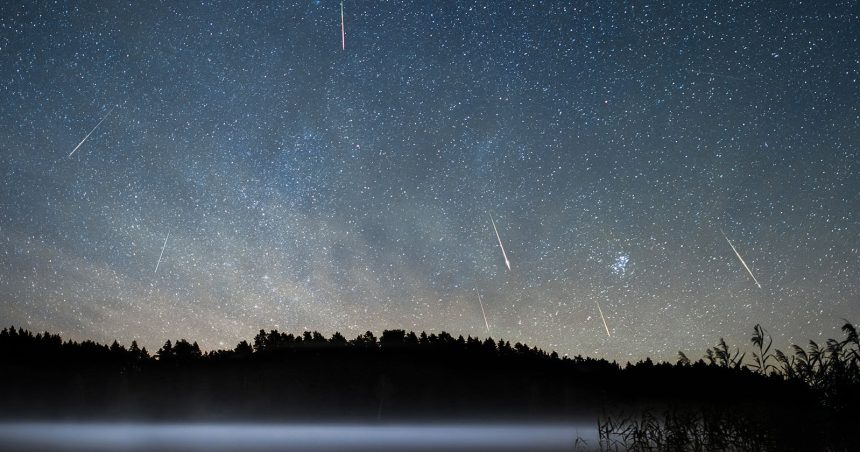
If you own a camera and a tripod, tonight is the night to point them skyward. The Perseids Meteor Shower — the most reliable celestial spectacle of the year for the Northern Hemisphere — reaches its peak tonight, running from just before midnight on August 12 through the hours before dawn on August 13, 2026.
The Perseids are visible across the entire Northern Hemisphere, and even reach observers in the very northern fringe of the Southern Hemisphere. That makes this one of the most widely accessible sky events on the calendar, no special filters or eclipse glasses required. And unlike today’s total solar eclipse — which was reserved for a lucky, narrow strip of Europe — the Perseids play no favorites with geography.
For photographers, meteor showers are equal parts patience and preparation. A few things are worth keeping in mind if you’re heading out:
- Go wide and go dark. A wide-angle lens captures more sky, improving your odds of catching a streak in frame. Pair it with the darkest location you can reach, well away from city light pollution.
- Lean on a tripod. Meteors are unpredictable, so long exposures are your friend — and long exposures demand a rock-steady mount. A remote shutter or intervalometer helps you fire off continuous frames without touching the camera.
- Shoot toward Perseus. The shower takes its name from the constellation Perseus, the radiant point from which the meteors appear to emanate. Framing that region of the sky increases your chances, though bright streaks can appear anywhere.
There’s a reason the Perseids draw crowds every August. They’re the debris trail of comet Swift-Tuttle, and Earth plows through that stream annually, producing one of the year’s most active meteor displays. Under ideal conditions — clear skies, no moon washing out the show — the payoff can be dozens of bright, fast-moving meteors per hour.
The best strategy is also the simplest: dress warmly, give your eyes at least 20 minutes to adjust to the dark, and settle in. Whether you’re chasing a portfolio-worthy long exposure or just want to watch the sky put on a show, tonight is the window. Miss it, and you’ll be waiting until next August for the encore.