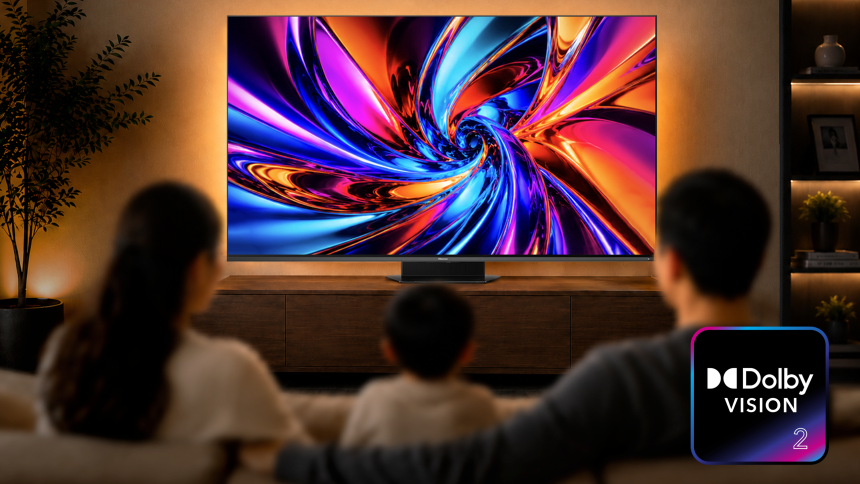
Dolby Vision 2 has started landing on its first TVs, and now there’s a tantalising possibility: the next-gen HDR format could reach existing 4K Blu-ray players too. The technical groundwork is there. The willpower, however, isn’t universal.
The catch emerged from an interview Dolby Laboratories gave to TechRadar. Here’s the good news first: because a 4K Blu-ray player’s job is essentially to pass encoded data along to the TV — which does the actual heavy lifting — most existing players could be taught to handle Dolby Vision 2 through a simple firmware update. Dolby Vision 2 itself only runs on select TVs because it leans on newer processors, but the disc spinner just needs to know how to forward the data correctly.
So far, so promising. The problem is that firmware doesn’t write itself. Each manufacturer has to actively partner with Dolby to build and release that update, and not everyone is keen.
Sony has already ruled it out. When TechRadar reached out to several brands, Sony was the only one to reply, and the answer was blunt: “We do not plan to provide a software/firmware update to support Dolby Vision 2 on the current Blu-ray player lineup.” Panasonic and Magnetar hadn’t responded at the time of writing.
That Sony stance is telling. The company hasn’t launched a genuinely new Blu-ray player in years — aside from a minor refresh of an existing model — and with the PS6 all but confirmed to skip a 4K Blu-ray drive entirely, the format’s long-term outlook already looks fragile.
There’s a second wrinkle worth understanding. Even if every player maker pushed out a firmware update tomorrow, the Dolby Vision 2 data would still need to be encoded onto the discs themselves. That means only new releases would carry the benefit — your existing shelf of 4K Blu-rays wouldn’t magically transform.
The silver lining? Dolby says that as long as you’re watching on a Dolby Vision 2-compatible TV, you should still see improvements from the newer HDR processing, even without an updated Blu-ray player feeding it fresh data.
So what does Dolby Vision 2 actually bring to the table? Three headline additions:
- A new image engine designed to enhance visual content across the board.
- A content recognition system that aims for a more authentic picture, closer to the creator’s original intent.
- An intensity slider that compensates for contrast lost to awkward viewing angles and screen reflections.
For now, only select Hisense TVs support the format, though wider adoption is expected soon. Meanwhile, Samsung’s rival technology, HDR10+ Advanced, is also arriving this month — initially limited to select Samsung TVs streaming Amazon Prime Video.
The takeaway for disc-loyal home cinema fans is bittersweet: the door to Dolby Vision 2 on your current player is technically open, but at least one major manufacturer has already chosen to keep it firmly shut.