In 1976, the year of the U.S. bicentennial, the Smithsonian’s National Portrait Gallery widened its collecting mandate to include photography. The reason was practical: many people who shaped American history never sat for a painted or sculpted portrait, but a camera caught them. Fifty years later, photographs make up nearly half of the museum’s holdings, and the Gallery is marking the anniversary with a large show of its own.
Photographic Memory: Fifty Years of Collecting opens on November 14, 2026, and runs through November 7, 2027, on the second floor of the National Portrait Gallery in Washington, DC. It brings together more than 120 photographic portraits from the museum’s collection, from the Daguerreian era through the digital age.
A walk through photographic technology
The exhibition is curated by Ann Shumard, the museum’s senior curator of photographs, and is laid out chronologically. It covers photographers and photographic processes from 1843 to the present. For anyone interested in how imaging technology developed, the gallery walls work as a timeline of the medium. An introductory timeline explains the major photographic processes and technical innovations, and the objects themselves show the changes over time:
- quarter-plate and half-plate daguerreotypes from the 1840s and 1850s;
- sixth-plate and quarter-plate ambrotypes, including portraits of Frederick Douglass and Olive Oatman from c. 1856;
- albumen silver prints by Alexander Gardner, José Maria Mora and Charles Milton Bell;
- a glycerine-developed platinum print of Zitkála-Šá by Joseph T. Keiley from 1898;
- 20th-century gelatin silver prints, and an inkjet print of Spike Lee by Jesse Frohman, made in 1999 and printed in 2014.
The first presidential couple on camera
The highlight is a historic pairing. An 1846 quarter-plate daguerreotype of Dolley Madison by John Plumbe Jr. will be shown for the first time since the Portrait Gallery acquired it in July 2024. It will hang next to an 1843 half-plate daguerreotype of President John Quincy Adams. This is the first time the earliest known photographs of a U.S. president and a first lady will be exhibited together.
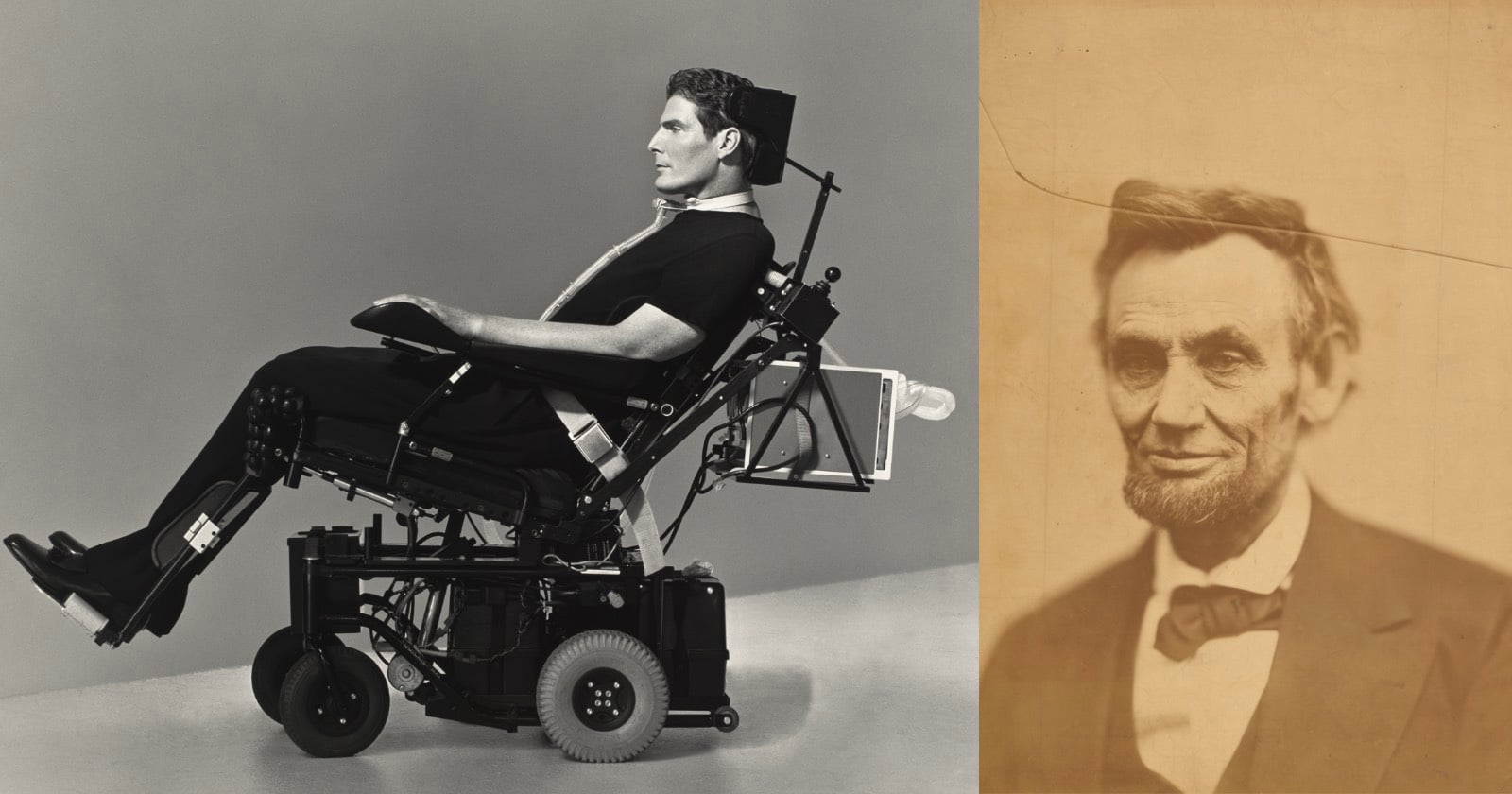
Other historical works include Alexander Gardner’s original “cracked-plate” portrait of Abraham Lincoln and Julia Margaret Cameron’s photograph of Henry Wadsworth Longfellow. There are also rare cabinet-card photographs of Ida B. Wells-Barnett by Sallie E. Garrity and of Ko K’un-hua by George K. Warren.
The big names
The 20th century is represented by many of the medium’s most famous names: Alfred Stieglitz, Edward Steichen, Dorothea Lange, Ansel Adams, Gordon Parks, Irving Penn, Richard Avedon, Diane Arbus and Annie Leibovitz. Works announced for the show include Man Ray’s c. 1930 portrait of Lee Miller, Gordon Parks’ 1963 image of Malcolm X, Yousuf Karsh’s 1944 portrait of Eleanor Roosevelt, Philippe Halsman’s 1954 Lena Horne and Herb Ritts’ 1996 side-view portrait of Christopher Reeve.
Exhibitions like this are a reminder that every format, from silvered copper plates to inkjet paper, was once the newest imaging technology. Seeing them side by side shows how much the look of a portrait depends on the process behind it, as well as on the person in front of the lens.