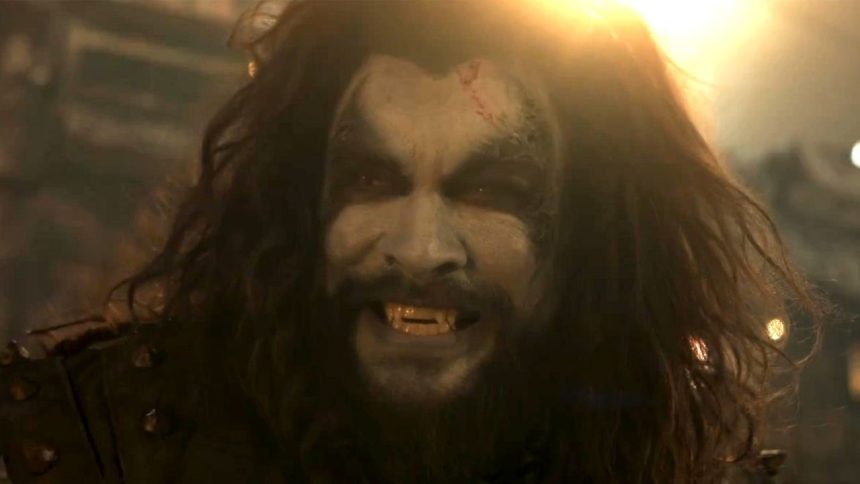
Warner Bros. has quietly pulled a behind-the-scenes featurette from its official YouTube channel after eagle-eyed fans zeroed in on something they weren’t supposed to notice — concept art that looked suspiciously machine-made.
The clip, titled Jason Momoa as Lobo, showed Supergirl director Craig Gillespie walking Momoa through the visual language behind the character. Lobo, the intergalactic bounty hunter set to appear in Warner Bros.’ 2026 Supergirl film, is getting a suitably menacing redesign for the big screen. The problem, according to viewers, wasn’t the design itself — it was how it may have come together.
During the featurette, fans spotted what they believe to be AI-generated concept art used to shape Lobo’s intimidating new look. The telltale signs of image-generation tools were enough to spark an immediate backlash across social media, with critics arguing that a tentpole superhero production shouldn’t be leaning on algorithms where human artists would normally do the heavy lifting.
The response from the studio was swift and unmistakable: the video disappeared from the official Warner Bros. YouTube page. No lengthy statement, no explanation — just a quiet deletion that, of course, only amplified the conversation. If there’s one lesson Hollywood keeps relearning, it’s that scrubbing something from the internet rarely makes it less visible.
This isn’t the first time AI has become a flashpoint in film and TV production, and it won’t be the last. The tension is a familiar one: generative tools promise faster iteration and cheaper pre-visualization, while artists and audiences push back against work that feels outsourced to a machine. When that friction lands on a high-profile property like Supergirl, the debate tends to boil over fast.
It’s worth noting what the incident actually confirms and what it doesn’t. Fans alleged the concept art was AI-assisted based on visual cues in the featurette — the kind of soft, over-rendered artifacts that generative models tend to leave behind. Warner Bros. hasn’t publicly confirmed how the Lobo art was created, and pulling the video doesn’t settle the question either way. But the optics are hard to ignore: taking down the evidence tends to read as an admission, whether that’s fair or not.
For a character as beloved and instantly recognizable as Lobo, the stakes are more than academic. Fans have strong feelings about how the bounty hunter should look, and the suggestion that his cinematic debut was partly shaped by AI concept work touches a nerve that goes well beyond one deleted clip.
Whether the studio addresses the controversy directly or simply lets it fade, the episode is a neat snapshot of where entertainment sits right now — caught between the efficiency of AI tools and an audience that’s watching every frame for signs of them.