By using this site, you agree to the Privacy Policy and Terms of Use.
Accept

GismoLand

Connecting You to Tech

  • Audio Video
    Audio VideoShow More
    Samsung Galaxy H1. The premium over-ear comeback nobody saw coming
    Samsung Galaxy H1. The premium over-ear comeback nobody saw coming
    4 Min Read
    Topping D900. A premium DAC that reinvents digital-to-analog conversion
    Topping D900. A premium DAC that reinvents digital-to-analog conversion
    3 Min Read
    Dolby Vision 2. Your 4K Blu-ray player might get it, or might not
    Dolby Vision 2. Your 4K Blu-ray player might get it, or might not
    4 Min Read
    Tecno Pova AI Buds Pro. Earbuds that take notes for you
    Tecno Pova AI Buds Pro. Earbuds that take notes for you
    3 Min Read
    Valerion ThunderBeat 4.1.2. Big sound in a box that never quite fills the room
    Valerion ThunderBeat 4.1.2. Big sound in a box that never quite fills the room
    4 Min Read
  • Mobile
    MobileShow More
    Feature Phones Refuse to Die. A third of readers still keep one around
    Feature Phones Refuse to Die. A third of readers still keep one around
    3 Min Read
    iQOO 16. A faster 165Hz screen and a slimmer camera bump on the way
    iQOO 16. A faster 165Hz screen and a slimmer camera bump on the way
    3 Min Read
    OnePlus Nord CE5 5G. The budget phone that refuses to die by dinner
    OnePlus Nord CE5 5G. The budget phone that refuses to die by dinner
    3 Min Read
    Poco M8x 5G. A fifth sibling steps out of the shadows in dark green
    Poco M8x 5G. A fifth sibling steps out of the shadows in dark green
    3 Min Read
    Nokia 9000 Communicator. The smartphone that arrived five years too early
    Nokia 9000 Communicator. The smartphone that arrived five years too early
    3 Min Read
  • Photo
    PhotoShow More
    Nova the Lyrebird. The 37-year-old avian sound designer who nailed a Polaroid shutter
    Nova the Lyrebird. The 37-year-old avian sound designer who nailed a Polaroid shutter
    3 Min Read
    Kodak Verita 200D. The Euphoria film stock you can't actually buy
    Kodak Verita 200D. The Euphoria film stock you can’t actually buy
    4 Min Read
    Ben Marcin The Holdouts. Sixteen years chasing Baltimore's last standing homes
    Ben Marcin The Holdouts. Sixteen years chasing Baltimore’s last standing homes
    2 Min Read
    Instante/revelación. The Getty maps a century of Mexican photography
    Instante/revelación. The Getty maps a century of Mexican photography
    3 Min Read
    Kodak Ektapan, Ektacolor Pro and Tri-X. The film revival goes large
    Kodak Ektapan, Ektacolor Pro and Tri-X. The film revival goes large
    3 Min Read
  • Robots
    RobotsShow More
    Airseekers Tron. A powerful mulching mower with a few rough edges
    Airseekers Tron. A powerful mulching mower with a few rough edges
    3 Min Read
    Neros Archer AI and Bandit. Silicon Valley builds the drones war will actually use
    Neros Archer AI and Bandit. Silicon Valley builds the drones war will actually use
    3 Min Read
    LG and Nvidia. A humanoid robot and self-driving brains take shape
    LG and Nvidia. A humanoid robot and self-driving brains take shape
    4 Min Read
    Hirebotics Cobot Welder. Tate wires up 58 robot arms across three states
    Hirebotics Cobot Welder. Tate wires up 58 robot arms across three states
    3 Min Read
    VicOne Radeis Extension. Stress-test your robot before hackers do it for you
    VicOne Radeis Extension. Stress-test your robot before hackers do it for you
    3 Min Read
  • Technology
    Technology
    Modern technology has become a total phenomenon for civilization, the defining force of a new social order in which efficiency is no longer an option…
    Show More
    Top News
    HDMI 2.2. The 96Gbps leap that rewrites what your cables can carry
    HDMI 2.2. The 96Gbps leap that rewrites what your cables can carry
    June 20, 2026
    Gemini Live. Google's voice assistant finally learns to remember you
    Gemini Live. Google’s voice assistant finally learns to remember you
    June 20, 2026
    Meta Boosts the Snack Budget. A Granola Bar Won't Fix This
    Meta Boosts the Snack Budget. A Granola Bar Won’t Fix This
    June 20, 2026
    Latest News
    Solar Eclipses 2026 and 2027. Why skywatchers should be booking now
    August 16, 2026
    Black Hole Star MoM-BH*-1. James Webb finds a star that is really a monster in disguise
    August 16, 2026
    BlueBird Tech CLOVER 5.8 GHz. Ukraine’s featherweight antenna punches above its weight
    August 16, 2026
    Apple Business Manager. What IT admins really need to know about the expanded API
    August 15, 2026
  • Entertainment
Search
Sections
  • Mobile
  • Audio Video
  • Photo
  • Robots
  • Technology
  • Entertainment
  • Contact
  • Blog
© 2026 GISMOLand. All Rights Reserved.
Reading: Bioxtreme. When robots and AI join forces to rebuild movement after stroke
Share
Sign In
Notification
Font ResizerAa

GismoLand

Connecting You to Tech

Font ResizerAa
  • Robots
  • Technology
  • Mobile
Search
  • Home
  • Audio Video
  • Mobile
  • Robots
  • Technology
  • Entertainment
Have an existing account? Sign In
Follow US
  • Contact
  • Blog
© 2026 GISMOLand. All Rights Reserved.
GismoLand > Blog > Robots > Bioxtreme. When robots and AI join forces to rebuild movement after stroke
Robots

Bioxtreme. When robots and AI join forces to rebuild movement after stroke

gismo
Last updated: August 16, 2026 5:13 pm
gismo
Share
Bioxtreme. When robots and AI join forces to rebuild movement after stroke
SHARE

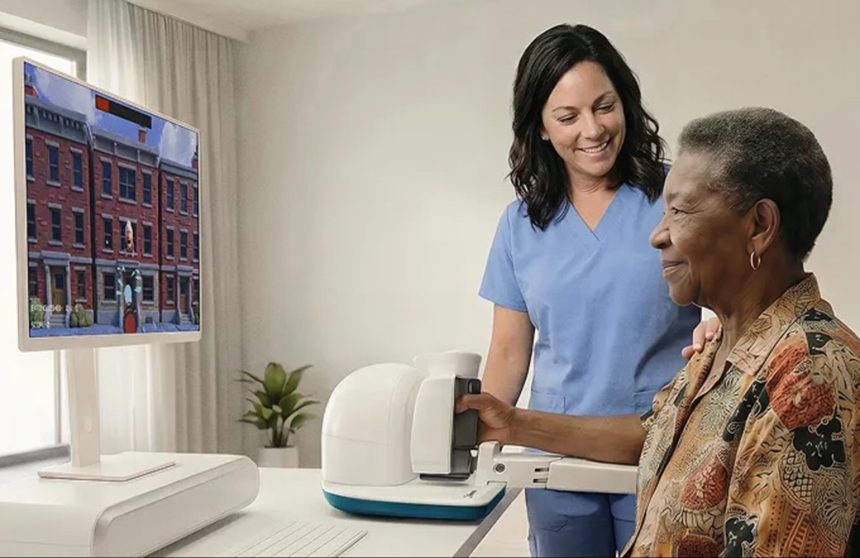
Stroke recovery has long been a marathon of repetition — hours of guided movements, a physiotherapist’s steady hands, and the slow rewiring of a brain relearning how to command a limb. Increasingly, that marathon is being run alongside machines, and the people building them argue the results speak for themselves.

Eyal Samuel Shachar, CEO of rehabilitation robotics company Bioxtreme, frames the shift as a genuine turning point rather than a gimmick. In his view, the growing synergy between robotics, artificial intelligence, and human-centered care is what makes the difference — not any single one of those ingredients on its own.

The logic is straightforward once you see how neuroplasticity works. Recovering motor function after a stroke depends on high-volume, high-precision repetition, the kind that reinforces new neural pathways. That is exactly where machines excel: a robotic system never tires, never loses concentration, and can deliver thousands of consistent, calibrated movements in a session. For a human therapist, sustaining that intensity over weeks is physically punishing and, frankly, impractical.

But raw repetition alone is not the story. The interesting part is the AI layer sitting on top of the hardware. Instead of running a fixed program, intelligent rehabilitation systems can read how a patient is performing in real time — how much assistance they still need, where they struggle, how quickly they fatigue — and adjust the challenge on the fly. That adaptive difficulty keeps patients working at the productive edge of their ability, rather than being bored by tasks that are too easy or defeated by ones that are too hard.

Shachar is careful, though, not to pitch this as robots replacing clinicians. The phrase he keeps returning to is human-centered care. The machine handles the grinding, repetitive workload and the data collection; the therapist interprets the bigger picture, sets goals, motivates the patient, and makes the judgment calls that no algorithm should. It is a division of labor, not a takeover.

There are practical payoffs beyond the clinical ones. Automated systems can capture detailed metrics on every session, giving clinicians objective evidence of progress instead of subjective impressions. That data can sharpen treatment plans and, over time, help the whole field understand what actually works. It also opens the door to extending therapy beyond the crowded hospital gym, where access to specialists is a persistent bottleneck.

None of this erases the challenges. Cost, clinical validation, and integration into existing care pathways remain real hurdles, and robotics in rehab is still an evolving field rather than a solved problem. But the direction of travel is clear enough. As Shachar sees it, the future of stroke recovery is not a choice between human therapists and machines — it is the two working in concert, each doing what it does best, in service of getting patients moving again.


You Might Also Like

Airseekers Tron. A powerful mulching mower with a few rough edges

Neros Archer AI and Bandit. Silicon Valley builds the drones war will actually use

LG and Nvidia. A humanoid robot and self-driving brains take shape

Hirebotics Cobot Welder. Tate wires up 58 robot arms across three states

VicOne Radeis Extension. Stress-test your robot before hackers do it for you

TAGGED: artificial intelligence, Bioxtreme, healthcare technology, robotics, stroke rehabilitation

Sign Up For Daily Newsletter

Be keep up! Get the latest breaking news delivered straight to your inbox.
[mc4wp_form]
By signing up, you agree to our Terms of Use and acknowledge the data practices in our Privacy Policy. You may unsubscribe at any time.
Share This Article
Facebook Twitter Copy Link Print
Share
Previous Article Nova the Lyrebird. The 37-year-old avian sound designer who nailed a Polaroid shutter Nova the Lyrebird. The 37-year-old avian sound designer who nailed a Polaroid shutter
Leave a comment

Leave a Reply Cancel reply

Your email address will not be published. Required fields are marked *

Stay Connected

248.1kLike
69.1kFollow
134kPin
54.3kFollow
banner banner
Create an Amazing Newspaper
Discover thousands of options, easy to customize layouts, one-click to import demo and much more.
Learn More

Latest News

Nova the Lyrebird. The 37-year-old avian sound designer who nailed a Polaroid shutter
Photo
Saber Interactive. When a CEO's AI boast blows up in his face
Saber Interactive. When a CEO’s AI boast blows up in his face
Entertainment
No Man's Sky. A decade in, Sean Murray's real high isn't the numbers
No Man’s Sky. A decade in, Sean Murray’s real high isn’t the numbers
Entertainment
Feature Phones Refuse to Die. A third of readers still keep one around
Mobile
//

Technology news network

Menu

  • Home
  • Audio Video
  • Mobile
  • Robots
  • Technology
  • Entertainment

Contacts

For any collaboration inquiries, please contacτ:

[email protected]

Follow US
© 2026 GISMOLand. All Rights Reserved.
Welcome Back!

Sign in to your account

Lost your password?