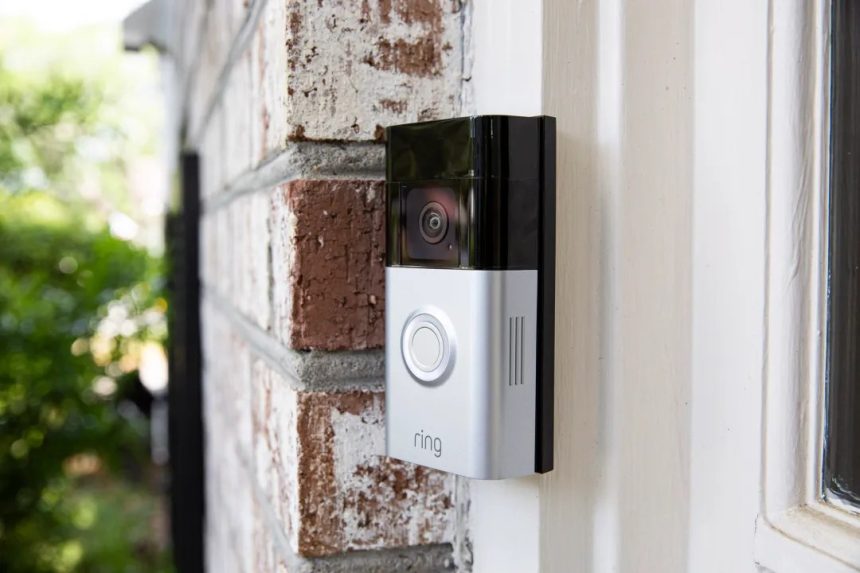
Ring has cooked up an unusual answer to a familiar problem: how do you keep home camera footage private while still letting the cloud do clever things with it? The Amazon-owned company’s solution is called TAKE — short for Throw Away the Key Encryption — and it’s designed to limit exactly when and why Amazon’s servers can peek at your video.
The name is the pitch. Rather than leaning on traditional end-to-end encryption, TAKE promises to lock down footage while still leaving room for the cloud-powered features Ring owners have come to rely on. That’s the tricky balancing act here: true end-to-end encryption tends to break the smart stuff, because the servers can’t read what they can’t decrypt.
With TAKE, Ring says you still get:
- Smart alerts for people and packages
- AI-powered video search
- Video descriptions generated automatically
The headline consequence, and the reason this is making waves, is what it means for law enforcement. Ring frames TAKE as a way to restrict the footage it can hand over to police — a pointed shift for a company whose relationship with law enforcement has drawn years of criticism. By constraining the cloud’s access to your recordings, Ring is effectively narrowing the pool of data it can be compelled to share.
Crucially, this isn’t a premium add-on. TAKE begins rolling out gradually starting in September, and it arrives regardless of whether you pay for a subscription. Over time it becomes the default encryption for every Ring customer, applied across the existing camera lineup rather than baked into a single new device. If you already own a Ring camera, this is coming to you.
The timing is no accident. TAKE lands during a year of intense scrutiny for Ring, as privacy advocates and regulators continue to probe how much footage the company collects and who gets to see it. Encryption that visibly reduces Ring’s own ability to comply with police requests is as much a reputational move as a technical one — and it puts the company in the unusual position of advertising the things it can’t do with your data.
The obvious question is how well TAKE holds up to independent scrutiny. “Throw away the key” is a memorable slogan, but the security community will want to know precisely where the keys live, which parts of a video the cloud can still process, and how the system reconciles AI search with genuinely limited access. Those details will matter far more than the branding.
For now, the takeaway is straightforward. If you’ve hesitated to trust a camera pointed at your front door, Ring’s new default is at least a step toward giving you more control over who sees what — no upgrade required, no subscription needed.