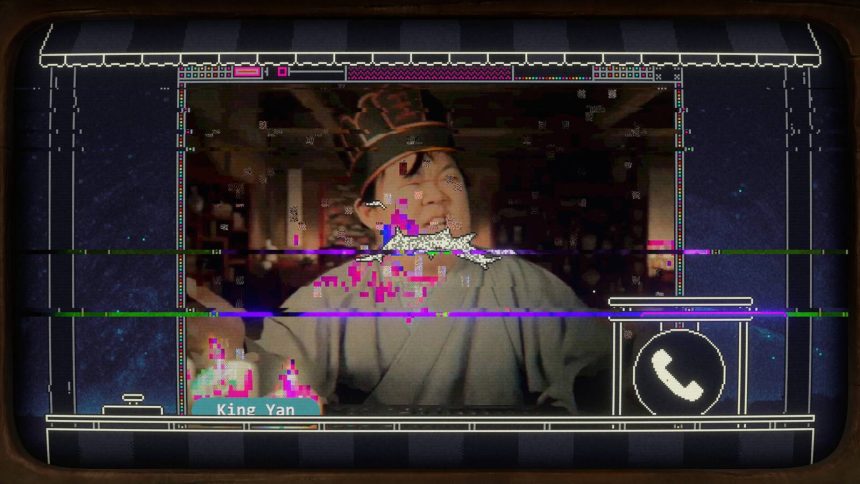
Rockstar rolled out its big Grand Theft Auto 6 showcase this week, and by every conventional metric it dominated the gaming conversation. Yet the trailer that keeps rattling around my head belongs to something far stranger and far smaller: Pony Island 2: Panda Circus, the follow-up to Daniel Mullins’ cult meta-horror puzzle game.
For the uninitiated, the original Pony Island was never really about ponies. It was a deceptively cute arcade game that peeled back its own code to become a fourth-wall-breaking descent into something considerably more sinister. Mullins Games built a reputation on that kind of trickery — games that pretend to be one thing while quietly rewiring your expectations. Panda Circus looks poised to weaponise that instinct all over again.
Here’s what we actually know:
- Developer: Daniel Mullins Games
- Release date: April 27, 2027
- Platform: PC at launch
- Minimum CPU: Intel Core i5-760
- Recommended CPU: Intel Core i5-3470
Those system requirements tell their own story. This is not a game chasing photorealistic vistas or ray-traced reflections — a decade-old Core i5-760 clears the minimum bar, and a mid-range i5-3470 is enough to run it comfortably. Where a blockbuster like GTA 6 measures itself in the sheer horsepower it demands, Panda Circus is betting on ideas over polygon counts. That’s a refreshing pitch in a season where hardware requirements often balloon faster than a game’s ambitions.
There’s no official price yet, and Mullins has stayed characteristically coy about mechanics — which, if you know his work, is entirely the point. Half the pleasure of a Daniel Mullins release is not knowing what you’ve signed up for until the game decides to tell you, usually while dismantling the interface around you. The developer’s back catalogue, including the acclaimed Inscryption, suggests Panda Circus will treat its own genre as raw material to subvert rather than a template to follow.
None of this makes it a GTA 6 killer, and it isn’t trying to be. The two occupy opposite ends of the industry: one a mammoth open-world spectacle years and hundreds of millions of dollars in the making, the other a tightly authored experiment from a small studio that thrives on surprise. But it’s telling that a single unnerving trailer from an indie sequel can hold its own against the biggest reveal in gaming. Sometimes the loudest showcase isn’t the one you can’t stop thinking about.
With an April 27, 2027 launch penciled in, there’s plenty of time for Mullins to keep everyone guessing — which is exactly how he likes it.