Turn-based tactics games live or die on how well they make you feel outnumbered, outgunned and forced to think three moves ahead. Star Wars Zero Company understands this — and then, in one memorable mission, it happily throws the rulebook out of the airlock.
Set during the Clone Wars, the game builds its identity around methodical, grid-and-cover combat. You weigh flanking angles, manage cooldowns and try to keep your squad alive against enemies that outnumber you. It’s the kind of deliberate, cerebral gameplay that rewards patience over reflexes, and the source singles out the tactical layer as one of the game’s genuine strengths.
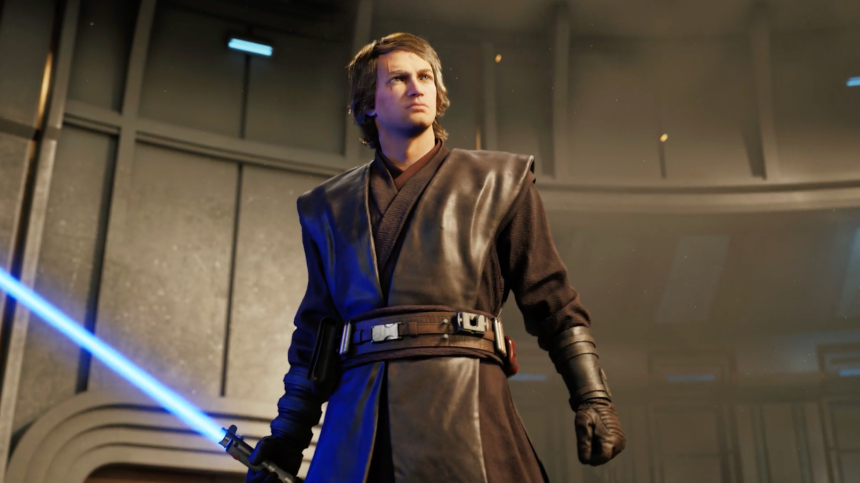
Then Anakin Skywalker shows up. And here’s the clever bit: he isn’t a fan-service cameo that waves at the camera and vanishes. He becomes a playable force of nature. For the duration of that mission, the careful, calculated tactics give way to something far more indulgent — a full-blown Jedi power fantasy.
It’s a smart design pivot. Tactics games often struggle to make individual units feel truly special; everyone is a chess piece with hit points and a movement radius. By handing you Anakin at exactly the right moment, Zero Company temporarily rewrites those rules. Suddenly the unit you’re moving around the map isn’t just another trooper with a blaster — it’s one of the most powerful Force users in the galaxy, and the game lets you feel every bit of that gap.
What makes the choice interesting is the contrast it creates. Because the rest of the experience leans so heavily into disciplined, resource-conscious combat, the Anakin sequence lands harder. You spend hours learning to respect enemy numbers and conserve every ability, and then you’re handed the tools to simply overwhelm the board. It’s the ludonarrative equivalent of switching from a scalpel to a lightsaber.
For a franchise that has spread itself across nearly every genre imaginable, this kind of tonal control matters. Plenty of Star Wars titles have tried to sell the fantasy of being unstoppable, and plenty of tactics games have tried to make every decision feel weighty. Fusing the two — and knowing exactly when to lean into which — is a harder trick than it sounds.
The takeaway from the source is refreshingly simple: Zero Company doesn’t treat Anakin as a marketing checkbox. It uses him as a deliberate gameplay beat, a moment engineered to make players grin. In a genre that can sometimes feel dry and unforgiving, that kind of showmanship is exactly what keeps people coming back to the table.
If the rest of the campaign balances its tactical rigor with these bursts of spectacle as well as this one mission does, Star Wars Zero Company could be one of the more memorable entries in the strategy corner of the galaxy far, far away.