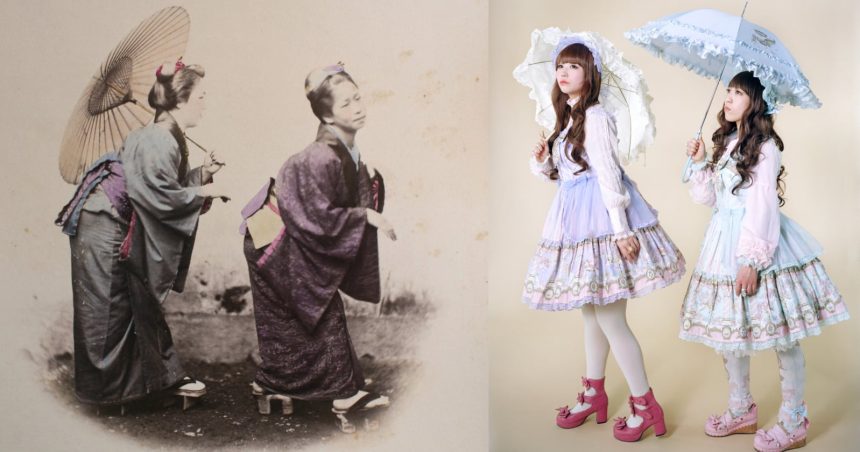
Rummaging through old boxes in her family home in Piedmont, Italy, photographer Giada Ripa stumbled onto something extraordinary: an album of 53 hand-colored photographs by Felice Beato, one of the earliest visual chroniclers of Japan. The images captured Japanese society in the 1860s, hand-painted with the meticulous care of a bygone era.
Beato settled in Japan shortly after the country opened to the West, a time when the shogun kept foreigners at arm’s length, admitting them mostly through diplomatic missions. For over 50 years, until the early 20th century, his hand-tinted photographs circulated in travel diaries, illustrated newspapers and published accounts, quietly shaping how the West imagined Asian societies.
The plot thickened months later, when Ripa discovered an unpublished manuscript by her distant ancestor Mathilde Ruinart. A 19th-century artist and muse to traveling intellectuals, Ruinart arrived in Japan in 1867 with her diplomat husband, hunting new varieties of silkworms for export to Italy. She befriended Beato, and her writings offer a detailed, first-hand account of the country during their stay.
Rather than simply archiving these finds, Ripa decided to retrace her predecessors’ footsteps. Traveling through Japan, she followed the exact paths Beato and Ruinart had taken, deliberately using an analog large-format camera to echo their slow, painstaking documentary method. The result is a book that stacks three perspectives — two from the 1860s, one contemporary — on top of one another.
The Yokohama Project, published by GOST Books on September 28, is built to be handled as much as read. Its spreads pair rare rice-paper reproductions of Beato’s originals with Ripa’s own images, and the book splits into two chapters:
- Chapter one is an archival and anthropological journey along the viewpoints Beato and Ruinart documented, weighing what survives against what has vanished over roughly 150 years.
- Chapter two gathers studio portraits shot in Tokyo — modern fishmongers, geishas, fashion designers, writers, wrestlers, priests and artists.
That second chapter is where the concept lands hardest. Beato once photographed and filed Japanese people under the reductive Victorian label of “native types.” Ripa answers him directly: her fishmonger works Tsukiji’s wholesale market, her monk is the chief priest of a Nichiren-shu temple, her portraits include the third-generation designer of Hello Kitty, a Yamato Transport employee, a kickboxing champion and a Bunka Fashion College student. Each is a specific person with a name and a job, not a specimen.
Placed side by side, the two eras create a visual conversation about how Japan’s people and landscape have shifted across a century and a half — filtered, deliberately, through the eyes of three Western outsiders looking in.
The Yokohama Project by Giada Ripa is available for pre-order from GOST Books.